Showing posts with label Psionics. Show all posts

Monday, July 25, 2011

Psionics

DIFFERENT PSION SPECIALISTS

THIS WEEK -- THE EGOIST
Also known as: Martial Monks, psychic gymnasts, psychic healers, Goku rip-offs

House Redoran warrior, by yours truly
Egoists are psionic martial artists, concentrating their energies on their bodies.  They are psions who have high intrapersonal intelligences.  They are completely in tune with their bodies.  Because of this intuition, egoists are capable of manipulating their bodies with their will.   Egoists usually learn martial arts to augment their own combat abilities.  Although some have the ability to heal others.

Egoist Psionic Powers List

Level 1 --- Minor Metamorphosis, Natural Healing, Thicken Skin
Level 2 --- Animal Affinity, Chameleon, Empathic Transfer
Level 3 --- Ectoplasm Form, Hustle, Metamorphosis
Level 4 --- Psychic Drain
Level 5 --- Psionic Revivify, Psychofeedback, Restore Extremity
Level 6 --- Cleanse Spirit, Greater Metamorphosis
Level 7 --- Fission
Level 8 --- Fusion
Level 9 --- True Metamorphosis


Archtypes
HUMAN PSIONIC MARTIAL ARTIST
Class: Psion (Psychometabolism speciality)
Feat: Unarmed Martial Strike
Feat (Human): Psionic Fist
Feat (Psion): Up the Walls

ELVEN PSYCHIC HEALER
Class: Psion
Feat:  Psionic Talent
Feat (Psion): Psionic Meditation
Powers: Empathy, Natural Healing, Heal Light Wounds

Saturday, May 7, 2011

Special Materials in Phoenicia

There are a number of special materials that showed up in Phoenicia, besides Mithril, Adamantine, Darkwood and all the rest; there are a couple of special materials that are found in Phoenicia and the vicinity.

Ferroplasm
Mined from secret locations in the Astral Plane, this malleable metal holds its shape only in the hands of a psionic being. When an item forged with ferroplasm is unattended or held by a nonpsionic creature, it melts and temporarily loses all special powers. But when wielded by a psionic creature, such an item immediately springs back into its true shape and regains all abilities. In its proper form, a ferroplasm item glows with a violet light (illuminating a 10-foot-radius), unless the item’s owner mentally quenches it. In an area where psionic powers do not function, it collapses as if in the hands of a nonpsionic creature.

Ferroplasm adds to the quality of a weapon or suit of armor based on how much of the material is used. Weapons fashioned from ferroplasm have a natural enhancement bonus to attack and damage. Armor fashioned from ferroplasm has a natural enhancement bonus to AC. These bonuses do not stack with other enhancement bonuses. Weapons or armor fashioned from ferroplasm are treated as masterwork items with regard to creation times, but the masterwork quality does not affect the enhancement bonus of weapons or the armor check penalty of armor.

Ferroplasm has hardness 20 and 40 hit points per inch of thickness when in its true form, and a hardness of 5 and 10 hit points per inch of thickness when soft.

Glyss
The the method of crafting glyss came with a traveler.   The glass is made by infusing the liquid glass with copper vapors.  The result is a glass that is a brittle translucent material.  In the hands of a warrior without psionic talent the material would shatter.  However, in the hands of a person with psionic talent, the material becomes hard as jade.  Though simple to craft, the majority of the stuff is found in Phoenicia and it's sister cities -- Syracuse and Sybaris.  Glyss glaziers can make a tidy profit from creating this material for psionic weapon and armorsmiths to work into suitable equipment.

How Glyss works is that it provides additional deflection bonuses when worn by a person with psionic talent.  By gaining and maintaining his psychic focus he gains a +2 deflection bonus to AC.  However, glyss armor and shields interfere with each other if worn by the same person.  Glyss crafted into bladed weapons have half the weight.  A person with psionic talents when maintaining his psionic focus gains a bonus with his Glyss weapon equaling a +1 bonus.

Weapons or armor crafted from glyss are treated with masterwork items with regard to creation times,  but the quality of the masterwork does not provide an enhancement bonus. 


Crafting Glyss
To create enough glyss for a suit of armor, a shield, or a weapon does require raw materials (sand, certain chemicals, and raw copper) equal to the value to one third the market price modifier for the item to be made. 

Creating the glyss requires one day per 1,000 gp of the final market price modifier as detailed in the table above, and a successful craft: Alchemy check (DC 20).  If the check is successful, then the alchemist or glazier has made the necessary amount of glyss.

---------------------------

OGL Section 15:
The Quintessential Warrior. copyright 2002 Mongoose Publishing.  Author Sam Witt.

Friday, May 6, 2011

Phoenica's Races

There are several races in Phoenicia's city limits.  All of them could be used for creating your characters.  Unless otherwise mentioned, you use the Core Rules for all character creation details.  Yes, your DM is the final arbiter of what is and is not allowed in your game.

COMMON RACES

Dwarves
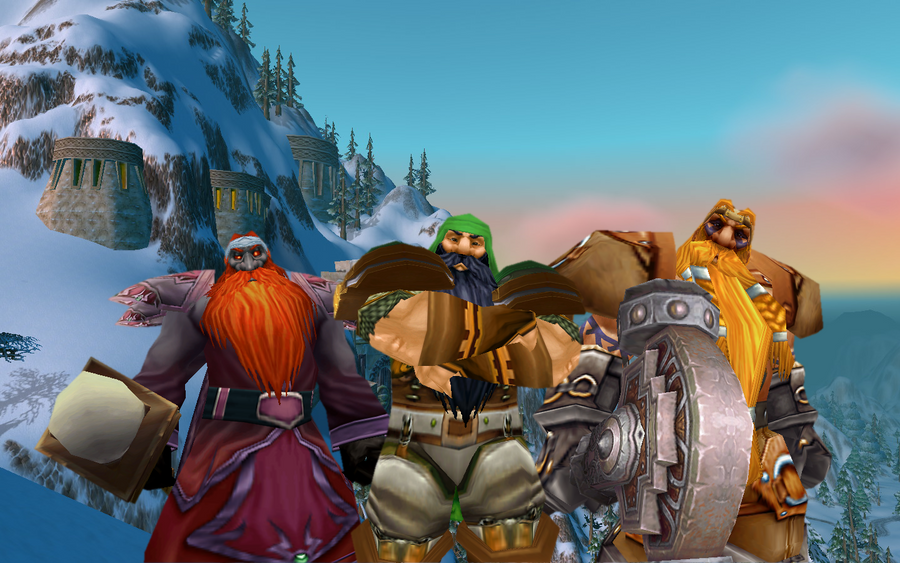
Although most people call them "dwarves" their own name for their own race is zwerc.  There are three dwarven clans known to the people of Phoenicia.  The Bright and genuine Ironhammer clan, the shamanistic Wildstone clan, and the ashenskinned firey bearded Vulcan Clan.

Dwarves (copyright Blizzard Entertainment)
Clan Ironhammer
The Ironhammer Clan is the clan that is the most used to living in city life.  Although they transformed the Mountain of Arat into their colony, part of the Ironhammer clan have moved North and West to mine the great mountains (its been 200 years, so it's supposed that there are new clans descended from the Ironhammer Clan). It was the Ironhammer Clan that first worked with ore and made Iron.  They gave the gift of Ironmaking to three human tribes who eventually solved the Riddle of Steel.  It was these three tribes that gave birth to the Iron Age.  Ironhammers are white and fair, with blond to light brown hair.  It is fashionable for Ironhammer men to be fullbearded, and Ironhammer women to shave their stubble and be beardless.  Use the standard rules for creating an Ironhammer Dwarf.

Clan Wildstone
Wildstone Dwarves exist in the Valley of the Tiger River.  One of the tributaries of the River Sardis.  The Wildstone Dwarves worship the Spirits of the Valley and are in particular bonded with the tiger spirits (while the orcs' supreme animal spirit is the wolf). It is said that their gift to mankind was the making of bronze out of copper.  The truth of the matter is that the Wildstone Dwarves perfected the art of making beautiful bronze swords using a stone mold, and they taught this technology to humans.  They are less stout than Ironhammer dwarves, and they have a swarthy complexion.  The men are clean shaven but they sport sideburns.  Their hair ranges from Auburn to black hair.

Clan Vulcan
The Vulcan Clan comes from Vulcan Island, where it is rumored that they serve the God Hephaestus.  In truth, they are more likely cursed by some god because of their ashen skin and firey beards.  Also called "deurgar" the Vulcan Clan have natural psionic talent.   The gift these dwarves bring to the people of Phoenicia is the working of the very rare metal known as ferroplasm.  Use Deurgar in Psionics Unleashed to create a Vulcan Dwarf.


Elves

High Elf
There are three elves in Phoenicia.  All of them descended from trans-dimensional travelers and belonged to five different tribes then.  The tribes since became civilized.  Most elves look the same, the High Elves are descended from the Tribe of Pelasgus, while another group of elves, called the Masallian Elves, are descended from the Tribe of Javan or the Fair Elves.  The two tribes of elves don't regard each other very well.  This because of the Pelasgiri Elves invaded the lands of the Fair Elves and utterly destroyed and enslaved most of the people.  The Pelasgiri Elves became the High Elves, and are distinguished by their long flowing hair, pointed ears, and noble features.  Use the standard "Elf" in Pathfinder for creating a High Elf.  Their are two more elven races: the Desert Elves and the Massalian Elves.


Gnomes

The Gnomes are frequently mistaken for halflings (or the other way around).  They are pretty rare, being an island people scattered among the islands of the Great Sea.  Gnomes have the reputation of gypsies, and they favor song, epic storytelling, and magic over most anything else.  The Gnomes of the island of Cyprus, however, favor building machines.  Use the standard "Gnome" in Pathfinder for creating a gnome.


Half-Elves and Half-Orcs
Half-elves and Half-orcs are rare, these races are so more common in Phoenicia than in many other places.  Half-elves may have High, Massalian, or Desert Elf parents and a human parent; while Half-Orcs may come from elven and orcish stock, or human and orcish stock.  The latter is very rare.

Halflings

Halflings were originally associated with the lands of the fairies.  However, due to their stature and willingness to live in Human lands, they were eventually called "halflings" due to their stature.   The name stuck with them.  They are small, fair, and nimble; but their childish size does not usually carry a childish manner.  Nomadic halflings use ponies to pull their carts, while settled halflings build burrows or houses.  Use the standard "Halfling" in Pathfinder to create halfling characters.


Human
Humans

According to Elven myths, the Elven Gods, the Halfling Gods, the Creator, and the Dwarven Gods divided the World amongst themselves.  The Dwarves claimed the mountains and their rich ore deposits; the Halflings claimed the verdant valleys between those mountains, and the Elves claimed the verdant forests.   This left the deserts for humans.  This turned out well, since human civilization arose in the desert where humans were forced to work together.   As a result the humans spread throughout the world.  They are the most prevalent of the races of the world.


MINOR RACES

Elans
Elans are humans transformed by psionic ritual that is somewhat similar to the same ritual that creates a Psionic Lich.  However elans are created by a secret society that isn't spread out over the whole world.   The transformation gives them partial immortality -- eternal youth and death only by violence.  The trade off is memories of a profession and any skills, although life memories persist.  The current elan council is favoring humans with Auburn hair; but transformations happen very rarely.  Use the rules from Psionics Unleashed to create elans for a Pathfinder game.

Elves, Desert
Desert Elf
 Desert Elves are descended from the third Elvish Tribe.  They live in the arid and semi-arid areas of this region of the world, and are living a pastoral existence herding sheep, goats, and cattle.  They are typically have bronze skin, dark hair, and blue eyes.

Elves, Massalian
One word, this race is driven by hate and revenge against High Elves for conquering their ancestral lands.  But their race was nearly wiped out by northern forest trolls, which race has also earned their hatred.  As a result, they rebuilt their society relying on Fiendish magic.  While not strictly evil, a Massalian Elf tend to use Fiendish magic to fight fiends.  They look like High Elves except for their eyes, which blaze with fiendish energy.  Stats are below.

Maenads:  Once they were human, however an ancient accident has caused crystals to be embedded into their skin.  What is worse, the accident has caused them to be more emotional than usual.   Through the generations, the Maenads have bred true; and so have their traits.  Phoenicia is one of the few cities where they are welcomed and tolerated.  Use the rules in Psionics Unleashed for creating Maenad characters for Pathfinder.

Half-Giants: The breeding of humans with giants produced half-giants.  Born with buff musculature, half-giants were gladiator slaves of the Sorcerer Kings in desert kingdoms.  Many have escaped and formed small tribes or bands wandering the area.  Use the rules in Psionics Unleashed for creating Half-Giants.


NPC RACES

Aasimar: These are graced with the blood of celestial beings.  These individuals are graced with angelic beings in their Family Tree.
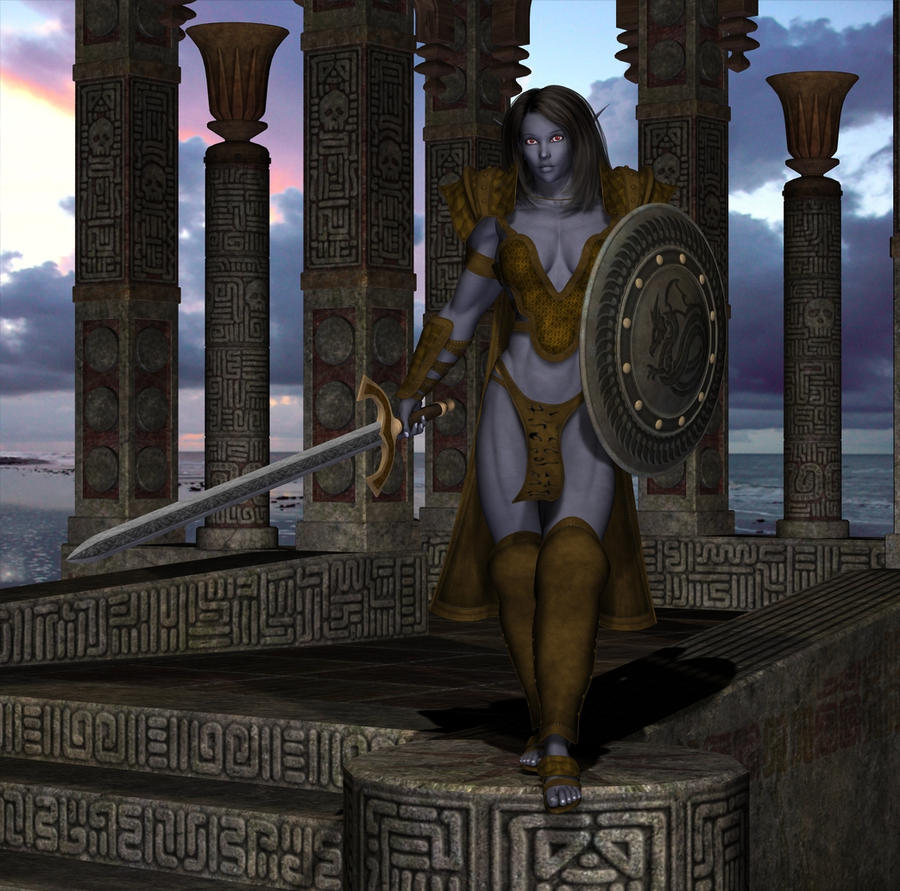
Elves, Dark:  The dark elves, or drow, are part of the fifth tribe of elves to come into the world.  One must delve deep into history to understand what had happened, but most drow are deep in the Earth. Sadistic and cruel, they revere dark and evil gods who urged them to conquest and dominance.
Orc
Orcs: The orcs of this world is described in great detail on this blog, and so forth.  Sufficeth to say that they are a race of barbarians.  Orcs worship their ancestors instead the Fiends that they once did.  They are also strongly shamanistic and feel a strong kinship with the wolf spirit.  Orcs are mostly found in the Hordelands, but certain tribes have come out of the south and have run afoul of the humans here.
Tieflings: These individuals have Fiendish blood -- the blood of demons or devils -- flowing through their veins.  Thus somewhere in their ancestry they have a fiendish ancestor.  They are a rare but significant force in Phoenicia.
The Unwanted: The city is also home to goblins, ratmen (Slitherin or Skavin) and other unwanted elements.  Most people call these things an infestation than anything else and want to drive them out.  These unwanted beings contribute nothing to the city's civilization, but they prey on its populace, stealing and robbing what they need.
Thursday, May 5, 2011

Phoenicia Preview: Character Classes

A few guidelines on how the Character Classes work in Phoenicia.

Core Classes
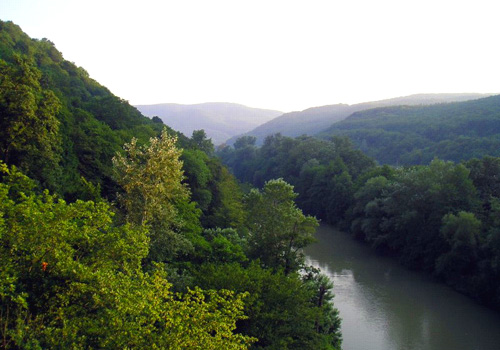
A Gorge in the Dragonwall
Barbarians: Most human barbarians are from the Dragonwall, the group of mountains that separate the Hordelands from the southern part of Civilization.   Barbarian Orcs are from the Hordelands.  Elves who are barbarians tend to be desert elves, while there are no dwarven or elan barbarians (unless you have an interesting backstory).

Bards: Bards fit very well in an Urban campaign centered around Phoenicia.  Singers, dancers, musicians, acrobats, and orators that pontificate on the local podiums count as bards.  Bards with psionic talent (usually wild talent) have been known to incorporate psionics into their performances.  Those with PK or Telepathic abilities are the more common.  Bards with PK ability often use levitation of objects, while bards with Telepathic ability are known as mentalists.  Bards with Clairsentience abilities are known as street psychics.  People who are martial art performers, however, are of an entirely different class.

Clerics: Clerics are pretty respected among society.   Clerics of Zeus have some political clout and often have to compete with the Brahmins.  You can work with the GM to choose a deity that suits your needs.  Note that Buddhist monks are considered to be of the Cleric class, not the Monk class.

Druids: Druids are priests or shamans that respect nature.  True druids are very rare and most orcs are of the Shaman class.  The few druids that exist are among human barbarian tribes and the few high elves that come to live in the city.  There are no druids among the Desert Elves, who have more monotheistic leanings (unless you have an interesting backstory).  Druids aren't often found in Phoenicia, and therefore the least common.

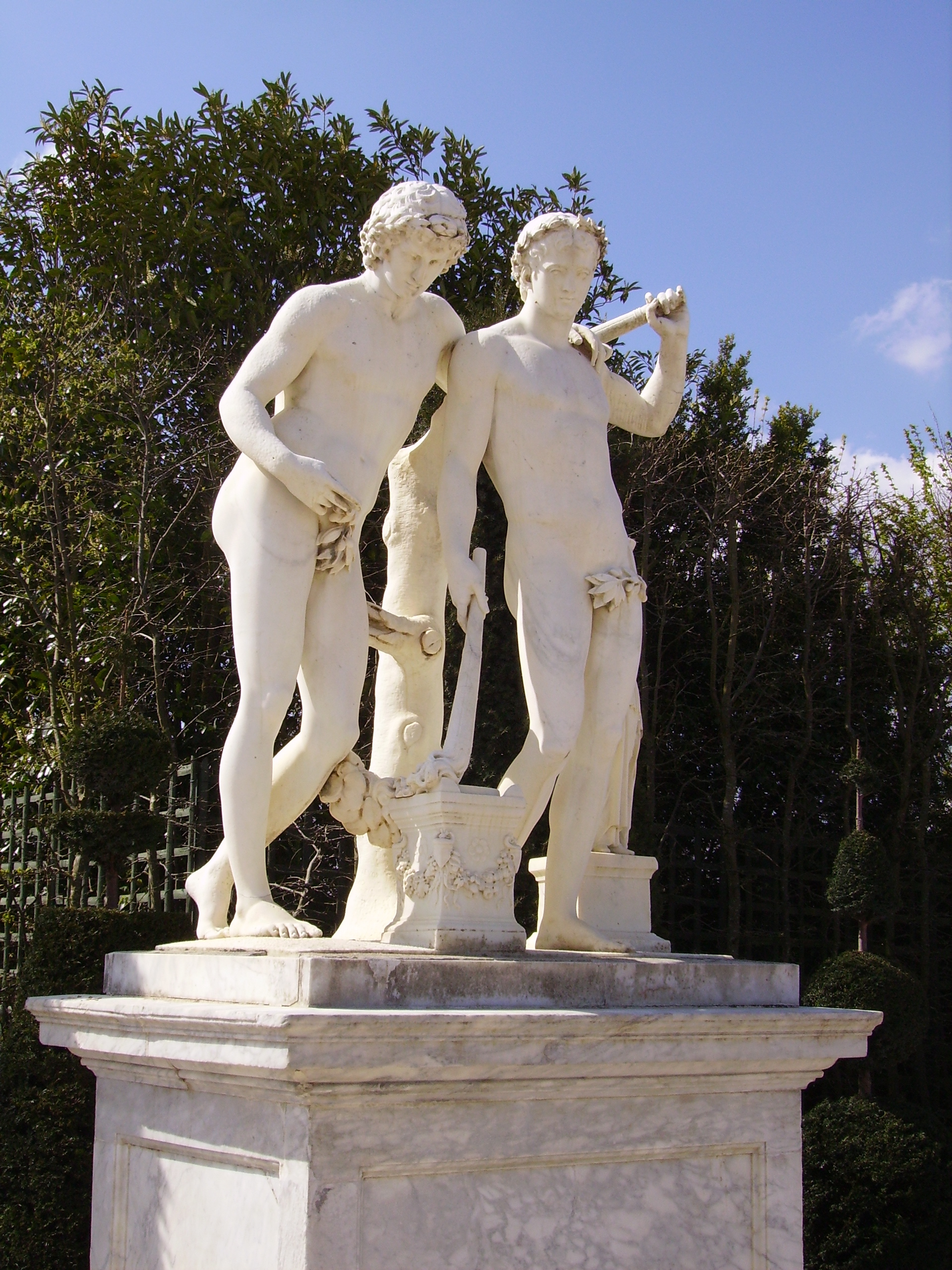
Castor and Pollux
Athletes (Monks): members of the Monk class are called Athletes.  Athletes who tend to adventure wish to follow in the footsteps of Hercules, or the Dioskouroi.  The traditions of the Athlete started in the West, and specialized in boxing and wrestling.  Athletes who adventure are typically shunned by their more competitive friends, since they use their unarmed combat not for competition; but for survival.

Fighters:  Fighters can come from any walk of life in Phoenicia.  Phoenicia has several orders of chivalry you may want to join.  There is also the Guild of Swords, or the Order of Strength.  Many fighters get their start in the Arenas; others join the with the army.

Paladins: Phoenicia has several orders of Chivalry you might find appealing, including the Order of Achilles or the Society of Rama.  The two orders have a friendly rivalry.  Also, see the discussion in the Cleric entry above about choosing a god to serve your needs.

Rogues: There is a whole society of thieves devoted to Hermes (Hermes' Sons).  Remember, though, thief is but one option.  There is the espionage route -- because Phoenicia has an entire agency dedicated to espionage called Secret Intelligence.  Orc rogues belong to the orc Society of Serpents (which means that they are more sophisticated than they let on).  Some rogues act as merchants and artisans, while others are rakes.  Not surprisingly, this is due to their skillfulness.  Thus, as far as hero classed people go, this class is the most represented in the city.

Sorcerers: Not surprisingly, in a psionic city, Sorcerers are rare but more common than wizards (or their variants).   The Bloodlines that are the most common are Abberant, Abyssal, Arcane, Destined, Dreamborn, Elemental, and Infernal.

Wizards: Wizards take a scholarly approach to magic.   They tend to look at magic as a science.  However, in a city of Psionics, they are extremely rare.  So rare that if someone saw a wizard working magic, they would most likely confuse him with a psion.  However, people confuse the Wizard with their more malefic counterpart -- the Warlock.  Wizards accused of working Dark, Fel Magic have little hope of proving their innocence but are commonly executed by drinking hemlock poison.  Wizards, whether apprentice or master, tend to hide their art.

Psionic Classes

Psion: Psions are the most common of the psionic classes.  They are typically learned and have learned psionics according to one of three methods: the Will and the Way, the Chakra Method, and the Law of Cause and Effect method.

Psychic Warrior: Like the fighter and the Paladin, there are some chivalristic orders that one can join over time.  Psychic Warriors can also start in the arenas.

Soulknives:  Soulknives typically train by using their psychic energy to create a mindblade.  There are many options for soulknives, however.  The same chivalristic orders and espionage are good options for Soulknives; also many soulknives act as paladins for their people.  A good number of soulknives operate in the City Watch.  They are the rarest of the psionic classes.

Wilders: Typically untrained, wilders have uncontrolled psionic potential.  Without the formal training, their powers are connected to their emotions.  Wilders are found among the poor and among those who can't demonstrate self control.  They are the second most common of the psionic classes.

Wednesday, May 4, 2011

Phoenicia Preview: Id Beast

I redid the Id Beast from Bruce R. Cordell's Hyperconscious for Pathfinder.  Yes, I did get a license.

Ahem. . . Around the city of Phoenicia are rare creatures of the Id.  Psionic creatures that can pose a threat.  So far, the creatures known as puppet masters have not shown up to wreck havoc, but the confluence of Psionic individuals attracts these creatures.

One of the creatures is an Id Beast.


Mr Hyde from Marvel, used as a stand in.
This Elf is an impressive specimen, having lean predatory lines, thick musculature, catlike eyes, and a powerful, hungry conduct that never fades.  It’s body swells with excess power and its emotions run especially high.  What is more, electrical plasma arcs around it’s muscles.
 
Ulundoner (Kirin the Heretic)
CR 6
XP 2,400
Male elf magical beast 4
N Medium magical beast (elf)
Init
+9; Senses low-light vision; Perception +11
 DEFENSE
AC 20, touch 17, flat-footed 15 (+5 natural armor, +7 Dex)
hp
34 (4d8+7)
Fort
+7, Ref +9, Will +8; +1 vs. divine magic, +2 vs. enchantment, +2 vs. mind-affecting effects
Defensive Abilities
evasion, trap sense +1, uncanny dodge; Immune sleep; Resistance 10 poison, acid, cold, electricity; cunning
  OFFENSE
Speed 50 ft.
Melee
2 mwk short swords +8 (1d6+1/19–20) or mwk short sword +10 (1d6+1/19–20), Bite +3 (2d6), Claws +3 (1d8/1d8)
Ranged
longbow +8 (1d8/×3)
Special Attacks
Id strike, biofeedback, vigor
  STATISTICS
Str 16, Dex 24, Con 18, Int 11, Wis 18, Cha 8
Base Atk
+3; CMB +4; CMD 19
Feats
Combat Reflexes, Two-Weapon FightingB, Weapon FinesseB, Weapon Focus (short sword)
Skills
Acrobatics +11, Climb +6, Diplomacy +0, Disable Device +8, Escape Artist +10, Intimidate +2, Knowledge (dungeoneering) +7, Knowledge (local) +6, Perception +15, Sense Motive +7, Sleight of Hand +10, Stealth +15, Use Magic Device +0
Languages
Common, Elven, Goblin
SQ
elven magic, Harrow boons (+1 Perception, +2 vs. mind-affecting effects, +1 Diplomacy), rogue talents (combat rogue, finesse rogue) traits (psionic), trapfinding +2, weapon familiarity, psionic
Combat Gear
 None
 SPECIAL ABILITIES
Cunning
An ulundoner is never caught flat-footed.
Id Strike
The ulundoner can make a normal attack to deal additional damage equal to its Hit Dice total (maximum of +20) against a foe once per day. When it makes such attacks, it visibly seems to swell with power as its muscles ripple and its eyes blaze out like beacons of hunger.

Psi-Like Abilities
Biofeedback (1/day): Manifester level 4th and Vigor (1/day). Augmentable powers are augmented to the limit of the manifester level, if appropriate to the power.
Immunities
Ulundoner are immune to sleep.
**Skills
Ulundoner gain constant +4 id bonus to on Perception and Stealth checks.


 Id beasts are the result of primitive instincts erupting in the minds of some people; like a volcano, these instincts overwhelm the Self in certain people.  While these instincts are apart of all, even the most highly evolved consciousness requires sustenance and survival and harbors a powerful Idbeast that salivates for freedom.

Under the right conditions, a living creature can undergo the most terrifying transformation catalyzed by it’s most basic instincts.  A very rare storm of psychic potential can cause a wave of physical and mental alterations in the creature, allowing its most primitive instincts to reshape itself.  In such transformations, the Id overwhelms the Self, as the Body supernaturally gains control over the Mind and the Spirit of the organism.  Even as his latent psionic energy erupts from the deepest part of one’s consciousness. In an ironic twist, a creature or being without psionic abilities before its release of his id find itself awakened to the power of his mind in a new, more primitive embodiment.

A permanent transformation, these id beasts are too wild to live in the confines of society.  These loners hunt the edges of civilization, sometimes forming packs of like individuals.  They search for ways to gratify their next unconquerable urge, be it for food or for pleasure.  Elves, whether High, Drow, or any other type; are called Ulundoner by the elves when and if they transform into Id Beasts.  The name comes from Ulundo, which is elvish for monster.

CREATING AN ID BEAST

Id beast” is a template you can add to any living creature with an intelligence of at least 3 (referred to hereafter as the “base creature”).  Constructs and undead are not viable choices (though an idbeast could become undead with the application of an undead template).  With the application of this template, the creature’s type changes to “magical beast.”  It uses all the base creature’s statistics and special abilities except as noted here.  Statistics and abilities not presented below are as the base creature.

To name your final id beast, simply add the word “id” to the front of the creature’s name as appropriate.
CR: Same as the base creature +1 (for 1–2 HD creatures); same as base creature +2 for 3–16 HD creatures; same as base creature +3 for HD 17+ creatures.
Type: Type changes to “Magical Beast.”  Do not recalculate HD, Base Atk, or saves.
Armor Class: Natural armor improves by +5
Speed: The creature’s base speed improves by +20
Attacks: An Idbeast gains bite and claw attacks in addition to the base creature’s attacks, if it did not have them already.
Damage: If the base creature does not have bite and claw attacks, use the damage values in the table below.  Otherwise, just use the values below or the creature’s damage, which ever is greater.
Special Qualities and Defenses: Idbeasts have all the special qualities of the base creature, plus they gain immunity to poison, and have acid, cold, electricity, and fire resistance 10. They also gain cunning and are considered psionic creatures (they can participate in mindscape combat).


Special Attacks: An id beast retains all the special attacks of the base creature. Idbeasts with Intelligence or Wisdom scores of 8 or higher possess the following psionic abilities, using their Hit Dice or level as the manifester level (an augmentable power is always augmented fully to the limits of that manifester level), as specified in the table below [see Hyperconscious, Mindscapes, or Beasts of the Id]. Unless otherwise indicated, the ability is usable once per day.

Id Strike (Su): The creature can make a normal attack to deal additional damage equal to its Hit Dice total (maximum of +20) against a foe a number of times per day as noted in the table. When it makes such attacks, it seems to swell with power as its muscles ripple and its eyes blaze like beacons of hunger.

Id Charge (Ex): If an idbeast charges a foe during the first round of combat, it can make a full attack even if it has already taken a move action.

Cunning (Ex): An idbeast is never caught flat-footed.

Abilities: Increase from the base creature as follows: Str +4, Dex +4, Con +4, Int –2, Wis +4, Cha +2.
Skills: Idbeasts receive a +4 id bonus on Perception and Stealth checks.
Alignment: Idbeasts are always neutral.

Idbeasts as Characters
Id beasts often have a character class; they favor fighters and barbarians.
Related Posts Plugin for WordPress, Blogger...