Tuesday, March 31, 2009

Free Items at DAZ


There are a total of three free items at DAZ Studio, so far, that I can determine. They are:

The Anime Uniform items pack comes with Aiko 3, Aiko's morphs, and many uniforms for her. The Safari starter pack comes with many exotic African animals you see in the Zoo, and the Anime Star Fighter pack comes with the Stinger as well as Aiko 3, Mitzu Hair, and Mech Girl. Most of these items were in the 3D bridge pack.

This is a good deal if you want to get started with DAZ.

Sunday, March 29, 2009

Ice Queen


Who is the Ice Queen?

Tell me who she is, what she is, and why she is there, and I'll stat her up.

Friday, March 27, 2009

Known Lands Campaign Site Launched

I launched my Campaign, the Known Lands, on the Obsidian Portal website. There, you can see the creation of the Known Lands and follow it either here or on the Known Lands campaign website on the Obsidian Portal.

Its still in the planning stages, actually. Someday, I might get around to mapping it. Hopefully.

The Known Lands

Religion in the Known Lands, Pt 4

The last post dealing with Religion in the Known Lands, I promise! This post deals with other religions that are prominent. Religions include: The Voice of the Night (or the Shadow), the Path of Light, the Path of Inspiration, Demonatry and Devilatry, and Satanism/Luciferism.

The Voice of the Night


The Voice of the Night is the opposing religion to the Holy Light although it is wrapped up into it's church hierarchy. Also called The Path of the Shadow, the religion is disorganized and worships the way of the night. Worshipers of the Voice of the Night are often called shadow priests, rogues, and the religion is associated with scum and villany.

Worshippers of the Voice of the Night swear that they hear it's whispers. Others do not, and often their inspiration has created several sects and movements in the Church of the Holy Light. For instance, some are actually zealous. Others have created inquisitions, and others enforce the ideals of the Holy Light seeking power and influence over others.

Game Rules
Actual clerics who hear the Voice of the Night gain access to the Knowledge, Destruction, Law, Trickery, and War domains.


The Path of Light

Religion among the Kalashtar. The Path of Light is typically called a Philosophic Religion, as its adherents do not believe in a Supreme Being as we understand the word. Called Il-Yannah, the Kalashtar seek a turning of the age in the Dream World from a nightmare to a dream of light and goodness. The religion is recounted in the Eberron Campaign Setting (for 3rd Edition, currently) and Races of Eberron.

A few clerics of the Path of Light gain access to the domains of Law, Meditation, and Protection.


The Path of Inspiration

The Path of Inspiration is a religion among the people controlled by the Inspired, the beings that oppose the Kalashtar. The religion is created a tool to manipulate the masses, but it isn't evil. Also seen as a Philosophic Religon, it's adherents do believe in a Supreme Being. This is generally not known. Clerics who ascribe to the Path of Inspiration gain access to the Community, Law, and Meditation domains. The religion itself is recounted in Secrets of Sarlona.


Demonatry and Devilatry

Worship of Demons and Devils. The religion is in direct opposition to the many forms of Christianity and any religion that professes to be good. The people worship in demon and devil cults, and draw power from pacts made with demons. The cults have a lot in common with the Cults of the Dragon Below in Eberron and the Burning Legion cults in World of Warcraft. Although Warlocks (both WoW and D&D Warlocks) are associated with Demonatry and Devilatry, clerics of such mad cults commonly choose their domains from Destruction, Evil, Madness, and Trickery.


Satanism/Luciferism

Truly a religion of evil, if there ever was one. Satanists do everything BACKWARD to achieve prosperity. Not a truly malific cult, Satanists seek to destroy faith, challenge people, achieve domination; everything backward. Satanism is in direct opposition to Christianity itself and is typically anti-christ. Satanic priests gain their domains from Evil, Knowledge, and Trickery.

Religion in the Known Lands, Pt 3

Monotheism

Okay, Monotheism is the belief in One God. Monotheism has impacted the Known Lands far more than any other religion recounted. Most people in the Known Lands are monotheists or profess to be monotheists. With the exception of the Orcs, who are mostly without a doubt Shamanistic; all cultures are professed to be Monotheistic with the exception of a few.

There are many Monotheistic religions, but two stand out. Christianity and the Holy Light.


Christianity

Christians are people who express belief in Jesus Christ as the savior of Mankind. With the arrival of the Bretonia came people who expressed and professed Christianity. Christianity in the Known Lands was once very Laissez faire and democratic. However, as the Christians got organized they reorganized a Heirarchy of Bishops, Archbishops, Pastors, and Priests.

Christianity in the Known Lands is very popular, and many people express belief in Jesus Christ and follow what he taught. The chief religious text among Christians, however, is the Bible. Clerics among Christians who profess true Faith in Christ and in God receive the following domains: Good, Healing, and Knowledge. The religion itself is Neutral Good.


The Holy Light

The Holy Light is mostly a philosophy. However, it is placed under monotheism since almost all followers of the Holy Light profess a belief in a Supreme Being or God. People think that the Holy Light is a synthesis of the Path of Light among the Kalashtar and Christianity. But this is not so. Most people in the Known Lands, including the Massalian Elves and the people of Caithness, follow the Holy Light.

There is little difference between Christianity and the followers of the Holy Light on the surface -- but Christians find those who believe in the Holy Light to be misguided. Most followers in the Holy Light do not believe in a Savior. But they do believe in a Supreme Being.

The Holy Light is surprisingly laissez faire despite the priesthood that exists. The religion of the Holy Light is organized; and can get very dogmatic. Unlike Christianity, which is considered to be a Mystery Cult or Mysterious Religion (something most Christians would reject is the word -- Cult) the Holy Light isn't considered a cult. Just a way to follow and attain spirituality.

Game Rules:
Clerics of the Holy Light can choose the Community, Glory, Good, Healing, Knowledge, and War domains.

Religion in the Known Lands, PT 2

Polytheism

Polytheism is the belief in many gods, although as you have read, there is but One God dealing with the Known Lands. However, this does not make idolatry impossible. Idol worship and pagan worship is worship in a polytheistic sense. Their are two polytheistic movements in the Known Lands: Oerthism and Olympianism.

Oearthism

The original Polytheistic model of the Known Lands until the arrival of the Bretonia in Ancient Times was Oerthism (also known as the D&D pantheon). Oerthistic clerics still exist, but they are pretty much underground when other religions such as the Path of Light, the Holy Light, and Christianity has taken prominence. Oerthists do not have places of worship any more except for hidden temples.

The Deities worshipped include:
  1. Bahamut
  2. Boccob
  3. Corellon Larethian
  4. Ehlonna
  5. Erythnul
  6. Fharlanghn
  7. Gruumsh
  8. Heironeous
  9. Hextor
  10. Kord
  11. Kurtulmak
  12. Lolth
  13. Moradin
  14. Nerull
  15. Obad-Hai
  16. Olidammara
  17. Pelor
  18. St. Cuthbert
  19. Tiamat
  20. Vecna
  21. Wee Jas
  22. Yondalla
  23. Dennari
Their domains are recounted in the Deities and Demigods supplement for the Dungeons and Dragons 3rd edition game.


Olympianism

Olympianism has come to the Known Lands with the arrival of the Bretonia. It's a pagan idol religion that comes from the people of Hellas, or the Ancient Greeks. The pantheon is tight, but worship is underground. Most Olympian clerics all look to Zeus, although the others are often worshipped. The pantheon includes:
  1. Zeus
  2. Aphrodite
  3. Apollo
  4. Ares
  5. Artemis
  6. Athena
  7. Demeter
  8. Dionysus
  9. Hades
  10. Hecate
  11. Hephaestus
  12. Hera
  13. Hercules
  14. Hermes
  15. Hestia
  16. Nike
  17. Pan
  18. Poseidon
  19. Tyche
Their domains are recounted also in Deities and Demigods.

Religion in the Known Lands, PT 1


Question: How many gods are there in the World of the Known Lands?

Answer: There is but one God.

Question: How many religions are there in the World of the Known Lands?

Answer: There are many religions.


There are many religions in the Known Lands, but only one God. This is simply because Religion in the Known Lands is a complex tapestry of beliefs and practices. All Religions in the Known Lands profess that they are the true way to attain Spirituality -- that is a relationship with God. But few, if any, can actually help a person attain Spirituality. As a result, you get arguments and religious wars in the Known Lands -- where war is fought between the faithful and the infidel.

In the Known Lands, religions range from the Polytheistic to the Monotheistic, to religions built around a philosophy to attaining Spirituality. The Religions of the Known Lands include:

Shamanism
Shamanism is a way of worshipping and expressing animistic beliefs. Shamans communicate with spirits of the Known Lands and other realms. This grants them seership of the past, present, and future. It also lends them the ability to command, entrap, and banish spirits both malign and benign. Such manipulations bring great potential dangers for the cleric and those associated with him. So you get some unpredictable results.

Shamanism is practiced among orcish cultures as well as any free pockets of shifters who still enjoy a tribal or totemic society. Shamanism is also found among civilized cultures. Shamanism is expressed in four different religions:

Orc Shamanism -- Orcs in the Known Lands were originally a Spiritual, shamanistic people while in Outland and Archaeron. The primal totem of the orcs was and still is, the wolf. Although there are other totemic spirits followed by orc shamans: such as the eagle, lion, and fox -- the wolf represents the people of the orcs as a whole. Orcs pattern their civilization after the Wolf. Due to the belief that wolves pair and mate for life, the orcs' marriage pattern is usually patriarchal and monogamous. Orc society encourages heterosexuality as a way of propagating orc culture due to the association of orc culture as a whole to the wolf.

However, the Ashanti orc tribes have taken up a replacement for the wolf due to living in lands without the wolf. The Ashantis have taken to the Eagle for their cultural association. Still the effects are the same.

Game Rules
Orc Shamans use the Shaman class from World of Warcraft d20. They gain the Animal and Spirits domains (the Spirits domain will be recounted here). Most orc shamans in the Known Lands will have a Spirit Wolf form.


Shifter Shamanism -- Shifter Shamanism is much like the Orc Shamanism. Although Shifter shamans take a large variety of totems and spirits as their guides on their spiritual journeys. Shifter shamans are usually Dreamsight shifters since these shifters are unusually close to the Spirit World. Shifter communities in the Known Lands are totemaic or tribal. They too, encourage heterosexuality and discourage homosexuality. Shifter marriages are more unstable than orc marriages, but they do work.

Game Rules:
Shifter shamans use the Shaman class recounted in the World of Warcraft RPG. They also gain the Animal and Spirits domains. Shifter shamans must choose a totemic animal and gain the Druid wildshape ability instead of the Spirit Wolf form (to shift in that animal form only).


Druidism -- Druidism is a "new age" sort of religion descended from Shamanism. Druidism is embodied by the druid class and is worshipped by nature loving cultures. Druidism is universal but is mostly found among the Elves and Eladrin; although there are a growing number of humans that subscribe to Druidism. Human druids have a great amount of influence in Caithness, but not as great as other religions to be recounted later.


The Four Elements -- Earth, Wind, Fire, Water! The four primal forces are worshipped by shamans in civilized human and elven lands. The four elements are recognized as Spiritual Elements in the Known Lands. Worship of these four elements are commonly expressed in a shamanistic way. Although, due to influence of philosophies from Ancient times, Elemental Shamans hardly are as connected to the Spirit World as orc, druidical, or shifter shamans are.

Game Rules -- Four Element shamans take the Cleric class and have access to the Spirits, Water, Fire, Air, and Earth domains.

The Races of Destiny


Humans of the Known Lands; and the Races associated with them (Half-orcs, Half-Elves, Shifters, Kalashtar, Elans, and Changelings) are all descended from the Ancients. In fact, most of them look like the Ancients -- Humans are Ancients -- however this particular fact has been lost.

Humans are one of the most prolific races of the Known Lands. But humanity is varied in its style. And there are many sub-races associated with Humanity. Each are listed below:

Humans -- Humans are found literally everywhere except in Elven, Eladrin, and Orckish lands. They have round ears and a shorter lifespan than Eladrin, and generally look better than orcs.

Kalashtar -- A race resulting from a synthesis of humanity and spirits from the Dream World. Psionically empowered.

Shifters -- A race that breeds true, resulting from the pairing of humans and lycanthropes.

Changelings -- A race that breeds true, resulting from the pairing of humans and dopplegangers.

Elans -- Psionically endowed humans living practically immortal due to the alteration process.

Half-Orcs -- beings resulting from a human and orc pairing.

Half-elves -- Beings resulting from a human/elf pairing (usually High Elf or Fair Elf, hardly Massalian Elf, but those pairings do happen).


NEXT: Religion in the Known Lands.

Tuesday, March 24, 2009

Reorganizing the Player's Handbook


In the unlikely event that I will purchase a Player's Handbook for 4th Edition, I wonder if it would be smart to break the binding of the book and to reorganize it into a logical fashion. Although I don't agree with the current Player Paranoia that grips WotC at this time (just look at the GSL); Uncle Bear has some good reasons to try it. And Greywulf tried 4e old style.

Here are the reasons why I don't have 4e yet:
a). my priorities have changed. I am unmarried, 34 year old virgin and it's about time I take care of that in my life.
b). Wizards of the Coast changed from a happy, fun loving company to one that fears it's customers (points to the GSL).
c). My gaming group isn't fond of it.

Largely, if I do get it I will have to break the binding on the pages and reorganize them so that it will be easily organized. It would be easier to get the PDF and probably redo the book that way. But I don't want to spend $40 twice.

Saturday, March 21, 2009

Why the Orcs are named after African Tribes


If you have been following my blog, you'd notice that the three orc nations in the Known Lands are named after African Tribes. This is not because of a racial slur on my part in any case. Sure, the orcs are often protrayed in RPGs as rapacious, evil, and destructive. But recent franchises has taken a fresh, new look at the orcs lately.

a). World of Warcraft. In World of Warcraft, the orcs aren't necessarily evil in their own right. Having escaped domination by demons the orcs have redeemed themselves. They are considered good guys, doing what is right based on their own code of honor. Just that they view humans as enemies and vice versa.

b). Eberron. In Eberron the orcs are also treated differently than they have in campaigns based around Dungeons and Dragons in the past. Orcs are treated as a misunderstood heroic race. They managed to keep abberations and demons out of Khorvaire and not the other way around.

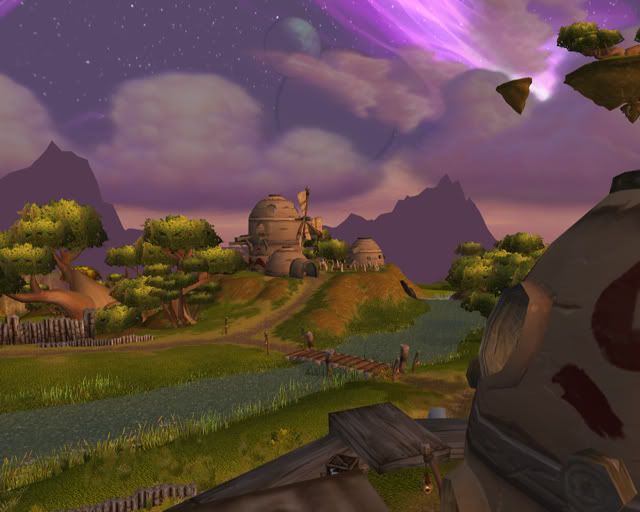
c). Culture. Most of the time, orc culture is built around war; and not around peace. Orc culture is often based on the Roman Legions from Tolkien's time. Instead of using Roman culture to define the orcs, I turned to Africa. Mostly because of, once again, World of Warcraft. The orc village of Garadar reminds me of African motifs. Thus, the reasons why the orcs of the Known Lands are associated with the African tribes. ;)

Tuesday, March 17, 2009

My Computer is fixed!

YAY!

My computer's faulty video card has been replaced and this is not going to happen again. No more faulty nVidia cards. nVidia has come through. I'm back, and I'm ready, baby! My Miles Gloriosus is back and ready to kick some proverbial butt for the raiding. Of course, I'm picking up my baby tomorrow.

NEXT: Humans in the Known Lands. Or, the Spawn of the Ancients!

Why Am I Not Online . . . .

I am usually online, typing away playing World of Warcraft, preparing my Miles Gloriosus for participation in raids. However, today I am not doing any such thing. Yesterday, my video card on my MacBook Pro had given out so I had to take into the Apple Store for service.

nVidia had created a batch of malfunctioning video cards. I got the card twice, so naturally Apple has vowed to replace the card with a better functioning video card. So that it won't happen again. I was going to post more on orcs, but I'll probably do that later.
Related Posts Plugin for WordPress, Blogger...