The Star Wars Saga has been one of the best series of movies that came out of Hollywood in the late 20th Century and part of the Early Twenty-first. The most important message of the Saga was the message about the Force.
If you remember the first movie, Episode 4, Obi-wan Kenobi introduced Luke Skywalker to the Force. He described the Force as an energy field generated by all living things. It surrounds us, penetrates us, and binds the Galaxy together and started Luke on his path on becoming a Jedi and facing the two Dark Lords of the Sith.
As the stories of Star Wars continued to expand, we learned much of the Jedi and the Dark Lords of the Sith, the Republic, the Sith Empire, and the Galaxy. Recently, last year, Star Wars: the Old Republic Massively Multiplayer Online Roleplaying Game (MMORPG) was released. This game answers most of the questions of the Jedi and the Sith. Where did they start? How did they come to be? What actually happened? However, watching on-line Lets Plays reveals something of the players of the game. More people played as Sith Lords or as Jedi than as Troopers, Smugglers, Bounty Hunters, and Imperial Agents.
Understanding Star Wars
Star Wars sets itself apart from Star Trek in the basic idea that the premise of both are incredibly different. Star Trek presents a positive view of Science and the Achievement of Man. Star Wars is a Spiritual, almost religious, Myth. Both are the brain children of two men. One was a police officer, the other was a racer. The second, George Lucas, was in a car accident while racing. According to his biography, George Lucas was in the hospital when he came to learn of the Force. The Star Wars movies presents his beliefs about the Force. A lot of people believe that the Force is fiction. However, in the twentieth Century, Science has been done before the Movies had ever come out, that may prove that the Force is an actual reality.
Doctor Riche and the Force
Doctor Riche was a German Scientist who made an interesting discovery. He practically discovered an energy that is present in all living things -- he called it the Orgone Energy. What he found was that the Orgone came in two flavors -- Positive Orgone and Deadly Orgone. Positive Orgone -- which he called POR -- can heal and cause growth in an organism if properly accumulated. Deadly Orgone causes Dis-Ease (disease) and sickness in an organism and can eventually kill.
When he published his discoveries and experiments with Orgone, Doctor Riche came under attack by a vicious smear campaign. He was eventually found guilty by an obscure health law, imprisoned, and his books burned. His life destroyed, this gentle scientist died in Prison. But the discoveries he has made with life and energy was so significant that Doctor Albert Einstein was impressed. Not impressed enough to endorse Doctor Riche, but impressed.
Since then, we have Photographic Proof of the Orgone Energy. It appears as a blue glow around Astronauts, Galaxies, the Earth, and organisms in the Earth. The Force is real enough. So, as the Force is real -- as in actual photographic proof, what does that make us?
The Vibrational Being
As humans (and star children, and indigo children, you know who you are) we are vibrational beings. We are capable of altering the vibrations of Energy -- the Force -- all around us to produce results. This is either a determined result or a subconscious result.
In the movies, Force sensitives were able to show that they can control the Force, they were able to show that they can alter the Force, and sense the Force. Luke Skywalker and Darth Vader could telekinetically move objects, see the future, and alter patterns in the Force to their desires. Even Darth Sidious was able to do this -- as he arrogantly bragged to Vader's son how everything transpired according to his desires.
Ironically, not many people know we can do the same. However, instead of telekinesis, and being our own seers, we alter the Force through creation. As vibrational beings, we alter Force patterns. However, to be able to do this, we also have to be beings of the Force ourselves.
In Episode 5 and the Episode 6 novelizations, both Yoda and Vader told Luke that we are luminous beings and not the crude matter that makes up our bodies. This implies that we are all apart of the Force, and therefore, connected to one another. This is the true message of the movies: that we are beings able to alter the Force. We are luminous, spiritual beings.
The Jedi and Sith, a Critique
One of the interesting things that came out of the movies is a new religion that has appeared on Earth. This religion is called the Jedi religion and it's been pieced together from the movies. However, I'd like to say that although the Jedi and Sith in the movies are on the right track, they have existed so long in that Galaxy that both have missed the mark as a Religion. Both Jedi and Sith are members of the same religion -- just that one side believes in strict monastic, or Aesthetic beliefs and the other indulges in the opposite.
What Happened on Tython
The MMORPG gets into what happened on Tython, the home planet of both Jedi and Sith, a little. From what is said on the Wookieepedia, those that followed Ashla and Bodan had a dichotomous disagreement over how the Force should be used. The Ashlar believed that strict control over one's passions is the key, while the Bodanists believed that unbridled emotion is the key to getting results. A fight broke out, and the result was a true schism. The Bodanists were eventually banished and the Ashlar, who became the Jedi, left the planet on their own accord, relocating on Coruscant.
The Bodan Jedi eventually found the Sith aliens and conquered them, becoming the Dark Lords of the Sith according to the Galactic Record. The Ashla Jedi simply became the Jedi. The two constantly clashed, but the two groups truly balanced one another. The Jedi can't exist without the Sith, it's impossible. If one group was destroyed, that group will eventually arise from the one who is victorious. So, the Galaxy was in balance because of the existence of both Jedi and Sith. However, both are wrong in their approach to the Force and the role of emotion.
I thought about what it would be like if Jesus Christ was born on Tython and how the Jedi and Sith would respond to his teachings. Jesus Christ, who would be the ultimate Force user, would probably put the Jedi Council and the Dark Council in a total tizzy. His teachings would bring both councils into an uproar as he probably would denounce both Sith and Jedi as hypocrites and taught the common people their secrets.
Jesus, a man of infinite love and compassion, would suffer death after their hands. Both the Jedi and the Sith would slay the Great Sage of Nazareth. So, I figure that there was probably a third group of Jedi on Tython, who strived to be one with the Living Force by neither denying emotion nor letting it run unbridled, but experienced emotion and were passionate enough to deliberately create from the Force.
Christianity and the Force
Most people don't understand that they are Children of the Force. However, all people on the Planet Earth has at least three fathers: the Father of our Intelligence, the Father of our Spirits, and our Earthly father make up the trinity that gives us our origins. Christians have a fourth father: Jesus Christ himself. All Christians -- whether baptized by proper authority or not, have taken upon themselves the name of Jesus Christ. But lets talk about these fathers, each in turn.
The First Father is our Earthly father. Our Earthly fathers have given us life by having sex with our mothers. When a father and a mother come together and become one flesh, they create new Life. Both must unite in this common purpose to create a body of Flesh and Blood so that we may experience Earth Life and learn from our experience. Through our Earthly father and mother, we are given a physical body so we can experience what we truly desire through our five senses -- Taste, Smell, Touch, Sight, and Hearing.
The Second Father is our Heavenly Father -- the Great Eternal. He is known by many names, but its most proper to call him Heavenly Father. The Jews call him Elohim, but in that, there is a strong problem. The word Elohim is plural. Our Heavenly Father is immortal, meaning that he has both Life Eternal -- a body of Flesh and Bones -- and Eternal Life. He is the father of our Spirit, or as the Psychologist would say, the father of our Consciousness. The process of creating Spirit bodies, however, is similar to creating a body of flesh and blood.
The Third Father is the Force itself. Our intelligence, our power and will to act, has to have an Origin. This is the Force, or more properly, the Holy Spirit. In ancient Hebrew the Holy Spirit is known as Ruach, which means wind, breath, mind, and spirit. We are all Children of the Holy Spirit. In a fit of Understanding Itself and seeking to be more, the Holy Spirit split a part of itself into infinite parts. These parts are us. All of us. Man, Animal, Plant, Mineral. All of us are a part of the Force or the Holy Spirit. Therefore, as a part of the Force, we are all connected to the Force, and through the Force, we are connected to each other. We are children of the Holy Spirit, and as such we are capable of having anything, doing anything, and being anything.
If we desire to lift an object without touching it, we can do so. If we desire to see the future and the past, we can do so. If we desire to leap high, cast Force lightning, and do other things beautiful, great, and terrible; we can do so. If we desire an abundance of goods, we will have them. If we desire to reject the message of Salvation, we can do so (and many have done so). The Force exists to grant our every desire, whether good or evil, bad or righteous, such desires are always granted by the Force.
The Fourth Father however, pertains to Christians. This fourth Father is Jesus Christ himself. As Christians, we have taken upon ourselves His name, and acknowledge Him to be the Father of our Salvation. Jesus Christ made it possible for us to come into Heavenly Father's presence. As Christians, we are to put our trust in Jesus Christ's sacrifice and live our lives according to how the Holy Spirit or the Force, directs us to live.
In this way, Jesus Christ is our Messiah, our Savior. He saved us from our sins, or our rebelliousness against the Holy Spirit. He saved us from an eternity of pain and suffering. Jesus also has another identity. Jesus, whose English name means NOTHING in Hebrew, was given the Hebrew name of Yeshua -- which is transliterated into English as Joshua. Yeshua, or Yahshua, means in Hebrew "Yahweh is Salvation."
This means that Jesus is Yahweh (pronounced "Yah-way"). This also means that Yahweh is Jesus. The God of the Old Testament, the God that commanded the Israelites to leave Egypt and to slay the Canaanites, is Jesus Christ of the new Testament. They are one and the same. When you speak of Yahweh, you are speaking of Jesus Christ. And when you are speaking of Jesus Christ, you are speaking of Yahweh. Jesus was crucified and was resurrected, meaning that he has a body of Flesh and Bone and is fully alive.
Jesus doesn't sleep, he is very aware of what is going on with the World and he has pleaded with His people in the latter days to repent and to believe upon Him and to forsake our vain quest for popularity and material things. Jesus has had enough with the wayward ways of His nation, and He will chastise His nation for our adulterous and slutty behavior. However, Jesus is full of infinite love and compass ion. He has sent a Prophet for those who want to live through his judgement of America, he will call those who will listen. These are His elect, and he will have them be prepared so he can have a nation of Priests and Priestesses, Kings and Queens once again.
In Summation
So to conclude the Treatise, the Force in Star Wars is an actual thing. It has been scientifically documented and experimented with by Doctor Wilhelm Riche. The Force is Orgone Energy, and there is photographic proof of the Force.
The Force is the father of our Intelligence. Because we are the Children of the Force, we are all connected to one another. We are also infinite as the Force is infinite, and we are capable of having anything, doing anything, and being anything we desire. We are truly the Children of God.
The Great Eternal, our Heavenly Father -- is the Father of our Spirits. The Spirit is the blueprint, or pattern, of our bodies. The Spirit gives our Intelligence definition and form. The Great Eternal, our Heavenly Father -- has a body of Flesh and Bones. Therefore, he was once a man liken unto our Earthly father. He was once mortal and had mortal children. Now he has an immortal body and has immortal children.
Our Earthly fathers are the fathers of our bodies. Our Earthly father, with the help of our Earthly mother, made it possible to for us to have a mortal body and to be able to experience Earth life. With a body we are capable of making manifest our desires, through the Force, into physical reality.
Our Father of our Salvation is Jesus Christ. As Christians, we have taken upon ourselves his name and promised not to be hypocrites -- saying one thing but doing another. Doing so is taking the name of Christ in vain. Vanity is a shallow thing when made manifest, especially as Christians. It is easier to be a Christian in vain, though -- than it is to be a Christian in reality. A vain Christian has the pride and popularity of the World. A real Christian is thought of as peculiar, strange, and weird by the World. Such a man or woman is laughed at, spit upon, thought of as crazy, weird, and eventually may find himself under physical persecution for his belief in Christ. He may even lose his life for the Father of his Salvation.
The Force is a real thing. We are real Children of the Force, or God. As such, we should do everything we can to Learn about ourselves, the reality of ourselves, and seek Atonement with God. We are to become one with God and eventually become as Exalted as the Great Eternal is.
Sunday, January 22, 2012

Tuesday, January 17, 2012
If I were to run Star Wars SAGA RPG
If I were to run the Stars Wars SAGA RPG, I'd set it during the Knights of the Old Republic Era -- the same as the current, and new Star Wars: The Old Republic Massively Multiplayer Online Roleplaying Game is set.
So, why STAR WARS SAGA?
Star Wars SAGA is the true 4th Edition of D&D. Really it is. Looking at the rules, it's easier to get. You've got five classes:
Jedi -- which covers the Jedi and the Sith.
Noble -- Star Wars nobles.
Scoundrel -- Han Solo
Scout -- Chewbacca (although his Scout role wasn't really all up on that. )
Soldier -- which covers Republic and Sith soldiers.
Next: you have feats and Talent Trees. The Talent Trees is where D&D 4e should have gone rather than use Powers set up in order to ease D&Ders into 4th Edition. In other words SAGA represents were 4th should have gone and 4th represents where 5th needed to go. By that time, we would be ready for 4th Edition as it stands.
But Alas, pathos, pathos, pathos.
So, why Star Wars: The Knights of the Old Republic?

KotR is the Setting of the Jedi Golden Age. Well, kinda. The Force was balanced by the Jedi and the Sith. Although to describe it as the Jedi Golden Age is laughable at best. Especially when I have the unnerving feeling that the Jedi will most probably try to kill Jesus Christ for taking the Jedi Secrets and teaching them to the common people.
The Brahmin Caste tried to do it when the Christ visited India. The Christ's only crime was to take the secret of the Brahmins and teach it to the Vayshas and the Untouchables. Then the Christ got kicked out of many places -- Athens, Alexandria, Persepolis, Rome . . . And the Shelahites finally crucified him. He didn't get kicked out of Britain, but he built the first version of Glastonbury church. Ahem.
Well, I would set the campaign during the Knights of the Old Republic. Player characters would be on the side of the Republic and fight the Sith Empire. Adventures would take them to Tython, to Coruscant, to Ord Mantell, and other lovely places in the Galaxy -- including Alderaan, Tatooine, and Corellia.
So, how does the MMO work?
Basically, it's based on the World of Warcraft model (a lot). In WoW, it's Horde vs. Alliance. In this case, its set in the KotR Aeon and it's Republic vs. Sith. Although in WoW, you can justify the Horde being good -- especially after the Horde has been cleansed by its blood taint and now they have two Paladin Orders -- the Blood Knights and the Sunwalkers to offset the Order of Argus and the Knights of the Silver Hand. In Star Wars it's not so simple.
Changing the Subject:
Although, in a fit, the MMO says you can set your own destiny by gaining Force points and Darkside points through certain choices. So it's possible to play a righteous Sith (although Ironically, you have to lie a bit to attain Righteousness among the Sith) and a wicked Jedi (which it makes sense that you have to lie and cheat to be WICKED among the Jedi). The problem is -- George tells us that the Sith are evil incarnate.
The Galaxy is very Dichotomous thanks to Ashla and Bodan. There is really no middle ground. So, what do you do? Gray out both sides. Corruption is in the Senate, and some of the Sith are actually good guys and they see the Empire as the way to spread law and order across the Galaxy. The only problem is --
All the Sith Lords are a bunch of backstabbing, half-brained, power hungry idiots who will sooner turn on each other or get their slaves to do their dirty work.
There are a total of 4 classes with their Dichotomy counter parts.
The Jedi Knight is opposed by the Sith Warrior.
The Jedi Consular is opposed by the Sith Inquisitor.
The Republic Trooper is opposed by the Imperial Agent.
And the Smuggler is opposed by the Bounty Hunter.
Advanced classes are these:
The Jedi Sage is comparable to the Priest in WoW. The Jedi Sage is about Force Healing and fighting purely with Ashla.
The Jedi Shadow has no comparison to a WoW class. The Shadows are consulars who are the James Bonds of the Republic. They wield double bladed lightsabers and have licenses to kill.
The Jedi Guardian is comparable to the Paladin in WoW. It's about protecting and dispensing Justice throughout the Republic and the Galaxy.
The Jedi Sentinel has no comparison to a WoW Class. They use the Force and they fight with two lightsabers, and they use the Force to exploit their enemies' weaknesses.
The Scoundrelous Smuggler is comparable to the Rogue in WoW.
The Gunslinging Smuggler is comparable to the Cowboy in all the Old West movies you used to watch. To get into the Gunslinging smuggler, you need to watch High Noon, The Shootist, and Support Your Local Gunslinger.
The Vanguard is comparable to the Warrior in WoW.
The Commando has no comparison in WoW, but if you have to compare it to a D&D class, the best way to compare it too is the ranger. The Commando is comparable to the U.S. Rodger's Rangers, who in the Revolutionary War, were a Crack Team of Elite soldiers of the Republic made up of rough and tumble Frontiersmen (and were one of the slights that turned General Arnold into a traitor).
The Power Tech bounty hunter specializes in using technology to his advantage. He has no comparable WoW class.
The Mercenary Bounty Hunter is the Sith Empire's answer to the Warrior Class in WoW.
The Juggernaut Sith Warrior is a Dark Paladin. Truly dark in every way, the Blood Knights -- although with a reputation for evil -- would find the Juggernaut to be a perversion of Paladin virtue.
The Marauding Sith Warrior is a highly aggressive Sith Lord that opposes Jedi Sentinels.
The Sith Sorcerer, an Inquistor that looks deeper into the Force -- is comparable to the WoW Warlock -- but not in every way possible. Some interesting parallels are the fact that they are also comparable to Shadow Priests in WoW.
The Sith Assassin are comparable to KGB Assassins in attitude. Maybe worse. They need no license to Kill. Wielding double bladed lightsabers, the Sith Assassin is something you don't want hunting you.
The Sniping Imperial Agent are comparable to snipers in Rainbow Six. The only comparable WoW Class is the Hunter.
The Operative Imperial Agent represent the Sith Empire's Impossible Mission Force. While the Republic relies on the Jedi Shadow to deal with impossible espionage missions, the Sith Empire is built on Lies, Secrets, and Intrigue. Thus it's fighting class -- the Imperial Agent -- is based on the WoW Rogue.
So, how do you put all this together in a Roleplaying Game?
The Jedi class represents Jedi Knights, Jedi Consulars, Sith Warriors, and Sith Inquisitors.
The Scoundrel class represents both Smugglers and Bounty Hunters.
The Soldier class represents the Republic Trooper, while the Scout class best serves the Imperial Agent. It's a little more complex than that. Bounty Hunters who are mercenaries are certainly Soldiers, while gunslinging Smugglers can certainly be Scouts.
The SAGA edition can certainly be used to replicate the ST:tOR MMO. Just remember that the SAGA game system and the MMO are based on different game systems (the d20 System vs. the WoW MMO system -- Advanced Classes get TALENTS!). You can't fully replicate one game with the mechanics of the other. However, with the RPG, you can go places were the MMO can't. The MMO is totally scripted -- in one Story, you are a Sith that gets involved with the Revanites in order to kill their leader and to destroy their religion. However in an RPG, you can get involved with the Revanites and not kill them but become their leader.
Kind of different way of doing things with the RPG than with the MMO.
So, why STAR WARS SAGA?
Star Wars SAGA is the true 4th Edition of D&D. Really it is. Looking at the rules, it's easier to get. You've got five classes:
Jedi -- which covers the Jedi and the Sith.
Noble -- Star Wars nobles.
Scoundrel -- Han Solo
Scout -- Chewbacca (although his Scout role wasn't really all up on that. )
Soldier -- which covers Republic and Sith soldiers.
Next: you have feats and Talent Trees. The Talent Trees is where D&D 4e should have gone rather than use Powers set up in order to ease D&Ders into 4th Edition. In other words SAGA represents were 4th should have gone and 4th represents where 5th needed to go. By that time, we would be ready for 4th Edition as it stands.
But Alas, pathos, pathos, pathos.
So, why Star Wars: The Knights of the Old Republic?
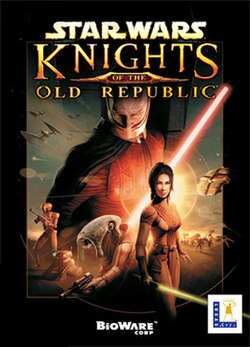
KotR is the Setting of the Jedi Golden Age. Well, kinda. The Force was balanced by the Jedi and the Sith. Although to describe it as the Jedi Golden Age is laughable at best. Especially when I have the unnerving feeling that the Jedi will most probably try to kill Jesus Christ for taking the Jedi Secrets and teaching them to the common people.
The Brahmin Caste tried to do it when the Christ visited India. The Christ's only crime was to take the secret of the Brahmins and teach it to the Vayshas and the Untouchables. Then the Christ got kicked out of many places -- Athens, Alexandria, Persepolis, Rome . . . And the Shelahites finally crucified him. He didn't get kicked out of Britain, but he built the first version of Glastonbury church. Ahem.
Well, I would set the campaign during the Knights of the Old Republic. Player characters would be on the side of the Republic and fight the Sith Empire. Adventures would take them to Tython, to Coruscant, to Ord Mantell, and other lovely places in the Galaxy -- including Alderaan, Tatooine, and Corellia.
So, how does the MMO work?
Basically, it's based on the World of Warcraft model (a lot). In WoW, it's Horde vs. Alliance. In this case, its set in the KotR Aeon and it's Republic vs. Sith. Although in WoW, you can justify the Horde being good -- especially after the Horde has been cleansed by its blood taint and now they have two Paladin Orders -- the Blood Knights and the Sunwalkers to offset the Order of Argus and the Knights of the Silver Hand. In Star Wars it's not so simple.
Changing the Subject:
Although, in a fit, the MMO says you can set your own destiny by gaining Force points and Darkside points through certain choices. So it's possible to play a righteous Sith (although Ironically, you have to lie a bit to attain Righteousness among the Sith) and a wicked Jedi (which it makes sense that you have to lie and cheat to be WICKED among the Jedi). The problem is -- George tells us that the Sith are evil incarnate.
The Galaxy is very Dichotomous thanks to Ashla and Bodan. There is really no middle ground. So, what do you do? Gray out both sides. Corruption is in the Senate, and some of the Sith are actually good guys and they see the Empire as the way to spread law and order across the Galaxy. The only problem is --
All the Sith Lords are a bunch of backstabbing, half-brained, power hungry idiots who will sooner turn on each other or get their slaves to do their dirty work.
There are a total of 4 classes with their Dichotomy counter parts.
The Jedi Knight is opposed by the Sith Warrior.
The Jedi Consular is opposed by the Sith Inquisitor.
The Republic Trooper is opposed by the Imperial Agent.
And the Smuggler is opposed by the Bounty Hunter.
Advanced classes are these:
The Jedi Sage is comparable to the Priest in WoW. The Jedi Sage is about Force Healing and fighting purely with Ashla.
The Jedi Shadow has no comparison to a WoW class. The Shadows are consulars who are the James Bonds of the Republic. They wield double bladed lightsabers and have licenses to kill.
The Jedi Guardian is comparable to the Paladin in WoW. It's about protecting and dispensing Justice throughout the Republic and the Galaxy.
The Jedi Sentinel has no comparison to a WoW Class. They use the Force and they fight with two lightsabers, and they use the Force to exploit their enemies' weaknesses.
The Scoundrelous Smuggler is comparable to the Rogue in WoW.
The Gunslinging Smuggler is comparable to the Cowboy in all the Old West movies you used to watch. To get into the Gunslinging smuggler, you need to watch High Noon, The Shootist, and Support Your Local Gunslinger.
The Vanguard is comparable to the Warrior in WoW.
The Commando has no comparison in WoW, but if you have to compare it to a D&D class, the best way to compare it too is the ranger. The Commando is comparable to the U.S. Rodger's Rangers, who in the Revolutionary War, were a Crack Team of Elite soldiers of the Republic made up of rough and tumble Frontiersmen (and were one of the slights that turned General Arnold into a traitor).
The Power Tech bounty hunter specializes in using technology to his advantage. He has no comparable WoW class.
The Mercenary Bounty Hunter is the Sith Empire's answer to the Warrior Class in WoW.
The Juggernaut Sith Warrior is a Dark Paladin. Truly dark in every way, the Blood Knights -- although with a reputation for evil -- would find the Juggernaut to be a perversion of Paladin virtue.
The Marauding Sith Warrior is a highly aggressive Sith Lord that opposes Jedi Sentinels.
The Sith Sorcerer, an Inquistor that looks deeper into the Force -- is comparable to the WoW Warlock -- but not in every way possible. Some interesting parallels are the fact that they are also comparable to Shadow Priests in WoW.
The Sith Assassin are comparable to KGB Assassins in attitude. Maybe worse. They need no license to Kill. Wielding double bladed lightsabers, the Sith Assassin is something you don't want hunting you.
The Sniping Imperial Agent are comparable to snipers in Rainbow Six. The only comparable WoW Class is the Hunter.
The Operative Imperial Agent represent the Sith Empire's Impossible Mission Force. While the Republic relies on the Jedi Shadow to deal with impossible espionage missions, the Sith Empire is built on Lies, Secrets, and Intrigue. Thus it's fighting class -- the Imperial Agent -- is based on the WoW Rogue.
So, how do you put all this together in a Roleplaying Game?
The Jedi class represents Jedi Knights, Jedi Consulars, Sith Warriors, and Sith Inquisitors.
The Scoundrel class represents both Smugglers and Bounty Hunters.
The Soldier class represents the Republic Trooper, while the Scout class best serves the Imperial Agent. It's a little more complex than that. Bounty Hunters who are mercenaries are certainly Soldiers, while gunslinging Smugglers can certainly be Scouts.
The SAGA edition can certainly be used to replicate the ST:tOR MMO. Just remember that the SAGA game system and the MMO are based on different game systems (the d20 System vs. the WoW MMO system -- Advanced Classes get TALENTS!). You can't fully replicate one game with the mechanics of the other. However, with the RPG, you can go places were the MMO can't. The MMO is totally scripted -- in one Story, you are a Sith that gets involved with the Revanites in order to kill their leader and to destroy their religion. However in an RPG, you can get involved with the Revanites and not kill them but become their leader.
Kind of different way of doing things with the RPG than with the MMO.
Friday, January 13, 2012
What I want 5e to do.
Simple. I want support, however measly that is, for interesting backgrounds that makes a character live and breathe.

Last night, one of my players had fun with Central Casting. It was Paul Jaquays' book on generating character backgrounds for fantasy characters, first edition. We spent more time on building his character's father's career than his.
As a result, we got an interesting background for a nezumi or ratkin, or skavin character. The results were simple. Here's a conversation between a 4e character and this Pathfinder Nezumi.
4e Character: "Hello, happy world! Hello, happy tree, hello happy bunny, hello happy squirrel!"
Pathfinder Character (who looks like a rat): "Hello, clueless one."
4e Character: "Oh hi! Can we be friends?"
Pathfinder Nezumi character: "Maybe. Tell me about yourself."
4e Character: "Well, my name's George. I'm a house Deneith Mercenary and I fought in the Last War."
Pathfinder Nezumi Character. "Well, you're certainly acting pretty one dimensional, what was your military experience?"
George Deneith (4e): "I don't know. I'm just a veteran of the Last War. But I have Intimidate as an associated skill!"
The Nezumi does a face palm. George. "What?"
"Your player is a gamist, right?"
"Yes."
"Thought so. My player took the trouble generating my background, but my exploits pale in comparison to my father's."
"Oh? What happened?"
"First of all, we were kicked out of Nezumi lands for being different. My father found work as a fisherman and joined the Home Guard so we can have some money. At first, he saw little action, ran away from some, and joined up to prove himself.
"There was a major war with a neighboring kingdom and his actions got him promoted to corporal. There was many battles, and he was finally decorated for his bravery and became an officer. He was so good that he signed on for another five years and was assigned to special forces -- in the Ranger division. Another war broke out with Drow and he kills one of their generals! There were major battles, where he lost most of his forces, but he proved himself and became a knight! A KNIGHT!
"There was another war that broke out, and his stint was increased. I never saw him but I knew he was doing well. When he returned, he taught me some of his swordcraft, and taught me sword fighting the soldiering way. Finally, there was a major coup on our kingdom and he led it. He slew the king and took over the kingdom."
George looked at the Nezumi with his jaw open.
"And you think you have problems. I've been adventuring in my father's shadow ever since!"
The difference between 4e and 3e is that 4e has little Roleplaying support. You get backgrounds and you get themes, so what? Tell me more about your character. Give him a reason that he's alive, that he fought in the Last War and returned a hardened veteran. After all, Roleplaying is ROLEPLAYING! 4e has little of that.
If you want to pick up a character sheet, write down some figures, and play; there's nothing wrong with that. Character creation in 5e at the start should be quick and easy and fun. However, if you want depth with your character, there should be options to build an interesting background for your character. Some of us don't want to pick up and play, we want to know everything about that character so we can just get started.
It's as simple as that.

Last night, one of my players had fun with Central Casting. It was Paul Jaquays' book on generating character backgrounds for fantasy characters, first edition. We spent more time on building his character's father's career than his.
As a result, we got an interesting background for a nezumi or ratkin, or skavin character. The results were simple. Here's a conversation between a 4e character and this Pathfinder Nezumi.
4e Character: "Hello, happy world! Hello, happy tree, hello happy bunny, hello happy squirrel!"
Pathfinder Character (who looks like a rat): "Hello, clueless one."
4e Character: "Oh hi! Can we be friends?"
Pathfinder Nezumi character: "Maybe. Tell me about yourself."
4e Character: "Well, my name's George. I'm a house Deneith Mercenary and I fought in the Last War."
Pathfinder Nezumi Character. "Well, you're certainly acting pretty one dimensional, what was your military experience?"
George Deneith (4e): "I don't know. I'm just a veteran of the Last War. But I have Intimidate as an associated skill!"
The Nezumi does a face palm. George. "What?"
"Your player is a gamist, right?"
"Yes."
"Thought so. My player took the trouble generating my background, but my exploits pale in comparison to my father's."
"Oh? What happened?"
"First of all, we were kicked out of Nezumi lands for being different. My father found work as a fisherman and joined the Home Guard so we can have some money. At first, he saw little action, ran away from some, and joined up to prove himself.
"There was a major war with a neighboring kingdom and his actions got him promoted to corporal. There was many battles, and he was finally decorated for his bravery and became an officer. He was so good that he signed on for another five years and was assigned to special forces -- in the Ranger division. Another war broke out with Drow and he kills one of their generals! There were major battles, where he lost most of his forces, but he proved himself and became a knight! A KNIGHT!
"There was another war that broke out, and his stint was increased. I never saw him but I knew he was doing well. When he returned, he taught me some of his swordcraft, and taught me sword fighting the soldiering way. Finally, there was a major coup on our kingdom and he led it. He slew the king and took over the kingdom."
George looked at the Nezumi with his jaw open.
"And you think you have problems. I've been adventuring in my father's shadow ever since!"
The difference between 4e and 3e is that 4e has little Roleplaying support. You get backgrounds and you get themes, so what? Tell me more about your character. Give him a reason that he's alive, that he fought in the Last War and returned a hardened veteran. After all, Roleplaying is ROLEPLAYING! 4e has little of that.
If you want to pick up a character sheet, write down some figures, and play; there's nothing wrong with that. Character creation in 5e at the start should be quick and easy and fun. However, if you want depth with your character, there should be options to build an interesting background for your character. Some of us don't want to pick up and play, we want to know everything about that character so we can just get started.
It's as simple as that.
Thursday, January 5, 2012
5th Edition
well, who wants to talk about 5th Edition Dungeons and Dragons now that Monte Cook is working on it?
5e. . .
5e . . .
5e!
5e. . .
5e . . .
5e!
Stargate SG-1 RPG
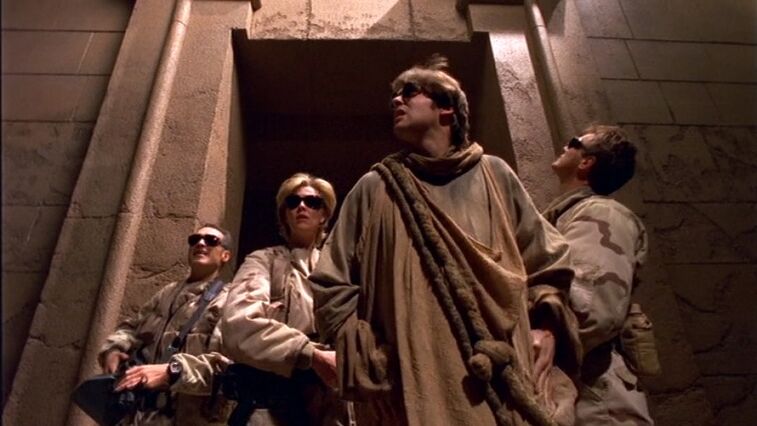
At the end of the book is a list of possible Crossovers:
Dragonstar, Mindshadows, Nyambe, and Seven Seas were all suggested as possible crossovers. In fact, Dragonstar could be a replacement for the Goa'uld and the Ori. In fact, the game suggests crossovers. So, my mind went a thousand miles an hour and put together the following possibilities.
The Dragon Empire -- after the Goa'uld and the Ori were defeated, the Dragon Empire becomes the new problem. With Quesamet and Asamet -- the Tau'ri have to deal with dragons in the Milky Way Galaxy and the Sagittarius Dwarf Elliptical Galaxy that has been intersecting with the Milky Way. The dragons are like the Goa'uld -- they become masters of all they see.
The two empires have been competing and now the Dragon Empire is expanding. Can the Tau'ri stop their expanse?

Forgotten Realms and Hârn: Both Faerun and Harn were linked to Earth. Instead of what the writers intended, I would use Stargates to link both Harn and Shavarash (Faerun) to Earth. The Stargate would be in an Earthmaster (Ancient) site on Harn (Melderyn) and on the Forgotten Realms, the Stargate is located on the Chessenta and Unther border.
The Goa'uld used the Stargate to seed Faerun with Orcs and Elves along with humans from Earth. Supreme System Lord Ra was defeated by the Goa'uld System Lord Gruumsh once, but Gruumsh was defeated by the Goa'uld System Lord Correllon Larethan. The Goa'uld are also the Imaskari, with most of the Imaskari fighting chaste being Jaffa.
Eberron: Eberron has a STARGATE! Built there by the Ancients, the Goa'uld seeded Eberron with humans from Earth -- taken from Troy or Greece. The Stargate is located in Sarlona, specifically somewhere in Riedra.
Yrth: The planet of GURPS: Banestorm has a stargate. The stargate is located in the island nations.
Plus, hundreds of other possibilities! You can do anything with a Stargate campaign. The possibilities are endless!
Friday, December 30, 2011
The Creation of the Earth

What really happened with the Creation of the Earth? Did it happen by Accretion, or was their another method? Lately, new information about the Earth has fallen into our hands. First of all, we do know that the Earth is hollow.
There is a great many witnesses to the fact that the Earth is hollow. From Admiral Bird's flight, to a heathen Scandinavian, to visitors from the Hollow Earth. They are all consistent. There is a "sun" of sorts in the inner Earth and there is no horizon. It's bright, as bright as it is up here. And that the "sun" of sorts provides light to the inhabitants of the Earth.
Also, information coming from the Space Age completely challenges the assumptions that gravity is in charge of everything. From Dark Matter, to Dark Energy, to Dark Forces, the theory of Relativity used to govern the Universe has become something of a cart before the Horse. It has gotten so bad that those who follow the Big Bang Theory have become little more than Astrologers. They have created a religion where Intellect is worshipped and that the Universe was started by the Big Bang and that there will be a big crunch afterwords.
Lately, however, there comes along another Theory. This theory is the Electric Universe Theory. The Electrical Universe theory is pretty old. It really started in the Early 20th Century. It's the theory that Electromagnetism is the dominate force in the Universe and that gravity is basically the ashes of this force. So, what does this have to do with the Creation of the World?
If you notice, there is a "sun" at the core of the Earth. This "sun" is made of plasma. The core of the Earth isn't solid iron, it's plasma. And that the land it shines on is abundant and rich. So, if the inner core is plasma, what does that tell you about the Creation of the Earth? Are we interpreting Genesis in correctly?
The Book of Abraham expounds upon the Creation of the Earth. Abraham, the father of the Israelite Nation and father of a multitude of nations (the U.S.A., England, France, Germany, Switzerland, Georgia, etc.), was given an account of the Creation of the Earth. The entire account is in Chapter 4, verse 1.
"And the Lord said: Let us go down. And they went down at the beginning, and they -- that is the Gods -- organized and formed the Heavens and the Earth."
So, those who took part in the Creation of the Earth organized and formed the Earth. The Earth was brought into a paradisiacal state, and that Man was brought on the Earth to till the ground and transform it into a Celestial Kingdom.
So, lets look at the words organize and form.
or·gan·ize (ôr g g -n -n z z ) )v. or·gan·ized, or·gan·iz·ing, or·gan·iz·es v.tr. 1. To put together into an orderly, functional, structured whole. 2. a. To arrange in a coherent form; systematize: organized her thoughts before speaking. b. To arrange in a desired pattern or structure: "The painting is organized about a young reaper enjoying his noonday rest" (William Carlos Williams). 3. To arrange systematically for harmonious or united action: organize a strike. See Synonyms at arrange. 4. a. To establish as an organization: organize a club. See Synonyms at found1. b. To induce (employees) to form or join a labor union. c. To induce the employees of (a business or an industry) to form or join a union: organize a factory. |
and now Form.
| form (fôrm) n. 1. a. The shape and structure of an object. b. The body or outward appearance of a person or an animal considered separately from the face or head; figure. 2. a. The essence of something. b. The mode in which a thing exists, acts, or manifests itself; kind: a form of animal life; a form of blackmail. 3. a. Procedure as determined or governed by regulation or custom. b. A fixed order of words or procedures, as for use in a ceremony; a formula. 4. A document with blanks for the insertion of details or information: insurance forms. 5. a. Manners or conduct as governed by etiquette, decorum, or custom. b. Behavior according to a fixed or accepted standard: Tardiness is considered bad form. c. Performance considered with regard to acknowledged criteria: a good jump shooter having an unusual form. 6. a. Proven ability to perform: a musician at the top of her form. b. Fitness, as of an athlete or animal, with regard to health or training. c. The past performance of a racehorse. d. A racing form. 7. a. Method of arrangement or manner of coordinating elements in literary or musical composition or in organized discourse: presented my ideas in outline form; a treatise in the form of a dialogue. b. A particular type or example of such arrangement: The essay is a literary form. c. The design, structure, or pattern of a work of art: symphonic form. 8. a. A mold for the setting of concrete. b. A model of the human figure or part of it used for displaying clothes. c. A proportioned model that may be adjusted for fitting clothes. 9. A grade in a British secondary school or in some American private schools: the sixth form. 10. a. A linguistic form. b. The external aspect of words with regard to their inflections, pronunciation, or spelling. 11. a. Chiefly British A long seat; a bench. b. The resting place of a hare. 12. Botany A subdivision of a variety usually differing in one trivial characteristic, such as flower color. v. formed, form·ing, forms v.tr. 1. a. To give form to; shape: form clay into figures. b. To develop in the mind; conceive: form an opinion. 2. a. To shape or mold (dough, for example) into a particular form. b. To arrange oneself in: Holding out his arms, the cheerleader formed a T. The acrobats formed a pyramid. c. To organize or arrange: The environmentalists formed their own party. d. To fashion, train, or develop by instruction or precept: form a child's mind. 3. To come to have; develop or acquire: form a habit. 4. To constitute or compose a usually basic element, part, or characteristic of. 5. a. To produce (a tense, for example) by inflection: form the pluperfect. b. To make (a word) by derivation or composition. 6. To put in order; arrange. |
So those involved had organized, or arranged the materials of the Earth -- and gave it form -- a shape. Because of the core of the Earth is plasma, it means basically that the Earth was organized and formed from Plasma. In every case, those involved waited until they were obeyed.
So, was the planet composed in nothing around the Sun, Sol? Early human traditions and beliefs say that wasn't the case. Early astronomer priests among the Egyptians, the Babylonians, and the Greeks all held something in high regard: they called this Ra, or Shamash, or Helios -- or even Chronos or Saturn. So, like a ship isn't built without a shipyard -- the Planet wasn't built without a shipyard.
Those who were involved in the Creation of this Earth built the planet in the Planet Saturn -- Saturn was the shipyard in this case. And like every ship, there was a Christening and a Launching of this planet from the Sun, Saturn. Everything was prepared. The planet Earth was bathed in Saturn's Corona. On the Earth, the animals and plants (and humans) were subjected to a soft twilight of red. In the Earth, however, the plasma core had shined brilliantly allowing the plants and animals that were set there -- including Man -- to be subject to the entire spectrum. However, everything was eventually set up to fall.
Abraham goes into the same detail as the Genesis account, but we turn to Genesis. According to Genesis, there was light, and the light was divided from the Darkness. It is also interesting that the Sun, Sol, appeared on the Fifth Day of Creation rather than the first. So, what can we gain from this?
Scientifically, to stay within what Human Testimony has said over the years and to ignore the theory of Creation by Accretion, it leaves us with one alternative. The Earth and Saturn were captured by Sol!
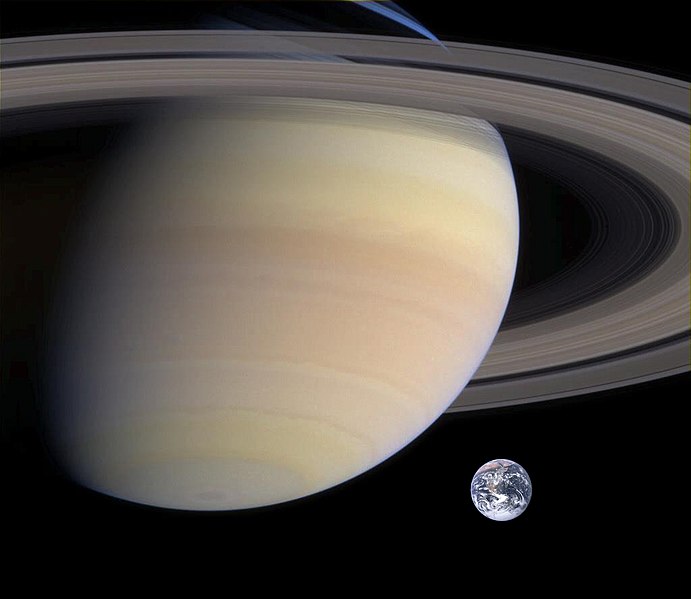
First Day of Creation -- the Solar Wind assaults Saturn's Corona, blowing it away literally. The first sign was a brilliant light. God declared that this light was good, and the division is marked by Twilight at daybreak and at sundown. The darkness was called night, and the light was called day.
In the Second Day of Creation, the waters were gathered together to form an ocean or Sea, and the dry land appeared. Well, since Man had saw this happening, there had to be land on the Earth already. So, again, this is symbolic of what actually happened. The clearing of the Atmosphere is the best candidate.
On the Third Day, the atmosphere of the Earth had grown transparent. At first, the Atmosphere was dominated by a thick cloud cover. Not as thick as the Atmosphere of Venus, but thick enough to obscure the stars from view. On the third day, humans could see stars and nebulae. They could also see the first sun, the planet Saturn. The Planet Saturn was given the role of being in charge of time.
The lord said the Sun, Sol, was to rule the day and that the Moon, Luna, was to rule the night. Suppose if you were to transpose Moon with Saturn, you will get a better understanding of what ruled the night. According to the fifth and sixth days of creation, the animals and plants were brought forth abundantly on the Earth and man came to till the ground.
When did the Creation actually happen?
A. Presumptly after the Age of Virgo and at the beginning of the Age of Leo.
Q. Why are you using the Zodiac to keep time?
A. Because the Zodiac was placed in the Heavens to help us with the roll of years. This has nothing to do with Astrology rather than just time keeping. Each sign of the Zodiac has an "age" about 2,000 years. To find out what Age we are in, you just track which sign the sun rises in during the Vernal Equinox. We are currently in the Age of Pisces -- the Fish -- and are currently moving into the Age of Aquarius, or the water bearer. To ride through the full Precession of the Zodiac takes about 26,000 years.
Q. Are you equating Saturn with Kolob?
A. Yes, actually. Saturn is Kolob. Although it can be shocking to most Mormons since my dad bellowed that Kolob is actually close to God and that God isn't anywhere close like Saturn. However, if one takes a look at the scriptures intelligently and take human testimony immemorial into account, one has to come to the conclusion that Saturn is Kolob.
One revolution of Kolob is liken unto a day to the Lord. Or a thousand years. Saturn has an orbit of about 30 years. The polar revolution of Saturn hasn't been measured. Now it takes 26,000 years for the poles of the Earth to revolve one full circle. Perhaps Saturn's poles are much more energetic and only take a thousand years to revolve. Who really knows?
Q. Why haven't the Brethren (Thomas S. Monson and the rest) said anything about this?
A. They don't know. They just plainly don't know.
R. But they are prophets, they are supposed to tell us these things.
A. Would it change anything if they had? You can bring an Atheist to the Fountains of Truth, but you can't make him drink. If Thomas S. Monson knew what was going on, do you really think that he would tell us? Joseph Smith understood things that if he told the brethren, they would immediately turn on him and kill him. If Thomas S. Monson is a true prophet, he would be urging us to prepare for the Second Coming in a physical sense and prepare us to live in a Zion Society.
He can't expound on the doctrine in the Temple because it's too urgent now to prepare to survive to the Second Coming. Assuming that he does receive revelation and talks and walks with God (his talks never change, it's all the same sleeping gas. I have never heard anything edifying from Thomas S. Monson, his talks are about stroking the ego and making us feel good -- I had to turn to other sources to find the truth I so crave). This has been revealed to the World through other means than the Temple. So this means that we must have rejected the knowledge.
Q. How do you know that the Core of the Earth is plasma?
A. I haven't been to Agartha or the city called Eden, so I can't really give a testimony that what I said is true. I only have the testimony of others to go on. I missed an opportunity to go. I should have signed on board, but then I wouldn't be writing this blog because I most likely won't be connected to this internet. (Some people would probably say: "You should have gone!")
Q. Is the Earth truly hollow?
A. It has to be. When it was in the great constellation of planets, the Earth vibrated with sound frequency singing "eeeeaaaaooooaaaaeeeee," which is the Name of God. This is the music of the Spheres. You can't get such a beautiful sound with a perfectly solid sphere -- but you can get one from a hollow sphere. A hollow sphere acts as a sound speaker. A solid sphere acts as a buffer.
Q. How does Gravity work with a hollow sphere?
A. I don't know. A scientist named Rodney Cluff can explain this one better.
If you have any other questions, leave them in the comments section.
Thursday, December 15, 2011
My Impression of Skyrim

Skyrim is probably the best Fantasy CRPG that has ever been produced. You still don't Roleplay as well as you could around the table, on open RPG, or any other virtual table, but Skyrim has the best engine for generating characters for a computer for a 1 player CRPG.
Not an MMO, Skyrim is the next generation in Fantasy CRPGs. Based off of concepts made for Fallout 3 and Fallout: New Vegas, Skyrim is not based on Dungeons and Dragons, or it's leveling system, or anything of that nature. Based on watching playthroughs on Youtube (which, if Anonymous has his way, will be illegal even though they are protected by the Fair Use Doctrine) when you create a character, you are no longer putting him in the straightjacket of a class.
Nay, for a one player CRPG, the straightjacketing of classed-based play makes absolutely no sense. When you play a game like Skyrim or Morrowind, you should be able to be immersed and given the chance to do anything you like. Pickpockets, learn some martial arts, or some magic.
As you level, specializations are handled by picking up perks, which grant you certain abilities (if you play 3e or 4e, think of perks as FEATS or POWERS). Some perks allow you to duel wield spells and weapons. Others allow you to summon more effectively, power up your spells, or block attacks more effectively, or be better at lock picking.
As you specialize in perks, you create your character's speciality. Play a warrior? specialize in weapon and blocking perks. Play a mage? Specialize in the schools' of magic perks, play a rogue? You can specialize in perks that allow you to sneak around, lock picks, and pickpocket. Play a knight? specialize in weapon and armor perks along with speech craft. Play a spellsword? Specialize in Armor, a chosen 1 handed Weapon of your choice, and blocking while you specialize further in Destruction, Alteration, and Restoration. Play a scholar? Specialize in lock picking, speech craft, mercantile, and possibly 1-handed weapon perks. Play a ranger? Specialize in Archery. Play a certain Dark Elf duel wielding 2 sabers? Make him and get the Dual Wielding perk in 1-handed weapons, need you ask?
Anything is possible. Even a pugilist. When you create a character, you just input your name and race, customize what you look like and have a blast.

Main Quest
In the main quest, you play a chosen of Akatosh. As a Chosen, you are one of the Dragonborn, a mortal who is capable of absorbing the memories and knowledge of a dead dragon. So, you aren't some half dragon that runs around looking like a human with a dragon's head on top covered in scaly skin. You are either human, elf, orc, kitty, or argonian that has this power.
It is your job to free Skyrim of the terrible evil that is Alduin the World Eater. Alduin, an ancient Dragon, has been awakening his children from their long sleep in pursuant of goals of his own. Along the way, you will learn the ancient language of the dragons in order to cast dragon magic, or shouts. You must do this order to cast Alduin back into the demonic world of Oblivion. Along the way you will gain both allies as well as make enemies. Some deserved, some undeserved.
Side Quests
Side Quests include:
* The Whitecloaks and the Imperial Legion, which gets you embroiled in the regions politics.
* The Companions -- which may turn you into a Werewolf.
* The College of Winterhold -- which is magic based and deals with the Lore of Magnus and the Psijic Order (who are a bunch of psions that have laid low all these years).
* The Den of Thieves called the Thieves Guild.
* The Dark Brotherhood that specialize in murder as a profession.
* The Bards College -- why not go learn how to sing?
There are the usual daedric quests, the divine quests, and quests related to the Forsworn. The Forsworn aren't as bad as it sounds, but it looks like they are bretons who settled in Skyrim anciently. There are the usual main city quests and village quests. And a few miscellaneous quests. You can even get married.
Like Oblivion, you can mod for the game. While body replacers haven't been made yet, you can get retextures -- just for females so far.

Q. What do you think of this Marriage in the Game Business?
I think it's great! Marriage has been missing from the Elder Scrolls game series since FOREVER! It isn't perfect, but it's wonderful that they are pushing this principle in the game. Marriage celebrates the coming together of two (or more people in the case of Polygyny and Polyandry) and the principle of union of the sexes. The main good thing about marriage in the game is that your character can have a traditional marriage or a gay marriage, or an interracial marriage or an interracial gay marriage. Whether this scares people away from the game matters little, the game celebrates something good and pure.
Q. What is wrong with marriage in the game?
Currently only one Temple, the Temple of Mara, performs marriages. All temples of all faiths should perform marriages.
Secondly, in the case of all, certain faiths have the right to marry certain couples. A priest of Akatosh won't perform interracial or gay marriages for instance. While a priestess of Dibella should be able to perform polygamous marriages and gay marriages, for example (as Dibella is the real Goddess of Beauty and the tender Passions).
You can marry anyone of any race except Khajiits. A Kahjiit should be able to be married in the game -- both a male and a female for completeness. It casts a bad light on the race, as to say: "all Kahjiits are promiscuous." Which isn't fair to the race as a whole. It's a gross generalization. While cats in real life are promiscuous does not mean that a race of living, breathing humanoid cats should be. This means that a PC Khajiit won't be forced to marry into an interracial relationship if he or she doesn't want to.
Q. Any sex in the game?
You will be able to have sex with your spouse when someone can craft some custom animations that shows two people performing this sublime and beautiful activity. Sex never was bad, but all sex is good and to see it performed in game between your character and his/her spouse would be a lovely thing in deed. I can see fellow Christians decrying this:
- a. If sex is bad, then why would the Creator endorse the activity and create Sexual Reproduction in the first place?
- b. Yahweh/Yahshua Messiah has placed sex in certain bounds in order to teach us certain truths.
- c. A homosexual relationship is not good for the race as a whole (since a couple consisting of two males or two females can't reproduce the species), but is good for the individuals who are in love. Sex is never wrong as it produces positive emotions and positive energy between two people -- no matter who the two people are.
- d. Yahweh/Yahshua Messiah decries homosexual activity because He desires Israel to be a nation of Priests and Priestesses, Kings and Queens. He told the Israelites (and incidentally, all peoples now living in America, the United Kingdom, France, Spain, the Netherlands, Scandinavia, and parts of Italy along with Japan, parts of India, and Israel) to punish known, unrepentant homosexuals with a death penalty in order to remove the evil from Israel. A homosexual community that is active politically and culturally within a nation leads to national spiritual cancer.
- e. It is the purpose of this game's creators to make Tamriel as living and as breathing as possible as within the computer. A large number of people play this game, and many are homosexual. It does not make sense for Bethesda to disallow gay marriages within the game, since Marriage itself is a living principle to be enjoyed by all -- black, brown, red, yellow, or white. Straight or gay.
- f. Consequences, good and bad, comes with all choices. Making choices that draw you closer to the Father and the Son brings unpopularity. Making choices that draw you closer to the World brings popularity.
- g. If you are gay and you marry someone of the same sex, then you must be able to accept the Consequences that come with that. Increased risk of homocide, increased incidence of parasites, and other nasty diseases comes with being in a homosexual relationship. However, as a homosexual you will be doggone popular today. Homosexuals are so popular that you can go to Walt Disney Company parties and see at least one. And Walt Disney says they are the family friendly company, go figure.
- h. Certain ordinances of Marriage is reserved for those who want to be Kings and Queens, Priests and Priestesses. This type of marriage is not reserved for the homosexual couple, nonetheless, the ability to get married is not withheld from them by the Spirit (who trumps the Father and the Son in almost every matter). The reason why Sealing Ordinances are withheld from Homosexual couples is because the Son's House is a House of Order. The Title 'God' is reserved for those hetrosexual couples who want be as the Father and the Son, to create a family of spiritual beings that will gain their own bodies through sexual reproduction as immortals, and then to give them physical bodies as mortals. A homosexual couple is unable to sexually reproduce so their making into Kings or Queens would be fruitless.
- h. In Skyrim, you are roleplaying an alter-ego (or a CRPG's definition of "Roleplaying"); so the Consequences are what you can imagine. (the game creates a world without many consequences. Sure, you can go to jail, but the game is only limited for a reason.) Skyrim isn't a perfect world for anyone, but it's the best that many can come up with so far. Especially with the addition of Marriage.
Inspite of the problems, Marriage is a step in the right direction that makes Skyrim a more complete living breathing world. Skyrim isn't a perfect world, the world here on Earth is a perfect world.
Tuesday, December 13, 2011
The Case for Open Access in China (and indeed, everywhere)
From QuestionCopyright.org:
 It is amazing how the Internet makes it possible for people to connect with one another in ways that were not possible a decade ago. Jennifer Howard published an article "What you don't know about copyright and should" in The Chronicle of Higher Education in May 2011. As a research student on copyright from China, I was naturally drawn to this piece and quickly added a comment suggesting that any introduction to copyright would be considered incomplete without a few words on the free culture movement such as Open Source Software and Creative Commons. My opinion was echoed by Mr. Karl Fogel at QuestionCopyright.org, who later invited me to write about "how people feel about copyright in China, especially focusing on the general public's attitude toward copying and sharing and attribution" for QuestionCopyright.org. This article is a result of that fortuitous interaction between Karl and me, which would have been unthinkable if access to Ms. Howard's article were restricted by copyright. This anecdote illustrates the first point I want to make about copyright in general: the copyright regime restricts the distribution of creative works and stifles the conversation that creative works may generate. The Internet has emerged as an antidote to this restriction, as Karl and I could read and discuss Ms. Howard's article online and work together for new articles on the same topic.
Earlier this year, I ran into a book named "Uncommon Sense- Economic Insights, from Marriage to Terrorism" when browsing Douban.com, one of the most popular social networking sites on books, movies and music for young people in China. Authored by two leading scholars from America, the Nobel economist Gary Becker and U.S. Court of Appeals Judge Richard Posner, the book was translated into Chinese by a leading publisher and received a high rating from users at Douban.com. But the Douban users also grudged about the relatively high price of the book- RMB 56 (the monthly stipend for a PhD student in China is about RMB 1,500). A Google search quickly located for me a free e-copy of the book, which was uploaded by some netizens to Sina.com, a major web portal in China. The e-copy I got was the original English version, which I could read without worrying about the errors or loss of meaning in translation.
More importantly, I found one essay in the English version that has been expurgated from the translation- "Google in China" discussing how Internet companies like Google deal with censorship of Internet by the Chinese government. It was ironic that the article was knocked out even though both authors expressed certain degree of sympathy with the Chinese government's censorship policies for the sake of social stability. Yet, this removed article on censorship illustrates a paradoxical situation in which many Chinese readers find themselves. On the one hand, our access to information is constrained by the infamous Great Firewall that blocks Facebook, Youtube, Blogspot, as well as by the General Administration of Press and Publication that regulates paper-based publication. On the other hand, the copyright regime restricts what we could read based on what we could afford: no doubt I have violated both international and domestic copyright laws when I downloaded a free e-copy of "Uncommon Sense" from Sina.com. Here comes my second thought on copyright in China: unauthorized copying and distribution of materials from abroad may enable at least some Chinese to access information that is not otherwise available and thereby help build a more open and democratic China in the long term.
Under international pressure, the Chinese government is doing everything it can to promote copyright education. Every year, events are organized all over the country to educate the public about the importance of respecting copyright. But there is a general confusion over the distinction between unauthorized copying and plagiarism. It has to do with an obscure principle in copyright laws, namely, the idea-expression dichotomy or the merger doctrine. Because copyright originated from publishing, it is is primarily concerned with protecting the expression of works – whereas the ideas expressed are not copyrightable. In other words, it is illegal to copy or reproduce a work without authorization, but perfectly fine to borrow one's ideas by paraphrasing. Yet, if you talk with any scholars or professors in China, you will find that most authors are more concerned if others borrow their ideas without giving them credit. It is not a big deal if their papers or journal articles are posted online by others without their authorization. Some of the authors may even be pleased to know their ideas are more widely circulated so long as the works are attributed to their names and are not altered without their permission. Copyright advocates often argue for more protection to produce stronger incentive for authors to create their works. But scholars in general do not get paid for publishing academic papers. In fact, many authors in China have to pay the publishers to get their work in print. But publishing one's works is considered a means to an important end: to get one's works scrutinized and recognized by the academic community. With certain number of papers published in leading journals, the scholars will get a tenured professorship and other opportunities to advance their career, e.g. providing consulting services for commercial companies.
So what can we do with plagiarism which is technically not illegal under the current copyright regime? Recently, a software system similar to Turnitin has been adopted by many Chinese universities to check all master's and PhD thesis against plagiarism. Yet, it is fairly easy to outsmart the system by paraphrasing the papers one has to copy so that the software cannot find any verbatim copying. In fact, a more straight-forward solution for plagiarism in China is simply to abolish all copyright protection for the academic works. According to Linus' Law, all bugs are shallow given enough eyeballs. The mechanism of debugging for open source software can also be transplanted to the context of academic writing in China. By removing all obstacles of accessing the academic papers, any incidents of plagiarism will be easily detected by the public.
In fact, the public has every right to access the scholarly works. Recently, American scholars are making efforts to remove copyright restriction on their works on the ground that many research papers resulted from research studies sponsored by taxpayers' money. It makes little sense if the publishers appropriate the works' copyright and charge the public again for access. An even stronger case for free access to Chinese journal articles can be made considering the fact that most major research universities in China are funded by the central government and most papers with academic merit are based on research projects sponsored by the government.
Since the open door policy was adopted in China in early 1980s, the Chinese economy has taken off and Chinese people have enjoyed dramatic improvement of living standards. Yet, many people are worried that the Chinese have become increasingly obsessed with material goods but ignored the equally important spiritual lives. We spend more time watching TV and less time reading literature. One important difference between TV programs and literate works is that while TV programs are freely accessible in China through sponsorship of the advertisers most books are copyrighted commodities that have become increasingly expensive in recent years. The advent of the Internet may offer new opportunities for the Chinese to access more quality literate works under business models alternative to conventional copyright-based model. With the help of new technologies, we the Chinese may find ways to circumvent both the government censorship regime and the copyright regime to forge a collective readership that is constructive and beneficial for all.
----------------------------------------

Earlier this year, I ran into a book named "Uncommon Sense- Economic Insights, from Marriage to Terrorism" when browsing Douban.com, one of the most popular social networking sites on books, movies and music for young people in China. Authored by two leading scholars from America, the Nobel economist Gary Becker and U.S. Court of Appeals Judge Richard Posner, the book was translated into Chinese by a leading publisher and received a high rating from users at Douban.com. But the Douban users also grudged about the relatively high price of the book- RMB 56 (the monthly stipend for a PhD student in China is about RMB 1,500). A Google search quickly located for me a free e-copy of the book, which was uploaded by some netizens to Sina.com, a major web portal in China. The e-copy I got was the original English version, which I could read without worrying about the errors or loss of meaning in translation.
More importantly, I found one essay in the English version that has been expurgated from the translation- "Google in China" discussing how Internet companies like Google deal with censorship of Internet by the Chinese government. It was ironic that the article was knocked out even though both authors expressed certain degree of sympathy with the Chinese government's censorship policies for the sake of social stability. Yet, this removed article on censorship illustrates a paradoxical situation in which many Chinese readers find themselves. On the one hand, our access to information is constrained by the infamous Great Firewall that blocks Facebook, Youtube, Blogspot, as well as by the General Administration of Press and Publication that regulates paper-based publication. On the other hand, the copyright regime restricts what we could read based on what we could afford: no doubt I have violated both international and domestic copyright laws when I downloaded a free e-copy of "Uncommon Sense" from Sina.com. Here comes my second thought on copyright in China: unauthorized copying and distribution of materials from abroad may enable at least some Chinese to access information that is not otherwise available and thereby help build a more open and democratic China in the long term.
Under international pressure, the Chinese government is doing everything it can to promote copyright education. Every year, events are organized all over the country to educate the public about the importance of respecting copyright. But there is a general confusion over the distinction between unauthorized copying and plagiarism. It has to do with an obscure principle in copyright laws, namely, the idea-expression dichotomy or the merger doctrine. Because copyright originated from publishing, it is is primarily concerned with protecting the expression of works – whereas the ideas expressed are not copyrightable. In other words, it is illegal to copy or reproduce a work without authorization, but perfectly fine to borrow one's ideas by paraphrasing. Yet, if you talk with any scholars or professors in China, you will find that most authors are more concerned if others borrow their ideas without giving them credit. It is not a big deal if their papers or journal articles are posted online by others without their authorization. Some of the authors may even be pleased to know their ideas are more widely circulated so long as the works are attributed to their names and are not altered without their permission. Copyright advocates often argue for more protection to produce stronger incentive for authors to create their works. But scholars in general do not get paid for publishing academic papers. In fact, many authors in China have to pay the publishers to get their work in print. But publishing one's works is considered a means to an important end: to get one's works scrutinized and recognized by the academic community. With certain number of papers published in leading journals, the scholars will get a tenured professorship and other opportunities to advance their career, e.g. providing consulting services for commercial companies.
So what can we do with plagiarism which is technically not illegal under the current copyright regime? Recently, a software system similar to Turnitin has been adopted by many Chinese universities to check all master's and PhD thesis against plagiarism. Yet, it is fairly easy to outsmart the system by paraphrasing the papers one has to copy so that the software cannot find any verbatim copying. In fact, a more straight-forward solution for plagiarism in China is simply to abolish all copyright protection for the academic works. According to Linus' Law, all bugs are shallow given enough eyeballs. The mechanism of debugging for open source software can also be transplanted to the context of academic writing in China. By removing all obstacles of accessing the academic papers, any incidents of plagiarism will be easily detected by the public.
In fact, the public has every right to access the scholarly works. Recently, American scholars are making efforts to remove copyright restriction on their works on the ground that many research papers resulted from research studies sponsored by taxpayers' money. It makes little sense if the publishers appropriate the works' copyright and charge the public again for access. An even stronger case for free access to Chinese journal articles can be made considering the fact that most major research universities in China are funded by the central government and most papers with academic merit are based on research projects sponsored by the government.
Since the open door policy was adopted in China in early 1980s, the Chinese economy has taken off and Chinese people have enjoyed dramatic improvement of living standards. Yet, many people are worried that the Chinese have become increasingly obsessed with material goods but ignored the equally important spiritual lives. We spend more time watching TV and less time reading literature. One important difference between TV programs and literate works is that while TV programs are freely accessible in China through sponsorship of the advertisers most books are copyrighted commodities that have become increasingly expensive in recent years. The advent of the Internet may offer new opportunities for the Chinese to access more quality literate works under business models alternative to conventional copyright-based model. With the help of new technologies, we the Chinese may find ways to circumvent both the government censorship regime and the copyright regime to forge a collective readership that is constructive and beneficial for all.
----------------------------------------
Raised in Mainland China and Hong Kong, Ho Simon Wang received his undergraduate education from Washington University in Saint Louis, USA and a Master degree in education from Oxford University, UK. He is currently living in Wuhan, China working as an English language teacher at Huazhong University of Science and Technology while pursuing a PhD degree in intellectual property rights at Zhongnan University of Economics and Law.
-----------------------------------------
End Censorship
Any ████████ who ███████ for ████ ████ ██████ ████ █████ ████████ and █████████████ ████████ for ████████ █████████ for ███████ █████ ████████ to ████! 
Monday, December 12, 2011
New Story set in Skyrim
I finished Oblivion, and now I'd like to play Skyrim.
Here's a new story to show I'm interested.
*********
Here's a new story to show I'm interested.
*********
UNFORSEEN ALLIANCES
Part 1
By Elton Robb
It’s happened to be one of those days in the Bee and the Barb. Talen-Jei, who is an Argonian from Black Marsh, was tending to the floor with a broom. Like all Argonians, he has the look of a lizard with green scales and a lizard like head. He had two yellow eyes, and a head full of spikes.
“Just what I need,” said Talen-Jei cheerfully, “another great day for the Bee and the Barb.”
Keerava, his partner and also an Argonian, replied, ”Yes, we took in quite a lot today.”
“You think you can sleep this time?” said Talen-Jei. “You’ve been running the inn non-stop. I think we can get some help to keep the inn running at all hours.”
Keerava, who was of a lighter color, just nodded. Unlike Talen-Jei, she didn’t grow the spikes on her head. Her head had spikes on it in a circle pattern, which was what you could expect from an Argonian. She just yawned, “Lets hire some help tomorrow and see where this goes. I could use the rest.”
Keerava then shuffled to her room. She wore a dress made of green and tan velvet, which shined in the light. The dress had a mid cut, which showed her cleavage. Her shoulders were bare except two shoulder straps. Her dress didn’t have a bell, which was the craze of the upper class, but the fabric moved with every movement. Her dress was cut so that her tail could be free. Her tail swayed lazily, betraying her state of alertness.
“I’m going to bed,” said Keerava. “You just clean up and lock up.”
Talen-Jei nodded as she went to her room. He was happy to mind the tap while Keerava handled the business side of running the Bee and the Barb. He finished cleaning up and putting chairs up when there was a knock on the door. Rap-Rap-Rap.
“Hmm?” asked Talen-Jei. “Who could be rapping on my door at this hour?” Talen-Jei opened the door and in fell through a human being. Wearing white, pure white; he wore a long coat like a duster. His hair was dark brown, long and curly, and his eyes were baby blue. His skin was reddish white and the shape of his face betrayed that he was from High Rock – a Breton. Maybe from Daggerfall or Wayrest. His pants were made of canvas, also pure white, and his boots – white except for the dark brown soles made of tough leather. He had a brown leather satchel slinged around his shoulder and neck and resting on his right side. His shirt had some color, white with a blue trim.
“I’m so tired, I came such a long way,” he said. In Tameriel, most humans were white; except for the people of the desert country of Hammerfell and probably the settlers in Elsweyer that eventually became the Khajiit. Talen-Jei grew up in Black Marsh, and unlike his brother, didn’t mind the humans.
“Okay, my name is Talen-Jei,” Talen-Jei said. “But you can call me Talen, it’s easier. You speak Cyrrodillic with almost no trace of accent.”
“Really?” said the human. “Do most humans speak it with no trace of accent?”
“No. Everyone has a slight to thick accent. Even those from the Imperial City,” Talen explained. “Let me get you a room for the night so you can be well rested.”
“Thank you,” said the human. “You’re too kind.”
Talen led the human up into a room and set him on the bed. He then returned to lock the door to the Bee and the Barb and retired to his own room. For as long as he could remember, his crèche-mates – and especially his brother Haldan-Kai; didn’t like humans or trusted them. However, Talen traveled and his travels took him to Skyrim. He settled with Keerava and both of them went into business with each other.
Talen, however, went to bed with the strange events of the day. A human, speaking Cyrrodillic with no trace of accent, wearing white . . . A strange event, a very strange event indeed.
* * *
The next morning didn’t start becoming busy until 9 AM. The human, however, looked rested as he came down dressed in the same manner. He sat down and opened his satchel, removing a book to read. The book was bound leather, and when one of the waitresses arrived, he ordered his breakfast. Which was shepherd’s pie with some strawberries and a good mead to wash it down. Talen, however, was busy mixing one of his famous drinks when the waitress, a buxom busty Khajiit, returned with the human’s order.
“Coming right up,” said Talen. Talen poured cream into this drink – a White Gold Tower, which was a popular mix of his. He served it up and took the order. He then got a cut from the shepherd’s pie and put strawberries and mixed a good mead. Although he wished he knew what the human preferred in a “good mead.”
The busty Khajiit served the shepherd’s pie while the human read and compared notes. “Here you go, sir,” she said. “Boy do you read a lot.”
“Thank you,” said the human. “And I am a scholar, it’s my duty to read and to report on what I read.”
“Oh, what can you read?” asked the Khajiit.
“Ancient elven script, human Hieroglyphs from Hammerfell, ancient Ogham, anything really,” the human replied as he took a bite from his shepherd’s pie.
“Oh, does this make you a magic user?” asked the Khajiit.
The human looked up with a startled look on his face while he chewed. The Khajiit wench just said, “oh, nevermind.”
The human just went back to his books and got out a map after he ate the pie. Talen was surprised at how attractive he looked, but then, he was engaged to Keevava. Well, at least he should ask his name. When he had a free moment not mixing drinks, and adding that special cream to his beers and ales; Talen went to the human.
“Hey, what is your name?” Talen asked.
The human looked up from his maps. “Call me Yôhanan, or John if that is easier for you.”
Talen then said, ”Alright, Yohanan. Nice to know your name.”
“Likewise,” said Yohanan. “So, is there anything else?”
“What are you reading?”
“Ancient Skyrim texts,” said Yohanan. “I’ve been trying to trace the original homeland of the humans. It seems that I’ve hit a dead end when I studied Redguard texts and all I have to go on is ancient legends and folklore.”
“Sounds like a hard thing to do.”
“It is. This land used to belong to the elves or mer, the khajiit, and the argonians respectively. We humans must have immigrated from somewhere else.”
“I hope you come to a discovery,” said Talen.
“Well, already, ancient legends have described a creation – the end of the old world and the beginning of ours. The last of the emperors was slain more than two centuries ago, bringing the empire into another phase,” said Yohanan. “As far as I can tell, this may be the fourth Age, but usually the turning of an Age is apocalyptic. The turning of the fourth age wasn’t all that apocalyptic. I’m trying to find out why.”
Talen looked like everything went over his head. “Okay, whatever,” said the argonian. He left the weird young man to his scholarship. He often wondered why the attractive young man was so single. No hard guess as to why he remained a bachelor. The young man was just too smart for marriage.
Yohanan tried the mead, and finding nothing wrong with it, continued to drink it. He was trying to make some corellations between the legends of the Nords and the map of Skyrim. However, sources were scattered and often the legends didn’t agree. Yohanan just made an audible sound of grief!
“Of all places I have to go visit some tombs!” he wailed.
Talen was taken aback. “What, you aren’t an adventurer?”
“Most of the time you have to do research,” said Yohanan. “Now I have to go dig!”
“Where?” Talen asked, curious.
“Darkwater Pass first, and then Septimus Signus’ Outpost,” said Yohanan. “The first may have some snow elf writings, and the last contains an Elder Scroll.”
Talen just shrugged. Yohanan was going on a dangerous mission poking around falmer caves like that. And then even an Elder Scroll, it was just too much. Since the troubles started with the last of the Septims, the Elder Scrolls were kept in the royal University of Magic. Talen thought that Yohanan was chasing after legends. Someone ordered another of his signature drinks – the Cliffracer. Still, if Yohanan was going on a fool’s quest he should need some help. Fortunately, he may have some contacts. He thought if he could talk his brother into helping the unfortunate scholar, everything would be easier. He didn’t want Yohanan to become falmer food.
****************
Subscribe to:
Posts (Atom)
