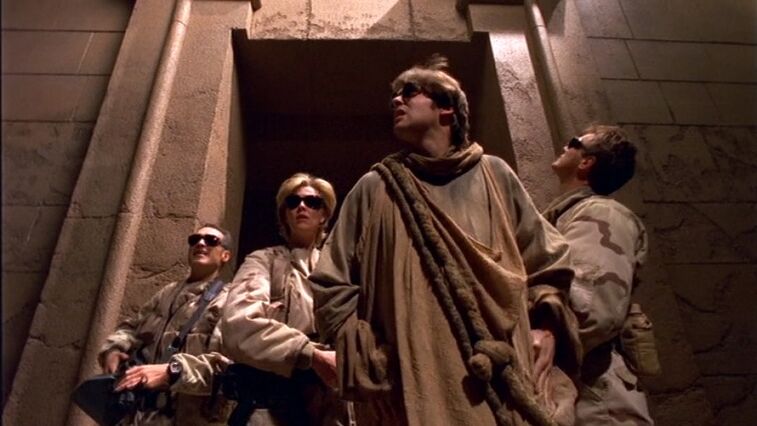
There is no Star Wars vs. Star Trek. They are both built on different stories, and have different bases in science. The differences are telling:
Star Trek deals with the potential of the human civilization and is based on Relativistic physics. Transporters aside (which is based on Quantum Teleportation), you have Warp Drive, phasers, complex plotting, and many different gadgets.
Star Trek attracts those with a higher education. Star Trek gets deep into intellectual and social character development. You hardly fire any photon torpedoes at your enemy, and everything is based on negotiations to resolve conflict. Of course, you get some phaser fire. Star Trek episodes deal with possibilities. You have some deep roleplaying in your Star Trek RPGs because not everything is based on combat. I have a copy of the TNG RPG (LUGTrek) and it handles TNG so superbly. Right down to how to portray your villains. In fact, a lot of things that happen in Star Trek Phase II (which is Original Trek carried on) is based on events and storytelling that happened in TNG.
Until Star Trek 9 happened. It wasn't because of Kirk. Kirk, as portrayed by Christopher Pine -- represents a younger hotheaded Trek. Shatner's Kirk in OST is much more mature, and Cawley's Kirk shows a Kirk that is wise beyond his years.
It was the storyline. Star Trek 9 wasn't Star Trek. But then, ST: Nemesis didn't make any sense either. But perhaps the worst part of Star Trek was Seasons 4 and 5 of Voyager. But Star Trek is strongly based on science and what could be possible and is highly intellectual in it's approach.
--------------------
So, on to Star Wars. Star Wars is based on Quantum Physics. While the show is fantasy, and has mythological themes, the thing that underlies it all is the Force. Star Wars is ultimately about individual human potential. While Star Trek talks about our potential as a species and how we can rise above barbarism, Star Stars talks about our potential as individuals and how we can achieve such potential.
You have the Force. Through the Force (which is a scientifically proven fact) a human being can become a better human - even supra human. And while you have spaceships -- with the capability to go into a whole other dimension (Hyperspace) no less -- everything about Star Wars is individual human achievement.
This is told through the Story of Anakin Skywalker and his relationship with his son, Luke Skywalker. Like the Master Sage -- Yahshua the Messiah -- Anakin Skywalker was the result of a parthenogenesis. Unlike Yahshua the Messiah who lived to be an example, Anakin Skywalker fell -- and he fell hard -- and became Darth Vader.
So the last two Jedi, Obi-Wan and Yoda, took it upon themselves to train Luke Skywalker in order to face Darth Vader and defeat him and his Emperor. Luke, with his reckless behavior, learned the horrible truth, Darth Vader was his father. Luke eventually fights his father and defeats him in front of the Emperor on the Second Death Star. His father, unable to HATE his son because he reminded him of Padme Amidala -- his beloved wife -- couldn't kill his son. Faced with the ultimate temptation, Luke resists temptation and says that he will not turn to the dark side and use Bogan.
The Emperor, feeling that he was a great threat to his power, attacked him with Force Lightning. During the fight, however, Luke used Dun Moch on his own father in a reverse and less perverse way. Luke saw the Good in his Father and Darth Vader, seeing what represented the last of Padme in utter pain from Force Lightning, repented and threw the Emperor down the main reactor shaft. Thereby redeeming himself of his terrible betrayal of the Jedi and becoming a vessel for Ashla once again.
Besides, the Science of Star Wars is much more complex than you think. Star Trek's science is simple to understand -- but the Science of Star Wars is so subtle in the movies that you need a book to understand what goes on behind the scenes.
------------------
Through the story of Star Wars, we learn that we can become better individuals through redemption and we have great Potential -- through the interaction of the Force and those sensitive to it. Through Star Trek, we learn that the human as a Civilization has the ability to improve and rise above our proclivity to war amongst ourselves. Star Wars is ultimately a Science Fiction tale about the Individual. While Star Trek is a science fiction tale about the Community.
Star Wars is about Individual Freedom, while Star Trek is about working together to achieve the objective. Star Wars is also about preserving true Freedom against tyranny -- whether it is from a Galactic Empire ruled by a Militaristic Dictatorship with the Emperor as its head or a true Utopia (Star Wars: X-XII). Star Trek is about the potential of the human to overcome the worst of our individual selves and to band together to build something great.
Both story cycles are good and both are great to watch. However to play in an MMO, Star Wars has the best potential to play in an MMO -- since all MMOs have mostly solo adventures. In Star Trek, you need to work together or its not going to be plausible as Star Trek. Star Trek would not work as an MMO, but both work as Roleplaying Games in their own right. Although Star Trek lends itself well to team play. :)
In the end analysis, neither is better than the other. Geeks who fight over who groks what universe best both should read and watch more Science Fiction. Stranger in a Strange Land, The Martian Chronicles, Dune, A Princess of Mars, The Gods Themselves, Foundation series, At the Earth's Core, Ender's Game, and Farseer are all good examples of Science Fiction.
Showing posts with label Science Fiction. Show all posts
Monday, February 27, 2012
Thursday, January 5, 2012
Stargate SG-1 RPG
I just read the Stargate SG-1 RPG. So many possibilities in one little RPG. A far reaching Stargate network -- and hundreds of d20 and Pathfinder campaigns connected by that Stargate Network. So many possibilities.
At the end of the book is a list of possible Crossovers:
Dragonstar, Mindshadows, Nyambe, and Seven Seas were all suggested as possible crossovers. In fact, Dragonstar could be a replacement for the Goa'uld and the Ori. In fact, the game suggests crossovers. So, my mind went a thousand miles an hour and put together the following possibilities.
The Dragon Empire -- after the Goa'uld and the Ori were defeated, the Dragon Empire becomes the new problem. With Quesamet and Asamet -- the Tau'ri have to deal with dragons in the Milky Way Galaxy and the Sagittarius Dwarf Elliptical Galaxy that has been intersecting with the Milky Way. The dragons are like the Goa'uld -- they become masters of all they see.
The two empires have been competing and now the Dragon Empire is expanding. Can the Tau'ri stop their expanse?
Forgotten Realms and Hârn: Both Faerun and Harn were linked to Earth. Instead of what the writers intended, I would use Stargates to link both Harn and Shavarash (Faerun) to Earth. The Stargate would be in an Earthmaster (Ancient) site on Harn (Melderyn) and on the Forgotten Realms, the Stargate is located on the Chessenta and Unther border.
The Goa'uld used the Stargate to seed Faerun with Orcs and Elves along with humans from Earth. Supreme System Lord Ra was defeated by the Goa'uld System Lord Gruumsh once, but Gruumsh was defeated by the Goa'uld System Lord Correllon Larethan. The Goa'uld are also the Imaskari, with most of the Imaskari fighting chaste being Jaffa.
Eberron: Eberron has a STARGATE! Built there by the Ancients, the Goa'uld seeded Eberron with humans from Earth -- taken from Troy or Greece. The Stargate is located in Sarlona, specifically somewhere in Riedra.
Yrth: The planet of GURPS: Banestorm has a stargate. The stargate is located in the island nations.
Plus, hundreds of other possibilities! You can do anything with a Stargate campaign. The possibilities are endless!
At the end of the book is a list of possible Crossovers:
Dragonstar, Mindshadows, Nyambe, and Seven Seas were all suggested as possible crossovers. In fact, Dragonstar could be a replacement for the Goa'uld and the Ori. In fact, the game suggests crossovers. So, my mind went a thousand miles an hour and put together the following possibilities.
The Dragon Empire -- after the Goa'uld and the Ori were defeated, the Dragon Empire becomes the new problem. With Quesamet and Asamet -- the Tau'ri have to deal with dragons in the Milky Way Galaxy and the Sagittarius Dwarf Elliptical Galaxy that has been intersecting with the Milky Way. The dragons are like the Goa'uld -- they become masters of all they see.
The two empires have been competing and now the Dragon Empire is expanding. Can the Tau'ri stop their expanse?
Forgotten Realms and Hârn: Both Faerun and Harn were linked to Earth. Instead of what the writers intended, I would use Stargates to link both Harn and Shavarash (Faerun) to Earth. The Stargate would be in an Earthmaster (Ancient) site on Harn (Melderyn) and on the Forgotten Realms, the Stargate is located on the Chessenta and Unther border.
The Goa'uld used the Stargate to seed Faerun with Orcs and Elves along with humans from Earth. Supreme System Lord Ra was defeated by the Goa'uld System Lord Gruumsh once, but Gruumsh was defeated by the Goa'uld System Lord Correllon Larethan. The Goa'uld are also the Imaskari, with most of the Imaskari fighting chaste being Jaffa.
Eberron: Eberron has a STARGATE! Built there by the Ancients, the Goa'uld seeded Eberron with humans from Earth -- taken from Troy or Greece. The Stargate is located in Sarlona, specifically somewhere in Riedra.
Yrth: The planet of GURPS: Banestorm has a stargate. The stargate is located in the island nations.
Plus, hundreds of other possibilities! You can do anything with a Stargate campaign. The possibilities are endless!
Labels:
roleplaying games,
Science Fiction,
Stargate SG-1
Wednesday, August 31, 2011
Thieves, Soulknives, and Inventors
A continuation of occupational templates for Atlantis.
Mystic (Martial Artist class)
Template cost: 15 points
Stats: Str 15, Dex 13, Con 13, Int 16, Wis 13, Cha 11
Attributes:
Combat Mastery +1, Damn Healthy! +1, Heightened Awareness +1, Highly Skilled +2, Speed +1, Special Attack: Raging Thunder Dragon Fist +1 (1d8 damage; Incapacitating, Extra Energy, Melee)
Choose 2 Defects:
Attack Restriction (Code of Honor) +1, Marked (Tattoos of Dragons around both arms) +3, Nemesis (Mystic from a Rival School) +1, Unique Character Defect (Poverty) +1
Skills:
Acrobatics +5, Climb +6, Craft: Votive Objects +7, Knowledge: Area (Lemuria) +7, Knowledge: Area (Atlantis) +7, Knowledge: Area (Khittan) +7, Knowledge: Religion (Mysticism) +7, Linguistics (World Wide Language) +7, Perception +5, Sense Motive +5, Swim +6, Unarmed Attack +1, Unarmed Defense +1
Feats: Combat Martial Arts, Power Attack
When Cain killed Abel in order to gain what he owned: his flocks and his wife; man's inhumanity to man had showed itself. Since then, man has always worked hard to find ways of killing each other. To our credit, we always worked out ways of defending ourselves from those that would do us harm. During the Age of Leo, this is not even different.
Wandering Mystics from Khittan (China) believe in a circular philosophy. Although they come from a barbarian Kingdom, they may wander to Atlantis or Lemuria or both to teach them the secrets of Mysticism. Some Mystics feel that they have an adventurer's heart and join an adventuring party to see more of the world and to increase their knowledge of cultures outside of Atlantis, Lemuria, or Khittan.
Necromancer (Dynamic Sorcerer class)
Template Cost: 15 Character points
Stats: Str 13, Dex 11, Con 9, Int 15, Wis 14, Cha 17
Attributes:
Aura of Command +1 or Exorcism (Undead) +1, Dynamic Sorcery (Class Feature) +1, Extra Energy +1, Highly Skilled +1, Magical Technique (Magical Blood) +1, Personal Gear +1, Pet Monster (Skeleton) +1
Restriction (Aura of Command to Undead) +2 Choose two Defects:
Easily Distracted (Corpses and Ossuaries) +1, Marked (scars) +1, Not so Strong +1, Not so Tough +1, Physically Unappealing +1, Reoccuring Nightmares +1, Skeleton in the Closet +1
Skills:
Appraise +6, Craft: Likenesses +6, Intimidate +7, Knowledge: Arcane (Spellcraft) +6, Knowledge: Biological Sciences (Human Anatomy) +6, Knowledge: Occult +6, Survival +3, Ranged Attack +1, Ranged Defense +1
Feats: Dazzling Display, Power Attack
Spells (Choose 12 slots of spells from 0 to second level, see Dyamic d20 Magic for DC casting costs), spells can come from these schools and from the Cleric list --
Abjuration, Divination, Conjuration, Necromancy, and Universal
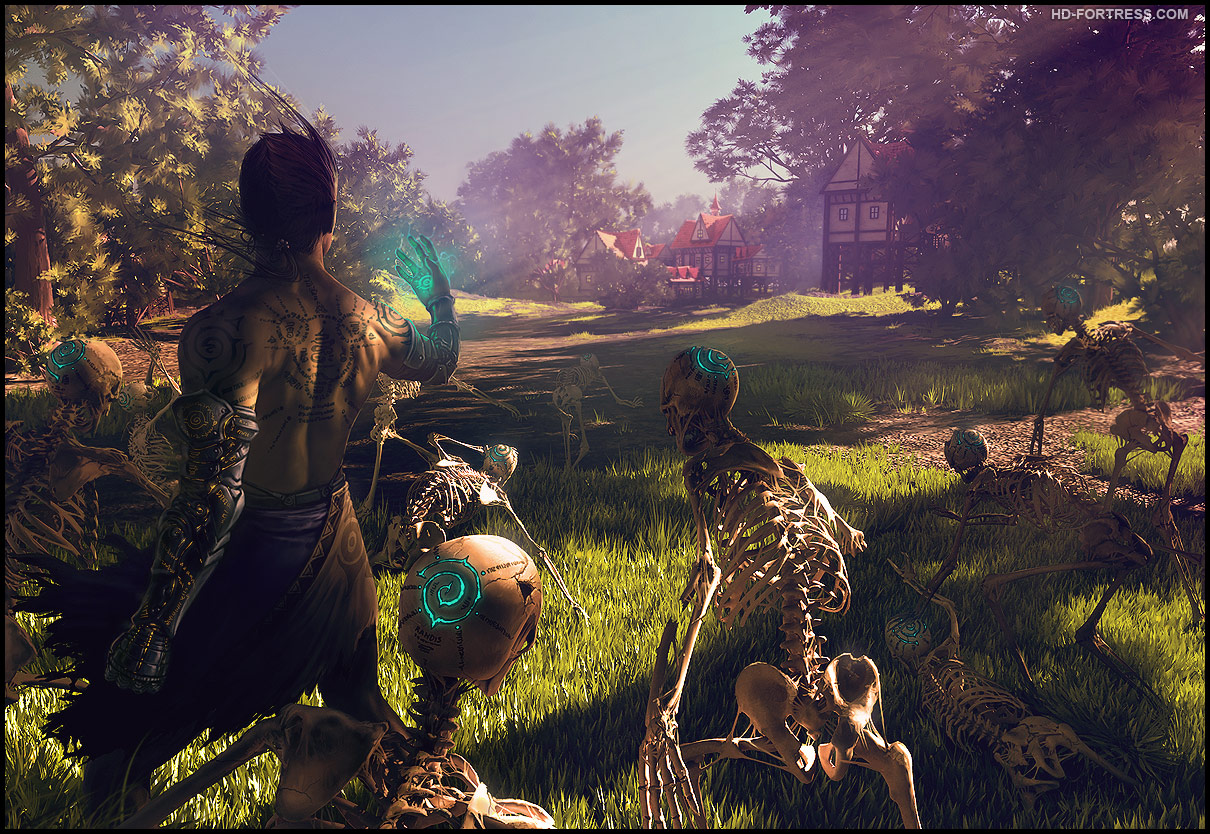
Necromancy, the art of communicating with and summoning the dead, may have had its start in the Middle East. Excavations have found that the Natufian culture had carefully buried their dead within their own homes and removed the skulls sometime afterward. In Leonine Jericho and 'Ain Ghazal, the inhabitants there would plaster the skulls of their dead to create a likeness of the dead person. There was definitely an Ancestor Worship cult in the Middle East. This eventually spread to Europe with the building of Ossuaries, where the dead where kept.
So, Necromancers come from the heathen nations of Europe and the Middle East. While not necessarily evil, his or her grim demeanor often does not win them very many friends. Most would distrust the necromancer, seeing him as "unnatural" or even blasphemous in their dealings with the Spirit World. Nevertheless, necromancers can be quite useful, since they can create armies of minions from dead bodies, as well as gain information by speaking with the spirits of the departed. They will sometimes choose to become adventurers as a way to test their abilities, as well as to acquire powerful Items of Power to aid them in their grim research.
Thief (Adventurer Class)
Template Cost: 5 Character Points
Stats: Str 13, Dex 17, Con 10, Int 15, Wis 13, Cha 12
Attributes:
Art of Distraction +1, Sneak Attack (Special Attack 1d8; Accurate, Concealable, Melee) +1, Heightened Awareness +1, Highly Skilled +2, Organizational Ties (Guild of Thieves) +1, Personal Gear +1
Pick two Defects: Easily Distracted (Wealth) +1, Not so Strong +1, Owned by Organization (Guild of Thieves) +1, Wanted +1
Skills:
Acrobatics +7, Bluff +5, Climb +5, Craft: Traps +6, Disable Device +7, Disguise +5, Escape Artist +7, Knowledge: Area (City of Atlantis) +6, Linguistics (World Wide Language) +6, Sense Motive +5, Swim +5, Melee Attack (Dagger) +1, Melee Defense (Dagger) +1
Feats: Dodge, Power Attack
Since men became sensual and devilish there will be thieves who lie and steal. The thief is a lithe, roguish, and often acrobatic outlaw who lives by his or her wits, charm, and light fingers. Some thieves steal from anyone, while others prefer to rob only wicked folk. They make natural adventurers. Both their skills and their general demeanours are well-suited to a life of dungeon delving. In addition, thieves commonly have a weakness for wealth, which is often found in great abundance in ruins and similar locales, making them ideal places to explore — and loot. Thieves often have a sinister reputation. Even the noblest among them (and there are such unusual individuals) find it hard to convince ordinary people that they use their larcenous abilities only for good ends. Consequently, thieves are often unwelcome in civilized settlements. Agents of the law are never far behind them, making it hard for thieves to put down permanent roots.
Psychic Warrior (Adventurer Class)
Template Cost: 15 Character Points
Stats: Str 15, Dex 11, Con 16, Int 12, Wis 10, Cha 14
Attributes:
Aura of Command +1, Dynamic Sorcery (Psionics Based) +1, Extra Energy +1, Highly Skilled +1, Mind Shield +1, Metapsionics (Heightened Power) +1
Pick two Defects: Girl/Guy Magnet +1, Famous +1, Ism (Psionism) +1, Reoccuring Nightmares +1
Skills:
Autohypnosis +4, Climb +6, Intimidate +6, Knowledge: Arcane (Psionics) +5, Knowledge: Physical Sciences (Quantum Mechanics) +5, Sense Motive +4, Melee Attack (Crystal Sword) +1, Melee Defense (Round Shield) +1, Swim +6
Feats: Power Attack, Focused Sunder
Powers: Choose 3 1st level powers from the Psychic Warrior list in Psionics Unleashed! or the Expanded Psionics Handbook, energy points are analogous to Power Points.
In Atlantis, Psychic Warriors are trained to be shock troops and Marines. In effect, Psychic Warriors are the Atlantean answer to the U.S. Army Rangers and U.S. Navy Seals. They are often sent in when the battle needs winning. Psychic Warriors are trained by both Atlantis and Lemuria to turn the tide of battle for their armies. Psychic Warriors who leave the armies will often become mercenaries or adventurers in their own right. Fighting for whatever cause, or whatever side. Many adventuring Psychic Warriors are soldiers of fortune.
Engineer (Tech Genius Class)
Template Cost: 10 Character Points
Stats: Str 10, Dex 13, Con 12, Int 17, Wis 15, Cha 11
Attributes:
Aura of Command +1, Computer Scanning +1, Highly Skilled +1, Mechanical Genius +1, Personal Gear +1, Wealth +1,
Choose 2 Defects: Achilles Heel (wasp stings) +1, Concentration (Computer Scanning) +1, Nemesis (rival Engineer) +1, Significant Other +2
Skills:
Computer Use +7, Demolitions +7, Disable Device +5, Drive +5, Knowledge: Electronics +7, Knowledge: Physical Sciences (Higher Mathematics) +7, Knowledge: Physical Sciences (Geography) +4, Linguistics (World Wide Language) +7, Profession: Mecha Engineer +6, Sense Motive +3, Research +7
Feats: Endurance, Lightning Reflexes
Whatever they are telling you, they are wrong about Man's ability to create and invent. Mankind has had a big brain for at least 60 thousand years, perhaps more. Atlantean Engineers are every bit as smart, or smarter, than our Engineers. To say that the Stone Age lasted longer and there was a gradual evolution is a terrible conceit. Many artifacts that are out of place (including the World Wide Language itself) attest to man's ingenuity in prehistoric times.
Atlantean Engineers were able to build the Pyramids, carve the first lion statue (the Great Sphinx) and calculate Longitude. They were also able to build Weapons of Abomination (nuclear weapons) and create Nuclear Plants. Also among their accomplishments was domestication: Atlantean Engineers genetically engineered the grasses (rice, wheat, rye, barley) into domesticated forms and create the dog, the feathered Troodon, and the Dairy cow. They were able to perfect the crystal technologies that Atlantis was famous for. Adventuring engineers are tech geniuses: specializing in maintaining mecha, doing surveys for Megalithic building, or doing field experiments. Unfortunately, a fraction of Engineers are Mad Scientists.
Mystic (Martial Artist class)
Template cost: 15 points
Stats: Str 15, Dex 13, Con 13, Int 16, Wis 13, Cha 11
Attributes:
Combat Mastery +1, Damn Healthy! +1, Heightened Awareness +1, Highly Skilled +2, Speed +1, Special Attack: Raging Thunder Dragon Fist +1 (1d8 damage; Incapacitating, Extra Energy, Melee)
Choose 2 Defects:
Attack Restriction (Code of Honor) +1, Marked (Tattoos of Dragons around both arms) +3, Nemesis (Mystic from a Rival School) +1, Unique Character Defect (Poverty) +1
Skills:
Acrobatics +5, Climb +6, Craft: Votive Objects +7, Knowledge: Area (Lemuria) +7, Knowledge: Area (Atlantis) +7, Knowledge: Area (Khittan) +7, Knowledge: Religion (Mysticism) +7, Linguistics (World Wide Language) +7, Perception +5, Sense Motive +5, Swim +6, Unarmed Attack +1, Unarmed Defense +1
Feats: Combat Martial Arts, Power Attack
When Cain killed Abel in order to gain what he owned: his flocks and his wife; man's inhumanity to man had showed itself. Since then, man has always worked hard to find ways of killing each other. To our credit, we always worked out ways of defending ourselves from those that would do us harm. During the Age of Leo, this is not even different.
Wandering Mystics from Khittan (China) believe in a circular philosophy. Although they come from a barbarian Kingdom, they may wander to Atlantis or Lemuria or both to teach them the secrets of Mysticism. Some Mystics feel that they have an adventurer's heart and join an adventuring party to see more of the world and to increase their knowledge of cultures outside of Atlantis, Lemuria, or Khittan.
Necromancer (Dynamic Sorcerer class)
Template Cost: 15 Character points
Stats: Str 13, Dex 11, Con 9, Int 15, Wis 14, Cha 17
Attributes:
Aura of Command +1 or Exorcism (Undead) +1, Dynamic Sorcery (Class Feature) +1, Extra Energy +1, Highly Skilled +1, Magical Technique (Magical Blood) +1, Personal Gear +1, Pet Monster (Skeleton) +1
Restriction (Aura of Command to Undead) +2 Choose two Defects:
Easily Distracted (Corpses and Ossuaries) +1, Marked (scars) +1, Not so Strong +1, Not so Tough +1, Physically Unappealing +1, Reoccuring Nightmares +1, Skeleton in the Closet +1
Skills:
Appraise +6, Craft: Likenesses +6, Intimidate +7, Knowledge: Arcane (Spellcraft) +6, Knowledge: Biological Sciences (Human Anatomy) +6, Knowledge: Occult +6, Survival +3, Ranged Attack +1, Ranged Defense +1
Feats: Dazzling Display, Power Attack
Spells (Choose 12 slots of spells from 0 to second level, see Dyamic d20 Magic for DC casting costs), spells can come from these schools and from the Cleric list --
Abjuration, Divination, Conjuration, Necromancy, and Universal
Necromancy, the art of communicating with and summoning the dead, may have had its start in the Middle East. Excavations have found that the Natufian culture had carefully buried their dead within their own homes and removed the skulls sometime afterward. In Leonine Jericho and 'Ain Ghazal, the inhabitants there would plaster the skulls of their dead to create a likeness of the dead person. There was definitely an Ancestor Worship cult in the Middle East. This eventually spread to Europe with the building of Ossuaries, where the dead where kept.
So, Necromancers come from the heathen nations of Europe and the Middle East. While not necessarily evil, his or her grim demeanor often does not win them very many friends. Most would distrust the necromancer, seeing him as "unnatural" or even blasphemous in their dealings with the Spirit World. Nevertheless, necromancers can be quite useful, since they can create armies of minions from dead bodies, as well as gain information by speaking with the spirits of the departed. They will sometimes choose to become adventurers as a way to test their abilities, as well as to acquire powerful Items of Power to aid them in their grim research.
Thief (Adventurer Class)
Template Cost: 5 Character Points
Stats: Str 13, Dex 17, Con 10, Int 15, Wis 13, Cha 12
Attributes:
Art of Distraction +1, Sneak Attack (Special Attack 1d8; Accurate, Concealable, Melee) +1, Heightened Awareness +1, Highly Skilled +2, Organizational Ties (Guild of Thieves) +1, Personal Gear +1
Pick two Defects: Easily Distracted (Wealth) +1, Not so Strong +1, Owned by Organization (Guild of Thieves) +1, Wanted +1
Skills:
Acrobatics +7, Bluff +5, Climb +5, Craft: Traps +6, Disable Device +7, Disguise +5, Escape Artist +7, Knowledge: Area (City of Atlantis) +6, Linguistics (World Wide Language) +6, Sense Motive +5, Swim +5, Melee Attack (Dagger) +1, Melee Defense (Dagger) +1
Feats: Dodge, Power Attack
Since men became sensual and devilish there will be thieves who lie and steal. The thief is a lithe, roguish, and often acrobatic outlaw who lives by his or her wits, charm, and light fingers. Some thieves steal from anyone, while others prefer to rob only wicked folk. They make natural adventurers. Both their skills and their general demeanours are well-suited to a life of dungeon delving. In addition, thieves commonly have a weakness for wealth, which is often found in great abundance in ruins and similar locales, making them ideal places to explore — and loot. Thieves often have a sinister reputation. Even the noblest among them (and there are such unusual individuals) find it hard to convince ordinary people that they use their larcenous abilities only for good ends. Consequently, thieves are often unwelcome in civilized settlements. Agents of the law are never far behind them, making it hard for thieves to put down permanent roots.
Psychic Warrior (Adventurer Class)
Template Cost: 15 Character Points
Stats: Str 15, Dex 11, Con 16, Int 12, Wis 10, Cha 14
Attributes:
Aura of Command +1, Dynamic Sorcery (Psionics Based) +1, Extra Energy +1, Highly Skilled +1, Mind Shield +1, Metapsionics (Heightened Power) +1
Pick two Defects: Girl/Guy Magnet +1, Famous +1, Ism (Psionism) +1, Reoccuring Nightmares +1
Skills:
Autohypnosis +4, Climb +6, Intimidate +6, Knowledge: Arcane (Psionics) +5, Knowledge: Physical Sciences (Quantum Mechanics) +5, Sense Motive +4, Melee Attack (Crystal Sword) +1, Melee Defense (Round Shield) +1, Swim +6
Feats: Power Attack, Focused Sunder
Powers: Choose 3 1st level powers from the Psychic Warrior list in Psionics Unleashed! or the Expanded Psionics Handbook, energy points are analogous to Power Points.
In Atlantis, Psychic Warriors are trained to be shock troops and Marines. In effect, Psychic Warriors are the Atlantean answer to the U.S. Army Rangers and U.S. Navy Seals. They are often sent in when the battle needs winning. Psychic Warriors are trained by both Atlantis and Lemuria to turn the tide of battle for their armies. Psychic Warriors who leave the armies will often become mercenaries or adventurers in their own right. Fighting for whatever cause, or whatever side. Many adventuring Psychic Warriors are soldiers of fortune.
Engineer (Tech Genius Class)
Template Cost: 10 Character Points
Stats: Str 10, Dex 13, Con 12, Int 17, Wis 15, Cha 11
Attributes:
Aura of Command +1, Computer Scanning +1, Highly Skilled +1, Mechanical Genius +1, Personal Gear +1, Wealth +1,
Choose 2 Defects: Achilles Heel (wasp stings) +1, Concentration (Computer Scanning) +1, Nemesis (rival Engineer) +1, Significant Other +2
Skills:
Computer Use +7, Demolitions +7, Disable Device +5, Drive +5, Knowledge: Electronics +7, Knowledge: Physical Sciences (Higher Mathematics) +7, Knowledge: Physical Sciences (Geography) +4, Linguistics (World Wide Language) +7, Profession: Mecha Engineer +6, Sense Motive +3, Research +7
Feats: Endurance, Lightning Reflexes
Whatever they are telling you, they are wrong about Man's ability to create and invent. Mankind has had a big brain for at least 60 thousand years, perhaps more. Atlantean Engineers are every bit as smart, or smarter, than our Engineers. To say that the Stone Age lasted longer and there was a gradual evolution is a terrible conceit. Many artifacts that are out of place (including the World Wide Language itself) attest to man's ingenuity in prehistoric times.
Atlantean Engineers were able to build the Pyramids, carve the first lion statue (the Great Sphinx) and calculate Longitude. They were also able to build Weapons of Abomination (nuclear weapons) and create Nuclear Plants. Also among their accomplishments was domestication: Atlantean Engineers genetically engineered the grasses (rice, wheat, rye, barley) into domesticated forms and create the dog, the feathered Troodon, and the Dairy cow. They were able to perfect the crystal technologies that Atlantis was famous for. Adventuring engineers are tech geniuses: specializing in maintaining mecha, doing surveys for Megalithic building, or doing field experiments. Unfortunately, a fraction of Engineers are Mad Scientists.
Friday, January 28, 2011
Running a Science Fiction Campaign
Oooh! My favorite subject!
Running a Science Fiction campaign can be really fun if you find the right combination for you and your players. Since I'm all about freedom, my favorites are basically Space Opera games. My favorite setting of the whole bunch is Selling the Moon, Wholesale! with possibly a military campaign set during the Long Night (see Gene Rodinberry's Andromeda for an example) running second and an Exploration game running third (Star Trek, Buck Rogers).
I want to talk about Selling the Moon, Wholesale setup first. This campaign offers the best freedom for you and your players in my mind. There are a huge amount of media that represents this setting, and most of them are computer games.
The best known examples of this type of campaign that come to my mind include Wing Commander: Privateer, Microsoft's Freelancer, and Elite.
Wing Commander: Privateer
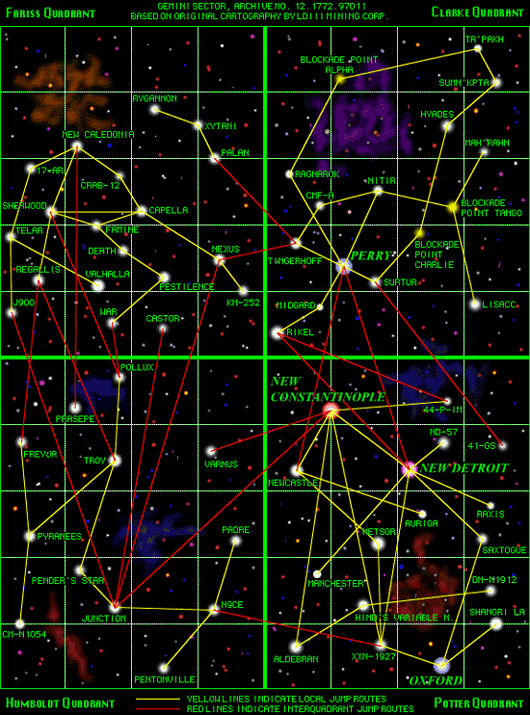
Wing Commander: Privateer is the successor of the game Elite. It's probably the best example of what to do in a campaign setting such as this. Privateer allows the player to really play in an expansive universe that immerses you in an expansive universe (although its only relegated to the Gemini Sector -- a sector built around the Gemini constellation in the Zodiac). There is essentially three paths opened to you: you can be a free trader, a mercenary, or a smuggler. What is best about the game is it's openness.
What does Selling the Moon, Wholesale offer you and your players?
Using Wing Commander: Privateer as a model, this model offers both the GM and the Players Dungeons and Dragons styled like scripting and running. The game is made up of three separate elements that ensure player freedom. They include:
* Random Encounters among space lanes.
* Small missions brokered by Independents, the Mercenaries Guild and the Merchants Guild
* Fixer missions.
Random Encounters
Although not in vogue among the RPGA, a Random Encounter system is great for Selling the Moon Wholesale because you can use Random encounters to set up your players with a bit of randomess against any NPC factions you have working in your universe. Like pirates, retroes, or enemy Space Nations (like the Kilrathi [space cats] or the Magog [space orcs] for example).
Small Missions
Small missions are GM created missions that usually don't need anything beyond an objective and random encounters. They can be written down on 3x5 cards with stats for spaceships and who is flying them. They can also include generated star systems for planets or drifts you can visit. Small missions are brokered by organizations through your Merchants Guild, your Mercenary's Guild, or a concourse kiosk.
Fixer Missions
Fixer Missions are full blown adventures -- written by you or published. They are brokered by NPCs, and provide you with a true plot and campaign scripting within your universe. Some examples are the old SpaceMaster Modules from ICE or the old modules from Star Frontiers. Even Gamma World modules may work with some rewriting. The Old Privateer game had a main campaign, find out how to destroy the egg that has been plaguing shipping lanes. While this strung people along, as a GM you don't have to string your players along in a campaign such as this.
Choosing your Game System
The Choice of a Game System is pretty important when running a game. You need a good game system that will provide fun for you and your players. Published game systems include:
That is just my set up, you can use whatever game you enjoy for you and your players.
Choice of Setting
So what is left is choosing a setting. From Star Trek to Privateer to Andromeda to Blue Planet there are a lot of published settings you can use. Even Space 1899 and Space 1999 are not impossible! Lets use Privateer as an example.
The game starts you out in the Gemini Sector, in the Troy system. The Troy system has a terraformed planet (Troy 3, I think -- known as Helen), and two Mining Bases (Hector and Achilles) with jump points to the Pollux, War, Regallis, Pender's Star, and Pyrannees systems.
you allow the players to either create their own ship, or give them a Taurus scout ship (note, if they create their own Hyperyacht, do not give them starting money!). You also can start them on Helen (which is a Garden planet) or one of the mining bases.
On a base in Privateer, the players have access to the concourse -- which provides offices to the Mercenaries Guild, the Merchant's Guild, a ship dealer, a commodity exchange, a bar, and a mission kiosk. As GM, on certain bases, you can expand the concourse to include a mini mall in which players an buy new clothes and food for their ship (maybe even get a food replicator).
The mission kiosk is where you can dispense your "mini" missions, and the Commodity Exchange is where the players can buy commodities to buy and sell on the open (and black) markets.
There are some interesting things about the Privateer universe. There are a couple of base types the players can fly too:
Plus there are a bunch of NPCs you can lift from the game.
There is a lot you can do, and I hope I gave you a lot of good ideas. If you enjoy science fiction gaming, the sky is literally the limit since there is a whole goldmine out there just waiting for you to explore!
Running a Science Fiction campaign can be really fun if you find the right combination for you and your players. Since I'm all about freedom, my favorites are basically Space Opera games. My favorite setting of the whole bunch is Selling the Moon, Wholesale! with possibly a military campaign set during the Long Night (see Gene Rodinberry's Andromeda for an example) running second and an Exploration game running third (Star Trek, Buck Rogers).
I want to talk about Selling the Moon, Wholesale setup first. This campaign offers the best freedom for you and your players in my mind. There are a huge amount of media that represents this setting, and most of them are computer games.
The best known examples of this type of campaign that come to my mind include Wing Commander: Privateer, Microsoft's Freelancer, and Elite.
Wing Commander: Privateer
Wing Commander: Privateer is the successor of the game Elite. It's probably the best example of what to do in a campaign setting such as this. Privateer allows the player to really play in an expansive universe that immerses you in an expansive universe (although its only relegated to the Gemini Sector -- a sector built around the Gemini constellation in the Zodiac). There is essentially three paths opened to you: you can be a free trader, a mercenary, or a smuggler. What is best about the game is it's openness.
What does Selling the Moon, Wholesale offer you and your players?
Using Wing Commander: Privateer as a model, this model offers both the GM and the Players Dungeons and Dragons styled like scripting and running. The game is made up of three separate elements that ensure player freedom. They include:
* Random Encounters among space lanes.
* Small missions brokered by Independents, the Mercenaries Guild and the Merchants Guild
* Fixer missions.
Random Encounters
Although not in vogue among the RPGA, a Random Encounter system is great for Selling the Moon Wholesale because you can use Random encounters to set up your players with a bit of randomess against any NPC factions you have working in your universe. Like pirates, retroes, or enemy Space Nations (like the Kilrathi [space cats] or the Magog [space orcs] for example).
Small Missions
Small missions are GM created missions that usually don't need anything beyond an objective and random encounters. They can be written down on 3x5 cards with stats for spaceships and who is flying them. They can also include generated star systems for planets or drifts you can visit. Small missions are brokered by organizations through your Merchants Guild, your Mercenary's Guild, or a concourse kiosk.
Fixer Missions
Fixer Missions are full blown adventures -- written by you or published. They are brokered by NPCs, and provide you with a true plot and campaign scripting within your universe. Some examples are the old SpaceMaster Modules from ICE or the old modules from Star Frontiers. Even Gamma World modules may work with some rewriting. The Old Privateer game had a main campaign, find out how to destroy the egg that has been plaguing shipping lanes. While this strung people along, as a GM you don't have to string your players along in a campaign such as this.
Choosing your Game System
The Choice of a Game System is pretty important when running a game. You need a good game system that will provide fun for you and your players. Published game systems include:
- Traveler
- SpaceMaster: Privateers
- Star Trek: The Next Generation Roleplaying Game
- Star Wars Saga
- GURPS
- Star Frontiers
- Alternity
- d20 Future
- Big Eyes, Small Mouth
- BESM d20
That is just my set up, you can use whatever game you enjoy for you and your players.
Choice of Setting
So what is left is choosing a setting. From Star Trek to Privateer to Andromeda to Blue Planet there are a lot of published settings you can use. Even Space 1899 and Space 1999 are not impossible! Lets use Privateer as an example.
The game starts you out in the Gemini Sector, in the Troy system. The Troy system has a terraformed planet (Troy 3, I think -- known as Helen), and two Mining Bases (Hector and Achilles) with jump points to the Pollux, War, Regallis, Pender's Star, and Pyrannees systems.
you allow the players to either create their own ship, or give them a Taurus scout ship (note, if they create their own Hyperyacht, do not give them starting money!). You also can start them on Helen (which is a Garden planet) or one of the mining bases.
On a base in Privateer, the players have access to the concourse -- which provides offices to the Mercenaries Guild, the Merchant's Guild, a ship dealer, a commodity exchange, a bar, and a mission kiosk. As GM, on certain bases, you can expand the concourse to include a mini mall in which players an buy new clothes and food for their ship (maybe even get a food replicator).
The mission kiosk is where you can dispense your "mini" missions, and the Commodity Exchange is where the players can buy commodities to buy and sell on the open (and black) markets.
There are some interesting things about the Privateer universe. There are a couple of base types the players can fly too:
- Agriculture planets
- Mining Bases
- Refinery bases
- Pleasure Planets
- Pirate bases
- New Constantinople (the Capitol)
- Perry (Military Base)
- New Detroit (Refinery and Manufacturing center)
- Oxford (University planet)
- Militia -- citizen Space police.
- Confed -- Galactic Confederation Military (Earth controlled, of course)
- Retros -- The Church of Man, a bunch of religious fanatics that want to take away your electric razor.
- Pirates -- yes, you know who these are.
- Bounty hunters -- the Competition in the Mercenary market, these citizens are space Vigilantes.
- Merchants -- Your competition in the Merchant market
- The Kilrathi -- Humanoid cats which are more like D&D Hobgoblins with their own politics and agenda. Do not think of them as orcs . . . that's for the Magog. The Confederation is at war with the Kilrathi.
Plus there are a bunch of NPCs you can lift from the game.
There is a lot you can do, and I hope I gave you a lot of good ideas. If you enjoy science fiction gaming, the sky is literally the limit since there is a whole goldmine out there just waiting for you to explore!
Wednesday, November 3, 2010
SpaceMaster New Space update
I've begun to post my Spacemaster campaign on the RPGnet wiki. Called SpaceMaster: New Space, for lack of a better name. Writing this took most of the day. Especially for a game inspired by Microsoft Freelancer and Origin's classic Privateer.
The campaign is fairly different from the above two. It takes place in 1982, with the associated microcomputer in development (2 to 4 bytes per second). However, some planets have computers that exceed this limit, but hasn't broken Bode's Law.
Items added today:
Scro, Eldar, the Massachusetts System, and Planet Akihabara in the Honshu System.
The campaign is fairly different from the above two. It takes place in 1982, with the associated microcomputer in development (2 to 4 bytes per second). However, some planets have computers that exceed this limit, but hasn't broken Bode's Law.
Items added today:
Scro, Eldar, the Massachusetts System, and Planet Akihabara in the Honshu System.
Labels:
Classic Play,
RPGs,
Science Fiction,
Space Master
Monday, October 25, 2010
My Spacemaster Campaign
| By NASA/JPL-Caltech/R. Hurt[see page for license], via Wikimedia Commons; in the Public Domain |
It's the Year 1982.
Twenty Years earlier, the Illithids were defeated in a major Interstellar War against the Nations and the Powers of World War Two. The Allies and the Axis joined together to fight the Illithids. Using FTL capability given them by the Eldar, the Earthers fought a major campaign to keep their independence and right to live.
The Earthlings defeated the Illithids at the Battle of Orion in 1962, forcing them to withdraw their imperial interests out of the Orion Spur. The Illithids still have a far reaching empire: in the outer arm, the Perseus Arm, the Norma Arm, and the Scutum-Centaurus Arm of the Milky Way Galaxy.
Mankind has settled the galaxy some forty light years beyond Sol. Each Nation, except the USSR, formed their own stellar nation and their citizens raced to these new nations to start new lives among the territory that the Earthers conquered from the Illithids. But the Illithids are still out there, biding their time to plot revenge.
| This image of the "Mind flayer" creature (concepted by TSR Inc. and Wizards of the Coast) is a from-scratch fan drawing. |
The Illithids were utterly defeated, but there are planets within the Orion Spur where some are still rumored to exist. The defeat did not come easily, but victory meant that the humans had new worlds to settle that were under Illithid Domination. And in the far Frontier, skirmishes between Illithids and Earthers are uncommon.
TECHNOLOGY OF THE EARTHERS
The Technology of the Earthers are simple, it's rivets and steel. While the Illithids use organic hulls on their space ships, the Earthers use strong Fullerine hulls. While the Eldar use wood, the Scro also depend on metal.
Space Drives
Human Technology depend on a Plasma Ion Propulsion drive for space -- which is similar to a fusion reactor drive, but plasma is used to foster the fusion process and the resultant ions are forced out of the nozzles. While in air, propulsion is based on a reactionless electromagnetic gravity drive. The Earther ships are able to produce electromagnetic fields around their ship that causes the ship to counter gravity and lift themselves up.
Humans depend on two star drives: the Plasma Slipstream Drive and the Fold Space Drive. The Plasma Slipstream Drive creates a Birkland Current around the ship and slips it into Faster Than Light travel.
![]() |
| Plasma Slipstream, in action. (From Stargate Universe) |
Drive Speed:
The new generation of Plasma Slipstream Drives allows ships to go at 7 parsecs a day.; this pretty much means that a ship traveling from Earth to Alpha Centauri at about 4.5 hours, to Canopus (which is 30 parsecs) about 4 days of travel; and Across the Galactic Arm, which is 2,000 parsecs: about 9 months. It takes 4 years to reach the Plasma confluence at the Galactic Core -- a distance of 10,000 parsecs. The Fold Drive system can carry ships up to a maximum of 50 light years per use. Most people prefer to use the Plasma Slipstream FTL if they can help it. The first generation Fold System is very temperamental and unreliable.
Fuel
Earther Ships rely on Plasma Fusion Generators to generate ion thrust and electrical power for the ship. However, the Zero Point Energy Converter is still experimental, as it would convert Zero Point Energy into electrical power and propulsion power. The fuel capacity for Plasma Fusion allows a ship to have a range of 20 parsecs non-stop.
![]() |
| Star Fashion, by myself. |
FTL Astrogation
FTL Astrogation is Complex and 3-Dimensional. The course must take into account the gravitational fields of intervening suns and star drift. A reliable course (Astrogation, Medium) can only be computed if the Astrogator has complete information about the system.
Communications
The communications of the galaxy depends on FTL communication via a tachyon network. While frontier planets depends on courier ships; planets closer to Sol uses the Tachyon network. Courier ships use Fold Systems to get from place to place, though, delivering the news.
Computers and Cybernetics
IN 1982, the Intergrated Circuit is still in its infancy. Computers have the power of a Apple IIe or a TRS-80 (pronounced trash 80) or an IBM computer with only 128 kilobytes of memory. Calculations and programming are done by Machine Language (COBOL), C, and Microsoft BASIC. Spreadsheets and Databases keep the computer banks informed. However, most ships have mainframes that carry 10 GBs of storage. Given the computer's level of evolution, however, Energy Matter Teleporation by machine is necessarily impossible.
Gravity Manipulation!
Gravity onboard ship is achieved by using electricity to produce the necessary Gravity aboard ship. Electricity is 10 to the 39th power much more powerful than gravity. Conversely, a ship is capable of generating powerful electromagnetic fields to counteract the effects of gravity, in order to lift itself into space.
Next Post: RACES!
Labels:
Classic Play,
roleplaying games,
Science Fiction,
Space Master
Monday, October 11, 2010
Unexpected Allies
Unexpected Allies by ~Atlantean6 on deviantART
The Terran-Illithid War rages on in the Galaxy! On an industrial planet under British Control, two people make a stand against invading Mind Flayers. They are a human female and a BKEO2K10. Unlikely allies, as the BKEO2K10 series are living androids and the humans that encountered them didn't accept them; they are thrown together for a common cause. Defeat of the Mind Flayer Empire in the Milky Way Galaxy!
Thursday, September 30, 2010
Encounter with Saturn
Encounter with Saturn by ~Atlantean6 on deviantART
Sometimes, Exploration can be as dangerous as encountering a space monster or an evil race in space. But the rewards can be great after the trials. This was rendered using a doctored picture of Saturn blissfully taken from the NASA website and the Cassini expedition. The pair are flying in a Vanguard, a large class of shuttle. Up ahead is Saturn.
I had to resize the Saturn picture to fit a certain range, and then use it as a backdrop. The light from Saturn blocks the stars, unfortunately, so no Solar Nebula. I would have used Saturn with a starry backdrop, but the photo editing would have been murder. :)
Sometimes, you need science fiction too. That's why I'm doing more science fiction renders from now on. :D
Labels:
DAZ Studio,
Renders,
Science Fiction
Tuesday, September 28, 2010
Mary Shelley's Frankstein
In 1816, Mary W. Shelley wrote Frankenstein: or the Modern Prometheus in response to Lord Byron's little contest to see who could write the best ghost story. Of the ghost stories told in Lord Byron's little party, only Mary Shelley's Frakenstein would live on.
The story, to be summarized, is about a scientist named Victor von Frankenstein that studied and found the secret to life. He used his knowledge to bring to life a creature made from human body parts. Essentially, a flesh golem in D&D but with the ability to reason and to speak. Horrified at reanimating dead tissue, Victor runs from his laboratory and the creature also leaves.
Through their adventures the creature is shunned by humanity and it starts to murder. After each murder, Frankenstein grows ill because he is responsible by default since he brought the creature to life. At some point, the creature demands that Victor creates a mate for him. Victor starts to do so, but he stops before completing the second creature. Victor gains a conscious, realizing that the creatures may be mortal and may be able to reproduce. He tears the thing to pieces and the first creature angrily curses him for destroying his font of happiness. In retaliation, he murders Victor's wife. The two have a final confrontation at the North Pole and in the end Victor dies and the creature wanders the Earth, never to be seen again.
The Modern Prometheus
The reason why Mary called the story the Modern Prometheus is because its an allusion to the myth of Prometheus and Epimetheus. Both Prometheus and Epimetheus were tasked to create life on Earth by the gods. Epimetheus, which his name means Afterthought, created all the animals first. He handed them all the powers that each of the animals all have. So, when he set to create man, there was nothing to give. So Epimetheus turned to his brother, Prometheus. Prometheus, whose name means Forethought, designed man with all the powers of the gods and gave them life.
However, Prometheus' story doesn't stop there. Prometheus cared for his children so he wanted to give them fire. Zeus forbade him to give Men fire. However, Prometheus disobeyed Zeus and took a fennel stock and started it on fire using the sun. He returned to Earth and showed men fire and taught him how to make fire. The result made Zeus angry, so Zeus chained the Titan to Mount Caucasus where an eagle or a vulture would come to eat out his liver every day.
By comparing the novel with the myth, Prometheus creates life and Victor von Frankenstein reanimates life, Victor von Frankenstein becomes Prometheus. At the outset, Mary Shelley wrote the book as a cautionary tale of how science can be used without limits or conscience. This book had a sequel, written by H.G. Wells known as The Island of Dr. Moreau that did deal with the consequences of science turned loose without ethics or morals to restrain it. Only in this case, The Island of Doctor Moreau had dealt with the consequences of genetic research without ethics and how it can be used to create monsters.
Frankenstein as a critique on Government
Frankenstein can be viewed as a critique on the Industrial Revolution and the politics of Commerce at the time. Although the writer Charles Dickens revealed how terrible the Industrial Revolution has had as an impact on 19th Century England; Mary Shelley goes at the heart of the problem and how Industrialized commerce could collude with government. Mary Shelley wasn't critiquing the Industrial Revolution she was critiquing government behind the Industrial Revolution. The government was personified by Victor von Frankenstein. The creature personified the society of the Industrial Revolution at the time. In a way, you could say that the story argues the consequences of social engineering -- something that the President of the United States wants to put into high gear on the United States of America.
It's also a story about the arrogance of government, and the monsters it can create out of society. In a terrible way, one can interpret Frankenstein as a story of what happens when government interferes with nature. It is the natural order of things for life to beget life and to die. In human society, it's natural for commerce, science, and religion to go about unregulated by the government. However, when government starts interfering, it can create an unnatural society. As capitalism can be seen as natural to Man, or even better yet, a society working under the Law of Consecration; socialism is a wicked construct that forces everyone to be equal in the eyes of human beings, removing the hope of individuality. The result is an unnatural society as powerful and mighty as the Creature Victor created.
Frankenstein's inspirations.
Mary Shelley took inspiration for Victor von Frankenstein from the work and lives of four men. Luigi Galvani, who experimented with electricity on dead animals to see what happened; his nephew Giovanni Aldini [pictured], who worked with electricity on dead human cadavers; Andrew Ure, a Scottish scientist who built on Luigi Galvani's experiments and also worked with cadavers. And finally, the infamous Konrad Dippel. The man who is strongly linked to the Frankenstein story even though his macabre experiments was done with alchemy rather than electricity.
Luigi Galvani was probably one of the scientists that studied electricity and its effects on dead animals. He stumbled across the notion that electricity was apart of our bodies when a thunderstorm caused the frog legs to twitch. So, Galvani tested electricity by applying it to a dead frog's sciatic nerve. The result was that the frog's legs jumped. He then released his findings and it revolutionized biology.
Galvani's work led to an explosion of using electricity to treat many kinds of ailments, as the new technology was believed to be a panacea and used as an entertainment piece. Much like computers are being used today, no doubt. Also, during Galvani's day, the new knowledge of how electricity was linked to the Body was demonstrated in Europe with all kinds of shows showing twitching limbs. It surprised and horrified people as the scientist explained how electrical energy was used by animals and humans to help their bodies move. However, Galvani put forward an idea that man can achieve immortality by being infused with electricity artificially. However, it took his nephew to demonstrate this in a much more startling and macbre way.
Giovanni Aldini had more common with Victor von Frankenstein than Galvani or Konrad Dippel. The man would demonstrate the effects of electricity on a human body. Aldini did this with a dead murderer's body. He'd connect electricity to the head and the anus and other parts of the body and the cadaver seemed to have come to life. Which was an unnerving experience.
The other man was Andrew Ure. Andrew Ure used a cadaver which he had made incisions into the body. He then applied electricity in the incisions. The bizarre experiment caused the man to make several faces, extend his leg and jump the leg enough to cause one of the assistants to fall back, and finally he used the electricity on the finger, which caused it to extend and point at the audience. Many believed that the man had come back to life.
The final man was Konrad Dippel. Dippel was born in, ironically enough, Castle Frankenstein. Konrad Dippel was educated in Alchemy and all matters of science. Konrad fought with his professors and felt his thoughts were right. He left the university and followed his own theories on finding the secret to life. Konrad Dippel was responsible for Prussian Blue, Dippel's oil, and other things. No one, however, was sure tha he used cadavers but the authorities found strange human bones in the courtyard of where he lived. Konrad Dippel died mysteriously either by poison or a stroke.
Frankenstein Filmography
Frankenstein is the story that is the most adapted to film, beating out Dracula the strange love story between an undead count and a young woman.
Frankenstein (1910)--one-reel Edison Studios film, recently recovered.
Life Without Soul (1915)--five-reel version.
Frankenstein (1931)--Universal film with Boris Karloff.
Bride of Frankenstein (1935)--with Elsa Lanchester.
Son of Frankenstein (1939)--with Basil Rathbone.
The Ghost of Frankenstein (1942)--Lon Chaney, Jr.
Frankenstein Meets the Wolf Man (1943)--Bela Lugosi.
House of Frankenstein (1944)--Glenn Strange.
House of Dracula (1945)--last of Universal's horror series.
Abbott and Costello Meet Frankenstein (1948)--Glenn Strange.
The Curse of Frankenstein (1957)--Hammer Films with Christopher Lee.
I Was a Teenage Frankenstein (1957)--pieces of teen corpses.
The Revenge of Frankenstein (1958)--Hammer with Michael Gwynn.
Frankenstein 1970 (1958)--Boris Karloff.
How To Make a Monster (1958)--make-up man's revenge.
Frankenstein's Daughter (1959)--son of creates woman.
The Evil of Frankenstein (1964)--Hammer with Kiwi Kingston.
Frankenstein Conquers the World (1965)--Japanese Toho Studios.
Frankenstein Meets the Space Monster (1965)--British, with android.
Jesse James Meets Frankenstein's Daughter (1966)--p.u.
Frankenstein Created Woman (1967)--Hammer, revenge.
Mad Monster Party (1968)--Rankin/Bass, stop-motion.
Frankenstein Must Be Destroyed (1969)--yes, we know this.
Horror of Frankenstein (1970)--Hammer.
Dracula vs. Frankenstein (1971)--Lon Chaney, Jr.
Lady Frankenstein (1971)--woman builds man.
Frankenstein's Bloody Terror (1972)--Spanish.
Frankenstein (1972)--Dan Curtis Productions, made-for-tv.
Frankenstein: The True Story (1973)--Michael Sarrazin; and see Jane Seymour get her head ripped off.
Frankenstein's Castle of Freaks (1973)--brain transplants.
Andy Warhol's Frankenstein (1974)--French-Italian.
Frankenstein and the Monster From Hell (1974)--Hammer.
Young Frankenstein (1974)--Mel Brooks parody.
The Rocky Horror Picture Show (1975)--the cult musical.
Terror of Frankenstein (1977)--fairly literal adaptation of the Shelley novel.
Frankenstein Island (1981)--John Carradine plus spiders, snakes, and Amazons.
Frankenstein (1982)--stars Robert Powell.
Frankenstein 90 (1984)--Frankenstein descendent and cultured creature.
Frankenweenie (1984)--resurrected pet dog.
Transylvania 6-5000 (1985)--tabloid scoop on return of monster.
Weird Science (1985)--nerds create woman.
Frankenstein's Great-Aunt Tillie (1985)--inheritance comedy.
Gothic (1987)--account of the 1816 stay of the Shelleys with Byron.
Dr. Hackenstein (1988)--comedy resurrection of late wife.
Frankenstein General Hospital (1988)--med. student "hi-jinks."
Frankenstein Unbound (1990)--Roger Corman's return to directing.
Frankenhooker (1990)--New Jersey mad doctor.
Edison's Frankenstein (1990)--Researched remake of the 1910 one.
Frankenstein: The College Years (1991)--Augh.
Frankenstein (1993)--Randy Quaid.
Mary Shelley's Frankenstein (1994)--Kenneth Branaugh, Robert De Niro.
Frankenstein and Me (1995)--carnival sideshow exhibit.
Mr. Stitch (1996)--A humanoid military weapon made from 88 corpses.
Lust for Frankenstein (1998)--Dr.'s ghost tells daughter to resurrect project: lesbian monster.
Frankenstein Reborn! (1998)--13-year-old Anna Frankenstein is curious about her uncle's experiments.
Rock & Roll Frankenstein (1999)--Music agent has nephew piece together rock star from pieces of greats.
Mistress Frankenstein (2000)--Lesbian nympho's brain in the dead Mrs. Helena Frankenstein. Frankenthumb (2002)--Spoof of the Frankenstein films done "digitally."
The story, to be summarized, is about a scientist named Victor von Frankenstein that studied and found the secret to life. He used his knowledge to bring to life a creature made from human body parts. Essentially, a flesh golem in D&D but with the ability to reason and to speak. Horrified at reanimating dead tissue, Victor runs from his laboratory and the creature also leaves.
Through their adventures the creature is shunned by humanity and it starts to murder. After each murder, Frankenstein grows ill because he is responsible by default since he brought the creature to life. At some point, the creature demands that Victor creates a mate for him. Victor starts to do so, but he stops before completing the second creature. Victor gains a conscious, realizing that the creatures may be mortal and may be able to reproduce. He tears the thing to pieces and the first creature angrily curses him for destroying his font of happiness. In retaliation, he murders Victor's wife. The two have a final confrontation at the North Pole and in the end Victor dies and the creature wanders the Earth, never to be seen again.
The Modern Prometheus
The reason why Mary called the story the Modern Prometheus is because its an allusion to the myth of Prometheus and Epimetheus. Both Prometheus and Epimetheus were tasked to create life on Earth by the gods. Epimetheus, which his name means Afterthought, created all the animals first. He handed them all the powers that each of the animals all have. So, when he set to create man, there was nothing to give. So Epimetheus turned to his brother, Prometheus. Prometheus, whose name means Forethought, designed man with all the powers of the gods and gave them life.
However, Prometheus' story doesn't stop there. Prometheus cared for his children so he wanted to give them fire. Zeus forbade him to give Men fire. However, Prometheus disobeyed Zeus and took a fennel stock and started it on fire using the sun. He returned to Earth and showed men fire and taught him how to make fire. The result made Zeus angry, so Zeus chained the Titan to Mount Caucasus where an eagle or a vulture would come to eat out his liver every day.
By comparing the novel with the myth, Prometheus creates life and Victor von Frankenstein reanimates life, Victor von Frankenstein becomes Prometheus. At the outset, Mary Shelley wrote the book as a cautionary tale of how science can be used without limits or conscience. This book had a sequel, written by H.G. Wells known as The Island of Dr. Moreau that did deal with the consequences of science turned loose without ethics or morals to restrain it. Only in this case, The Island of Doctor Moreau had dealt with the consequences of genetic research without ethics and how it can be used to create monsters.
Frankenstein as a critique on Government
Frankenstein can be viewed as a critique on the Industrial Revolution and the politics of Commerce at the time. Although the writer Charles Dickens revealed how terrible the Industrial Revolution has had as an impact on 19th Century England; Mary Shelley goes at the heart of the problem and how Industrialized commerce could collude with government. Mary Shelley wasn't critiquing the Industrial Revolution she was critiquing government behind the Industrial Revolution. The government was personified by Victor von Frankenstein. The creature personified the society of the Industrial Revolution at the time. In a way, you could say that the story argues the consequences of social engineering -- something that the President of the United States wants to put into high gear on the United States of America.
It's also a story about the arrogance of government, and the monsters it can create out of society. In a terrible way, one can interpret Frankenstein as a story of what happens when government interferes with nature. It is the natural order of things for life to beget life and to die. In human society, it's natural for commerce, science, and religion to go about unregulated by the government. However, when government starts interfering, it can create an unnatural society. As capitalism can be seen as natural to Man, or even better yet, a society working under the Law of Consecration; socialism is a wicked construct that forces everyone to be equal in the eyes of human beings, removing the hope of individuality. The result is an unnatural society as powerful and mighty as the Creature Victor created.
Frankenstein's inspirations.
Mary Shelley took inspiration for Victor von Frankenstein from the work and lives of four men. Luigi Galvani, who experimented with electricity on dead animals to see what happened; his nephew Giovanni Aldini [pictured], who worked with electricity on dead human cadavers; Andrew Ure, a Scottish scientist who built on Luigi Galvani's experiments and also worked with cadavers. And finally, the infamous Konrad Dippel. The man who is strongly linked to the Frankenstein story even though his macabre experiments was done with alchemy rather than electricity.
Luigi Galvani was probably one of the scientists that studied electricity and its effects on dead animals. He stumbled across the notion that electricity was apart of our bodies when a thunderstorm caused the frog legs to twitch. So, Galvani tested electricity by applying it to a dead frog's sciatic nerve. The result was that the frog's legs jumped. He then released his findings and it revolutionized biology.
Galvani's work led to an explosion of using electricity to treat many kinds of ailments, as the new technology was believed to be a panacea and used as an entertainment piece. Much like computers are being used today, no doubt. Also, during Galvani's day, the new knowledge of how electricity was linked to the Body was demonstrated in Europe with all kinds of shows showing twitching limbs. It surprised and horrified people as the scientist explained how electrical energy was used by animals and humans to help their bodies move. However, Galvani put forward an idea that man can achieve immortality by being infused with electricity artificially. However, it took his nephew to demonstrate this in a much more startling and macbre way.
Giovanni Aldini had more common with Victor von Frankenstein than Galvani or Konrad Dippel. The man would demonstrate the effects of electricity on a human body. Aldini did this with a dead murderer's body. He'd connect electricity to the head and the anus and other parts of the body and the cadaver seemed to have come to life. Which was an unnerving experience.
The other man was Andrew Ure. Andrew Ure used a cadaver which he had made incisions into the body. He then applied electricity in the incisions. The bizarre experiment caused the man to make several faces, extend his leg and jump the leg enough to cause one of the assistants to fall back, and finally he used the electricity on the finger, which caused it to extend and point at the audience. Many believed that the man had come back to life.
The final man was Konrad Dippel. Dippel was born in, ironically enough, Castle Frankenstein. Konrad Dippel was educated in Alchemy and all matters of science. Konrad fought with his professors and felt his thoughts were right. He left the university and followed his own theories on finding the secret to life. Konrad Dippel was responsible for Prussian Blue, Dippel's oil, and other things. No one, however, was sure tha he used cadavers but the authorities found strange human bones in the courtyard of where he lived. Konrad Dippel died mysteriously either by poison or a stroke.
Frankenstein Filmography
Frankenstein is the story that is the most adapted to film, beating out Dracula the strange love story between an undead count and a young woman.
Frankenstein (1910)--one-reel Edison Studios film, recently recovered.
Life Without Soul (1915)--five-reel version.
Frankenstein (1931)--Universal film with Boris Karloff.
Bride of Frankenstein (1935)--with Elsa Lanchester.
Son of Frankenstein (1939)--with Basil Rathbone.
The Ghost of Frankenstein (1942)--Lon Chaney, Jr.
Frankenstein Meets the Wolf Man (1943)--Bela Lugosi.
House of Frankenstein (1944)--Glenn Strange.
House of Dracula (1945)--last of Universal's horror series.
Abbott and Costello Meet Frankenstein (1948)--Glenn Strange.
The Curse of Frankenstein (1957)--Hammer Films with Christopher Lee.
I Was a Teenage Frankenstein (1957)--pieces of teen corpses.
The Revenge of Frankenstein (1958)--Hammer with Michael Gwynn.
Frankenstein 1970 (1958)--Boris Karloff.
How To Make a Monster (1958)--make-up man's revenge.
Frankenstein's Daughter (1959)--son of creates woman.
The Evil of Frankenstein (1964)--Hammer with Kiwi Kingston.
Frankenstein Conquers the World (1965)--Japanese Toho Studios.
Frankenstein Meets the Space Monster (1965)--British, with android.
Jesse James Meets Frankenstein's Daughter (1966)--p.u.
Frankenstein Created Woman (1967)--Hammer, revenge.
Mad Monster Party (1968)--Rankin/Bass, stop-motion.
Frankenstein Must Be Destroyed (1969)--yes, we know this.
Horror of Frankenstein (1970)--Hammer.
Dracula vs. Frankenstein (1971)--Lon Chaney, Jr.
Lady Frankenstein (1971)--woman builds man.
Frankenstein's Bloody Terror (1972)--Spanish.
Frankenstein (1972)--Dan Curtis Productions, made-for-tv.
Frankenstein: The True Story (1973)--Michael Sarrazin; and see Jane Seymour get her head ripped off.
Frankenstein's Castle of Freaks (1973)--brain transplants.
Andy Warhol's Frankenstein (1974)--French-Italian.
Frankenstein and the Monster From Hell (1974)--Hammer.
Young Frankenstein (1974)--Mel Brooks parody.
The Rocky Horror Picture Show (1975)--the cult musical.
Terror of Frankenstein (1977)--fairly literal adaptation of the Shelley novel.
Frankenstein Island (1981)--John Carradine plus spiders, snakes, and Amazons.
Frankenstein (1982)--stars Robert Powell.
Frankenstein 90 (1984)--Frankenstein descendent and cultured creature.
Frankenweenie (1984)--resurrected pet dog.
Transylvania 6-5000 (1985)--tabloid scoop on return of monster.
Weird Science (1985)--nerds create woman.
Frankenstein's Great-Aunt Tillie (1985)--inheritance comedy.
Gothic (1987)--account of the 1816 stay of the Shelleys with Byron.
Dr. Hackenstein (1988)--comedy resurrection of late wife.
Frankenstein General Hospital (1988)--med. student "hi-jinks."
Frankenstein Unbound (1990)--Roger Corman's return to directing.
Frankenhooker (1990)--New Jersey mad doctor.
Edison's Frankenstein (1990)--Researched remake of the 1910 one.
Frankenstein: The College Years (1991)--Augh.
Frankenstein (1993)--Randy Quaid.
Mary Shelley's Frankenstein (1994)--Kenneth Branaugh, Robert De Niro.
Frankenstein and Me (1995)--carnival sideshow exhibit.
Mr. Stitch (1996)--A humanoid military weapon made from 88 corpses.
Lust for Frankenstein (1998)--Dr.'s ghost tells daughter to resurrect project: lesbian monster.
Frankenstein Reborn! (1998)--13-year-old Anna Frankenstein is curious about her uncle's experiments.
Rock & Roll Frankenstein (1999)--Music agent has nephew piece together rock star from pieces of greats.
Mistress Frankenstein (2000)--Lesbian nympho's brain in the dead Mrs. Helena Frankenstein. Frankenthumb (2002)--Spoof of the Frankenstein films done "digitally."
- Hallmark's Mary Shelly's Frankenstein (2004) --Hallmark's version which centered on the love story. Frankenstein Reborn (2005)
- Frankenstein (2007) -- Asylum's modern retelling.
- Frankenstein (2010) -- College adaptation.
Labels:
essays,
Horror,
Mary Shelley,
Science Fiction
Tuesday, December 29, 2009
Dolphins, Humans, and Ideas

(Neo-Spacian Aqua Dolphin Yu-Gi-Oh! Card copyright 1996 by Kazuki Takahashi)
Okay, this is a post about an idea that I got while surfing Darknest for Roleplaying Opportunities (okay, I don't like violence). You get ideas in the strangest places. The RP called for something called a Deep-Link or something to a Dolphin-humanoid to explore an ocean world. I loved the RP idea I tried to sign up for it!
Well, the person responsible for the post didn't get back to me. So I thought, wouldn't it be great to use the idea from James Cameron's Avatar (no relation to Avatar: the Last Airbender), and run with the idea in a short story?
The story would be an idea story. It's about the idea in and of itself. A marine biologist explores an ocean world as a humanoid dolphin. Great thing about the idea:
A. Life explodes in all directions. Somewhere out in the Universe, or somewhere in an alternate reality; there is a species of humanoid dolphins. What would life be like for a humanoid dolphin (a dolphin with a human-like skeleton)?
B. Anatomy. What would their anatomy be like? (the dolphin humanoid must be able to eat, excrete, sleep, breathe, and reproduce; and most importantly -- make tools and calculate calculus).
C. If I go with a situation like Avatar, how does one Deep link? I tried to think of a Dream state, actually, where the person is dreaming while he controls his new dolphin-humanoid body.
D. A different race? If so, what would be being an ambassador to this race would be like? Dolphins like to have sex with each other, would a dolphin humanoid try to have sex with a human ambassador?
Lots of things to consider. I put up the image of Neo-Spacian Aqua Dolphin to show you an idea of what such a body might look like. I hope Mr. Takahashi won't mind. :)
Thursday, April 23, 2009
World Building . . . BORING?!
This is a knee jerk reaction to Ben Stein's "Expelled: No Intelligence Allowed" documentary on the debate between Intelligent Design and Evolution. One apologist for Darwinism said one thing that irked me: Creation is boring.
Excuse me? Creation is boring?
BORING?
Something so wonderful, so beautiful, is boring? How can he say that? I felt totally, and completely insulted at what this evolutionist said. As a game designer, I often try to design worlds that scientists would approve of. Something other world designers don't do. The Known Lands is built on a world that works on scientific principles. I studied a lot of science to do this, and there is still not a lot that I don't know.
Solar system models, planetary accretion, moon models, atmosphere and ocean dynamics, oceanography, biology, wildlife, ecology, desert ecology (I have a text book on deserts to help explain Athas' environment, the world of Dark Sun); anthropology, history, civilization. A lot of knowledge and work went into creating the Known Lands. I'm just describing it in scientific terms (then bring in the religious world view of the inhabitants). And what I do is boring? How can he say that?
Frankly, I don't know what your religious leanings are. If you are a Darwinist or not, if you play or GM D&D; you still participate in world design. I realize I do, and I actually get a beautiful rush doing it. I get high on building worlds. It makes me happy. Frankly, who has the authority to say in an authorative canonical statement that what I do is boring? It's pure and utter nonsense for one man to say that the activity that makes me happy is boring. I think this person is just monumentally naïve on how much work is put into creating a high quality, scientifically based, "fantasy" world.
The first person that stands up and says that the Known Lands is science fiction gets a candy, but I still say its built for fantasy gaming. :)
Excuse me? Creation is boring?
BORING?
Something so wonderful, so beautiful, is boring? How can he say that? I felt totally, and completely insulted at what this evolutionist said. As a game designer, I often try to design worlds that scientists would approve of. Something other world designers don't do. The Known Lands is built on a world that works on scientific principles. I studied a lot of science to do this, and there is still not a lot that I don't know.
Solar system models, planetary accretion, moon models, atmosphere and ocean dynamics, oceanography, biology, wildlife, ecology, desert ecology (I have a text book on deserts to help explain Athas' environment, the world of Dark Sun); anthropology, history, civilization. A lot of knowledge and work went into creating the Known Lands. I'm just describing it in scientific terms (then bring in the religious world view of the inhabitants). And what I do is boring? How can he say that?
Frankly, I don't know what your religious leanings are. If you are a Darwinist or not, if you play or GM D&D; you still participate in world design. I realize I do, and I actually get a beautiful rush doing it. I get high on building worlds. It makes me happy. Frankly, who has the authority to say in an authorative canonical statement that what I do is boring? It's pure and utter nonsense for one man to say that the activity that makes me happy is boring. I think this person is just monumentally naïve on how much work is put into creating a high quality, scientifically based, "fantasy" world.
The first person that stands up and says that the Known Lands is science fiction gets a candy, but I still say its built for fantasy gaming. :)
Labels:
fantasy,
science,
Science Fiction,
world building
Friday, July 18, 2008
Jules Verne

Before I talk about the Journey to the Center of the Earth film I saw yesterday, I should probably talk about the Grandfather of all Science Fiction: Jules Verne. Jules Verne is an inspiration to me in various ways. although more indirectly through movies produced based on his works than with his works themselves.
Jules Verne is responsible for my journey into Atlanteology. More so than Ignatius Donnelly, which I will talk about later. Jules Verne, when he wrote his Exploration Imaginares, was a visionary man. He also inspired many people to build on his ideas. These people are called Vernians, since they take Jules Verne's writings as fact.
At present, my favorite novels of his are: A Journey to the Center of the Earth, Paris in the Twentieth Century, Twenty Thousand Leagues Under the Sea, and Around the World in Eighty Days. The last of which inspired a Forgotten Realms novel -- Around the Realms in Eighty Days.
Jules Verne is the Author who wrote memorable impressions of Atlantis. Atlantis was first introduced in Twenty Thousand Leagues Under the Sea as a group of ruins. Something that stayed in my mind.
Many authors of Adventure and Science Fiction look to Jules Verne for inspiration. Aside from Sir H. Rider Haggard's King Solomon's Mines and his adventures of Alan Quartermain, Jules Verne is directly responsible for today's Adventure and Science Fiction. Aside from Plato, which started the Fantasy and Science Fiction Genre (if you read the Timaeus and Critas, which I have) Jules Verne has helped many bring their imaginations to life. And George Lucas is right, there are people without imaginations.
Labels:
fantasy,
Jules Verne,
science,
Science Fiction
Subscribe to:
Posts (Atom)