Showing posts with label Fantasy Roleplaying. Show all posts

Saturday, November 19, 2011

PSION FORCE

While trying to figure out what to do with my open source character, shaper, it hit me.  Why not make a Mutant and Masterminds supplement of a Super Hero team based on the four classes in the Expanded Psionics Handbook, and also the six disciplines?

Meet . . . 

PSION FORCE!

This is a team of nine members, all who are students who attended the same Wealth Building seminar.  Each specializing in one of the six disciplines of Psionics, and three others specializing in other areas.  The team's powers come from the same source -- their indomitable belief in the Potential of the Human Spirit.  All of them received their powers after a dream that they had.

The Shaper -- Role: The Driving Force, discipline: Metacreativity.  The Shaper has psionic powers that is comparable to Green Lantern's.  The shaper can make constructs out of Matter and Energy.  The Energy he uses to shape his constructs is Zero Point Energy.  Sex: Male.  Religion: Spiritual Christian. 

The Kineticist -- Role: Raw Energy Blaster.  Discipline: Psychokinesis.  The Kineticist's powers has to do with energy.  He can't shape energy, but he can project it, move objects in space with his mind, cause explosions of energy psionically, that sort of thing.  Powers are like Phoenix of the X-Men, or Marvel Boy of the Avengers.  Sex: Male.  Religion: Hare Krishna.

The Seer: -- Role: Guidance, Discipline: Clairvoyance.  A jewish radical activist for Woman's Rights, this woman had spent her energy fighting the patriarchy.  She visited the wealth builder conference, and in her dream that night she learned of her true calling.  To help guide people to spirituality and better choices.  Her powers include clairvoyant powers.  She is the sibyl of the team.  Sex: female.  Religion: Judaism. 

The Egoist. Role: Strong Guy.  Discipline: Psychometabolism. A body building nurse, this Egoist always wanted to help people.  After the Wealth Building seminar, he had a dream and gained psionic healing powers as well as powers that augment his physical attributes.  He can also psionically -- and physically -- fuse with another to form a dynamic fighting powerhouse.  Sex: male, Religion: Protestant Christian.

The Nomad.  Fast hero.  Discipline: Psychoportation.  Once a world renowned Athlete, this young woman had her day when she ran for the 2008 Olympics.  She earned a silver medal for running the 500 yard Dash for the United States.  Hard on her luck, she attended the Wealth Building Conference.   She gained psionic powers of teleportation and movement (moving things bypassing space).  Sex: female, Religion: Buddhist. 

The Telepath. Director.  Discipline: Telepathy.  Once a psycho-analyst, this telepath had a successful practice as a psychiatrist.  He attended the wealth building seminar out of curiosity.   After all, all he believed in was tangible results and reason.  However, in a dream that night, he had his disbelief severely challenged when he received the powers of Telepathy.  Sex: male, religion: Atheist. 

The Psychic Warrior.  Weapon Specialist.  A marine, his family fell on hard times after he came back from two tours in Afganistan.  He left the army and sought to start a business starting a firing range.  He went to the Wealth Building seminar for ideas on how to build wealth.  That night, he gained a host of psychic powers.  Sex: male, Religion: Protestant Christian.

The Soulknife.  Assassin.  A woman trained as a CIA assassin, this woman joined the Wealth Building seminar to spy on the speaker to get a line on the head of the business.  When she woke up the next morning, she could form a weapon that is the distillation of her own mind. Sex: female, Religion: None.

The Wilder: Uncontrolled woman.  A black woman, this girl has emotional outbursts and a troubled marriage back home.  She joined the wealth builder seminar because she was seeking a divorce from her alcoholic husband.  The next morning, she gained psychic powers.  However, some of her powers are connected to her emotions.  Sex: female, Religion: Wiccan (Egyptian Mythos -- worships Sehkmet).

Okay, that's all I got for the team right now.  Since I got DC Adventures to make this team, expect the Default team to reside in a DC Universe.  The Team is open sourced, however, and can reside in any Superhero universe -- DC, Marvel, Dark Horse, Image, any of them.  I'll be building a document with them empowered over the weekend. :)

Wednesday, September 21, 2011

Atlantean Technology, Continued

Atlantean Sonic Pistol: A sonic pistol or gun has several frequencies that can be used for defensive or offensive applications on the battlefield.  The pistol itself consists of a handheld speaker that is 6 in. by 6 in.  It is constructed around a miniature ZPE converter for power.  The pistol itself consists of a handheld speaker that is 6 in. by 6 in.  A device constructed around the converter allows the user to adjust the frequency.  The sonic waves can be concentrated to be comparable to a Glock 17 9mm autoloader pistol.  The spell, Protection from Energy and the like can provide protection from the sonic pistol.

Knockdown Frequency
The sonic pistol delivers an attack that is comparable to the Improved Bull Rush feat on a successful attack.  Range increment: 30 ft.


Stun Frquency
The Sonic Pistol can be calibrated to deliver an attack that stuns your opponent for 1d6 rounds on a successful attack roll.  Range increment: 30 ft.

Suggestion Frequency
The sonic pistol can be technologically built to deliver a powerful suggestion per the spell or telepathic power suggestion (links to the spell).  The suggestion is transmitted directly and only to the person hearing it, and has a DC equal to 19.  Since it's technological and not magical, spell resistance is ignored.  Range Increment: 90 ft.

Hurting Frequency
Damage: 2d6
Critical: 20
Type: Energy (sonic)
Range Increment: 30 ft.
Size:Small
Purchase DC: 18
Notes: Protection from Energy offers a bonus of +4 AC vs. the Sonic Pistol for 10 minutes.

------------------

Atlantean Sonic Cannon
A larger version of the Atlantean Sonic pistol is the Sonic Cannon.  It is placed in and on a car, van, or a truck the size of a Hummer 2.  The sonic cannon consists of larger speakers that deliver powerful sonic waves that can be dangerous to buildings.  Although not a weapon of mass destruction like a biological weapon, a chemical weapon, or a nuclear weapon; the Atlantean Sonic Cannon is a sonic application of cannon technology.  It has two frequencies: Suggestion and Destroying.

Mass Suggestion Frequency
The Sonic Cannon can be surreptitiously used to implant a suggestion in a large number of people as per the spell or telepathic power Mass Suggestion (links to the spell).  This effect ignores spell resistance and has a Save DC equal to 26.  Range increment: 300 ft.

Destroying Frequency
The Sonic Waves can be concentrated into a frequency that will vibrate most constructions apart.  The waves will knock down an army of men per the Improved Bull Rush feat.
Damage: 2d6x100
Critical: 20
Type: Energy (sonic)
Range Increment: 300 ft.
Size: Gargantuan
Purchase DC: 35

---------------------------------

Firearms:  Atlantis has a large number of firearms.  Rather than make up fire arms with Atlantean names, I suggest that the player pick up a copy of the Weapons Locker for d20 Modern and use the pistols and machine guns in that book for use.  If the Weapons Locker is unavailable, then use the Firearms table in the d20 Modern SRD downloadable from Wizards of the Coast.


-------------------------------
Energy Weapons, Other

Other Energy Weapons are not beyond the Atlanteans' capabilities.  However, to stay within the realm of our own possibility, you have to assume that only Ion Cannons and Laser Cannons are currently probable.  Ion Cannons have been developed by Nikolai Tesla, so they aren't beyond 20th Century technology.  Laser cannons, or the Heat Ray, have been in fiction since at least the publication of The War of the Worlds by H.G. Wells.

This is a 'good' use of a 5 million volt electron accelerator.


However, lets go beyond our capability and say that the Atlanteans had at least, energy rifles.


Laser Rifle:  A laser rifle is able to fire a beam of light through Light Amplification by Stimulated Emission of Radiation; that causes heat damage comparable to a Browning M2HB.  The rifle is fully portable, and contains it's own miniature Orgone Converter.  The generator is capable of generating 5 million volts and fires a concentrated beam of light energy.  No backpack required.  Sound is added for effect (chu! :) ).

Damage: 2d12
Critical: 20
Damage Type: Fire
Range Increment: 110 feet
Rate of Fire: One continuous beam
Power Source: Orgonite Energy Clip
Size: Large
Weight: 12 lbs.
Purchase DC: 22


Ion Rifle: An Ion Rifle fires a concentrated beam of electrons at your enemy (beta radiation).   The rifle consists of a miniature particle accelerator, and the high energy electrons causes as much X-Rays and Gamma Rays as a bolt of lightning.  The power source uses the same miniature Orgone Converter as the laser rifle.  Sound is comparable to a crack of thunder, but not deafening.

Damage: 2d8
Critical: 20
Damage Type: Electricity
Range Increment: 110 feet
Rate of Fire: Single
Power Source: Orgonite Energy Clip
Size: Large
Wieght: 13 lbs.
Purchase DC: 24

Gauss Plasma Rifle: A plasma rifle that is lot a like the Ion Rifle, except its much more unwieldy.  It uses magnetism to fire high energy projectiles at your opponent.  The Gauss Plasma Rifle is more dangerous than the Plasma Shotgun.

Damage: 2d12
Critical: 20
Damage Type: Ballistic
Range Increment: 220 ft.
Rate of Fire: Single
Magazine: Linked.
Power source: Orgonite Energy Clip
Size: Huge
Weight: 50 lbs.
Purchase DC: 75


Plasma Shotgun: A weapon capable of firing a packet of high energy ions, like the Ion Rifle.  It's a Guass Plasma Rifle toned down.

Damage: 2d8
Critical: 20
Damage Type: Fire
Range Increment: 30 ft.
Rate of Fire: Single
Power Source: Orgonite Energy Clip
Size: Large
Weight: 8 lbs.
Purchase DC: 17

---------------------

Vehicles of Peace and Vehicles of War

People laughed at Noah for building a ship that wasn't anywhere near water.  So, the Atlanteans had ships to convey themselves across the water.  They also had cars, trucks, vans, SUVs, and trains.  But none of these depended on the Internal Combustion Engine, while Steam Locomotives would not use coal.  All of these would use ZPE or Orgone Energy converters.  There were jets too.  And this is where we step off the realms of what is Hard Science and go into more realms of Speculative Science.

Conveyances

Atlantean Submarine:  The Atlantean Submarine is much like the Los Angeles class submarine (links to naval-technology.com) in the U.S. Navy.  It's packing 362 ft. of waterproofed steel, and displaces 6,818 long tons of water when submerged.  Atlantean Submarines are self propelled by Orgone converters through independent crystal matrices.
Speed: 20 Knots (23 mph) on the surface, 20 Knots submerged with 33 Knots capable.
Purchase DC: 90

Atlantean Technology

In my Atlantis Roleplaying Game, in which the adventurers go out and adventure in the Age of Leo, you'll come across tech that is not beyond our current possibilities.  And some tech that is beyond our current possibilities (or too expensive to really develop).   Atlantean technology depends on converting Zero Point Energy, or Orgone Energy --- the energy that is currently around us -- into electrical energy.

Although Stargate: Atlantis shows Atlanteans taking advantage of whole sub-universes in a Zero Point Module it is perfectly within 20th Century technology to make electricity from the air.  This documentary tells how scientists: one within my own hometown. Thomas Henry Moray, of Salt Lake City, had managed to harness Zero Point Energy.


Atlantis used technology that is still within our ability to create.  They tapped Zero Point Energy -- sometimes called Vril Energy, or Orgone Energy.  Energy at the Zero Point is all around us.  There is enough energy in your room to power your city for a while.  And it never runs out.  While Thomas Henry Moray figured out ways to tap ZPE directly, Doctor Whilem Riche created Orgone Accumulators made of organic and metallic materials that were alternated.  These would accumulate and concentrate ZPE which could be used to accelerate healing and give a sense of well being.  With this in mind, lets venture into Atlantean Technology.

--------------------------------
Power Production

The Atlanteans of the Age of Leo were able to tap into Free Energy.  It is unknown whether they used petroleum products first or they just went after Zero Point Energy without tapping petroleum from the Earth; but they were able to use free Energy.  They did it with Lemurian Seed Crystals -- or Quartz Crystals that are at least the size of your forearm; using Tesla Coils and probably a manmade substance called Orgonite; since Thomas Moray's technology hasn't been properly explained as the man was hounded when he developed his technology for the rest of his adult life.

The Crystal was set in a base of orgonite, and the Tesla coil was wrapped around it.  The ZPE would accumulate around the crystal and cause it to resonate.  Electrons would accumulate around the coil according to a particular resonance, say 432 hertz or 528 hertz, and transmit as electricity (yes, this sounds far fetched, but it's not impossible to test this claim).  The generators were housed in pyramids, and power was transmitted through the air in order to power the area equal to 5 U.S. States.  And you don't have to be hooked up to the power grid, a small generator could be used to power your home.

In fact, smaller crystals arranged in certain patterns could become computers, or if it is cheaper to create an integrated circuit, Atlanteans could create integrated circuitry and create computers that are not unlike the computer used to type up this Blog.  Did the Atlanteans have movies and television?  It's quite possible they did and they used them for both good and evil.  Did they have radio?  It's quite possible they did since Radio uses electrical patterns at radio frequencies to transmit information.  Did the Atlanteans have an internet?  If they had computers, they most certainly did have an internet.  Unfortunately, there is no evidence that they had such devices.  Although if the Atlantean Civilization had technology comparable to ours it is not beyond the realm of possibility that they would have movies, television, radio, and the world's largest copying machine.

----------------------------------
Metallurgy
By Anita Martinz from Klagenfurt, Austria, via Wikimedia Commons

The Atlanteans relied on a substance called Orichalcum.  It's unknown what this substance is, although my Latin dictionary reports that its brass.  Orichalcum is a metal that is not on the periodic table of Elements.  Brass is an alloy of copper and zinc, and in the right proportions could theoretically become the red metal that is orichalcum.  However, Plato could be wrong since the only real example of red copper is cuprous oxide (link to Chemguide UK).

The only other metal that could be strong enough to work, but isn't red at all,  is Titanium.   And there is another problem.  Out of Place Artifacts from the era are made of alloys of the strangest combinations but there has been no examples of prehistoric brass that fit Plato's description.  Probably there are properties of brass that we clearly don't know other than it's uses for decoration.  Perhaps brass was used for orgonite, although makers of orgonite today prefer copper and steel.

---------------------------------
Weapons

It is all possible that Atlanteans used stainless steel and titanium steel to make their weapons of war.    Out of Place Artifacts show that the Atlanteans did have knowledge of these metals and could smelt them and work them.  But if their technology was comparable to ours, they would have sonic energy weapons as hand held lasers and particle beams are so far out of our range (but not impossible).


A weapon that could concentrate and deliver a high energy sonic pulse is not out of range of our technology as long as the generator could be portable and there was a range of frequencies one can choose.  A laser rifle cannot be hand held nor can a particle beam rifle could be hand held.  These were used on vehicle mounts.

While swords were certainly used, a sonic hand-held pistol can concentrate enough force to knock a man down or cause internal damage within the body depending on the resonate frequency

Sonic Pistol  

Thursday, September 15, 2011

Is Roleplaying a Geeky activity?

Quite simply put. . . no, not actually.   Roleplaying is not a geeky activity, it's a social activity.  While you don't see roleplayers getting gold medals during the Olympics, Roleplaying Games harkens back to the Olympian Games and the Pythian Games where stage actors actually competed.

Not there is any competition in playing Dungeons and Dragons anyway.  But the value of roleplaying is the fact that you get to create a character and actually roleplay that character through problems and situations that the gamemaster presents.

So far, in my Pathfinder Game, I have been presenting problems to my players that they would have have to solve.  The problems have been different and provides them with opportunities to solve these problems.  So far, only one character is overpowered (it's our ranger) in regards to the rest of the group.  the GM, me, has been so far unable to defeat her.   Lucky me.


So, if playing roleplaying games is geeky, then lets say that playing football is geeky. Roleplaying is a form of amateur dramatics that harkens back to the Olympian and Pythian Games.  You are put on stage in Hamlet, where you have no script to play -- just that the Director just gives you the problem and have you work it out through Roleplay.

it's a lot like Who's Line Is It Anyway? and similar television shows.  Without the audience. :) 

Thursday, August 18, 2011

Alantis as an Anime Campaign Setting

Anime Campaigns are ones that are based on the tradition of Anime.  Anime is often referred to animation that comes out of Japan.  Some of it is very good, and some of it is terrible.  That being said, way back on this blog you heard me mention something about an anime Atlantis.  New information has come to light that should make an Atlantis that much more exciting.

The scariest thing about basing a Campaign on good old Planet Earth is that good old Planet Earth is the most mysterious place in human imagination.  Our World is full of inconsistencies within the Archaeological Record and the neolithic was not all "Guys and Gals in Loincloths using stone tools."


That is a Romantic view of the Neolithic Age.  While there is a lot said in that video that could be true, there is a lot that had gone unsaid.  We promote the view that the time before recorded history men were unsophisticated, stupid, or otherwise blissfully ignorant.

Atlantis as reality?
According to the writers of Forbidden Archaeology and thousands of artifacts from earilier ages, there is strong evidence to the contrary.  Especially unnerving to certain groups, is evidence of a World Wide Language during the Neolithic Age.


From s8int.com.

Atlantis has appeared as Roleplaying Games over the years.  It is the most mysterious land in our tradition since Plato first wrote of it.  For traditional settings of Atlantis, I suggest GURPS Atlantis -- which is referred to on this site.

Anime Atlantis will take shape using BESM d20 (I'm still contracted to use TRI-STAT logos).


Wednesday, June 15, 2011

Chapter 9 of Pheonicia: the Docks

The Docks

In the Hellenic and Desert Quarters of Phoenicia is the docks of Phoenicia.  Five miles down river is the Sea, and the river here is wide enough and deep enough beyond the cateract to service seagoing ships.  A dozen ships moor here in the deep waters of the Sardis river at any given time.  Sometimes many more than a dozen. This is a particularly rough area of Phoenicia and includes the city's famous "red light" district.


Part of the Sardis Estuary, the docks are full of warehousing, shipyards, hostels, and taverns.  These establishments service the merchants and sailors who use them extensively.  Connected to the Old City on one side of the Sardis River and the Poor city on the other, the Docks district seems like its own separate community.  Of course, many residents of Phoenicia live out their lives without going there.

By Ángel Serrano Sánchez de León (Own work) [GFDL (www.gnu.org/copyleft/fdl.html), CC-BY-SA-3.0 (www.creativecommons.org/licenses/by-sa/3.0/) or CC-BY-SA-2.5-es (www.creativecommons.org/licenses/by-sa/2.5/es/deed.en)], via Wikimedia Commons
The Flavor of the Docks
The smell of fish and the river pretty much dominates here.  The sound of the falls can also be heard all the time, but the further one is away from it, the softer the sound is.  Also, depending one which side of the river you are on, the larger than life statues of Zeus (on the Hellenic side of the cateract) and Buddha (on the Vedic side of the cateract) carved into the escarpment dominate the skyline.  There are dozens of seagulls in the air, each of them trying to find food.  The wooden buildings of the docks is stained with grime, but not necessarily salt.   The district boasts few new buildings; with several old buildings that should be condemned and torn down.

The streets bustle from daybreak to midnight with sailors and all manner of folk that support the shipping industry.  Basically, dockworkers and shipwrights, carpenters and warehouse laborers, harlots and strumpets and innkeepers, and so on.  These are hardworking folks with rough demeanors living roughened lives. Most are looking for strong drink and entertainment when not working, especially sailors who are off the ships getting their land legs back.  The two sides are not a place for those who love to be offended or people who worry about little details.  It's really no coincidence that the Hellenic and Vedic Nobles live on top of the escarpment that is responsible for the cataract falls in the first place.  They are as far from the docks as anyone can get, both vertically and literally.

Many types of ships come into the harbor.  Zebecs, dhows, biremes, triremes, reed barges from fabled Khemet, galleys, galley barges, baghlahs, and other ships.  These ships carry passengers and cargo.  Cargo to trade, passengers to buy or sell or to settle and make a living.  Large ships often drop anchor in the river and rely on smaller ships to transfer their cargo.  However, this is rare and it is to avoid the daily user fees for docking.

The Docks were constructed on either side during the Vedic occupation of the site.  Which is why they are connected to the Old City in the Hellenic Quarter.   Since the conquest of the Hellenes, the docks on the Hellenic Quarter was razed as a matter of course, and was built according to the manner of the Hellenes.  The Vedic docks still retain their distinctive flavor.

by Raja Ravi Varma (1848-1906)
One the Hellene side, a temple to the god Poseidon dominates the merchant roads of this district.  While on the Desert side a temple to Varuna was constructed.  That temple had fallen into disrepair.  The temple to Varuna was eventually demolished and a temple was built to the Desert Elves' One God, forcing Hinduism to retreat from the Docks.  Despite this, though, Middle Kingdom immigrants built a small Taoist shrine in the Docks to take advantage of the Feng Shui of the region.

(end of Part 1)

Saturday, June 4, 2011

Orc Sorcery

Except for orc Warlocks, orcs have a hard time learning arcane magic -- especially wizard magic.  If the power of the Warlock wasn't so seductive, an orc would not learn arcane magic so formally.   However, that is not to say that orcs cannot practice magic through instinct and improvisation.  Sometimes, magic can erupt from several different bloodlines.

Orcs capable of sorcery display the Abyssal bloodline, and are probably descendents of Orc tieflings or orc warlocks mating with their succubi.   Although a small percentage manifests an elemental bloodline connected to fire.  But a rare few can trace their magic back to the legendary chieftains that led their people into the World when they crossed over to conquer it.  These powerful sorcerers have the pure ancestral bloodline connected to the Ancient Lionmane Clan -- the Ancient Royal Dynastic Clan that was blessed by Nwali himself.

Orc Bloodline
The rage of your ancestors burns within you, and the taint of savage orc blood flows through your veins. Your anger is never far from the surface, giving you strength and driving you to seek greater power.

Class Skill: Survival.

Bonus Spells: burning hands (3rd), bull’s strength (5th), rage (7th), wall of fire (9th), cloudkill (11th), Naskil's transformation (13th), delayed blast fireball (15th), iron body (17th), meteor swarm (19th).
 

Bonus Feats: Diehard, Endurance, Great Fortitude, Intimidating Prowess, Improved Overrun, Power Attack, Toughness, Widen Spell.

Bloodline Arcana: You gain the orc subtype, including darkvision 60 feet and light sensitivity. If you already have darkvision, its range increases to 90 feet. Whenever you cast a spell that deals damage, that spell deals +1 point of damage per die rolled.

Bloodline Powers: You are heir to the bestial power of the great orc warlords of the past. You feel their rage in your blood, and must take care lest the urge to despoil and destroy consumes you.

Touch of Rage (Sp): At 1st level, you can touch a creature as a standard action, giving it a morale bonus on attack rolls, damage rolls, and Will saving throws equal to 1/2 your sorcerer level (minimum 1) for 1 round. You can use this ability a number of times per day equal to 3 + your Charisma modifier.

Fearless (Ex): At 3rd level, you gain a +4 bonus on saving throws made against fear and a +1 natural armor bonus. At 9th level, you lose your light sensitivity, gain immunity to fear, and your natural armor bonus increases to +2. Strength of the Beast (Ex): At 9th level, you gain a +2 inherent bonus to your Strength. This bonus increases to +4 at 13th level, and to +6 at 17th level.

Power of Giants (Sp): At 15th level, you may grow to Large size as a standard action. At this size you gain a +6 size bonus to Strength, a –2 penalty to Dexterity, a +4 size bonus to Constitution, and a +4 natural armor bonus. You may return to your normal size as a standard action. You may remain in this size for up to 1 minute per character level per day; this duration does not need to be consecutive, but it must be used in 1 minute increments.

Warlord Reborn (Su): At 20th level, you become a true orc warlord of legend. You gain immunity to fire and DR 5/—. Once per day, you can cast transformation as a spell-like ability using your sorcerer level as your caster level.

------

OGL Section 15

Open Game License v 1.0a Copyright 2000, Wizards of the Coast, Inc.
System Reference Document. Copyright 2000. Wizards of the Coast, Inc; Authors: Jonathan Tweet, Monte Cook, Skip Williams, based on material by E. Gary Gygax and Dave Arneson.
Pathfinder Companion: Orcs of Golarion. Copyright 2010, Paizo Publishing, LLC; Authors: Steve Kenson, Rob McCreary, Richard Pett, Sean K Reynolds, and JD Wiker.
Orcs of Galatea. Copyright 2011 by Elton Robb.  Not all rights are reserved, see the Creative Commons License shown above.

Friday, June 3, 2011

The NPC Races of Phoenicia

The following races are typically reserved only for NPCs in Phoenicia. Players who want to play one of these races should ask their DM for special permission.  For full details on these races, one should consult the Pathfinder Bestiary.

Aasimars

Aasimars are the result of a Celestial bloodline mixed with a human one.  Although following this logic, all humans are aasimars, the Celestial bloodline is often made stronger by a Celestial becoming mortal enough.  Aasimars who are recognized as Aasimars command respect and awe.  Most aasimars often reinforce their reputations by committing acts of Benevolence and Heroism.  And it is said that some of Humanity's greatest heroes are Aasimars.   Virtually all aasimars are good aligned.  They typically are spread out among the population and may be as much a beggar as they are a noble.

Drow (Dark Elves)

By myself, of course

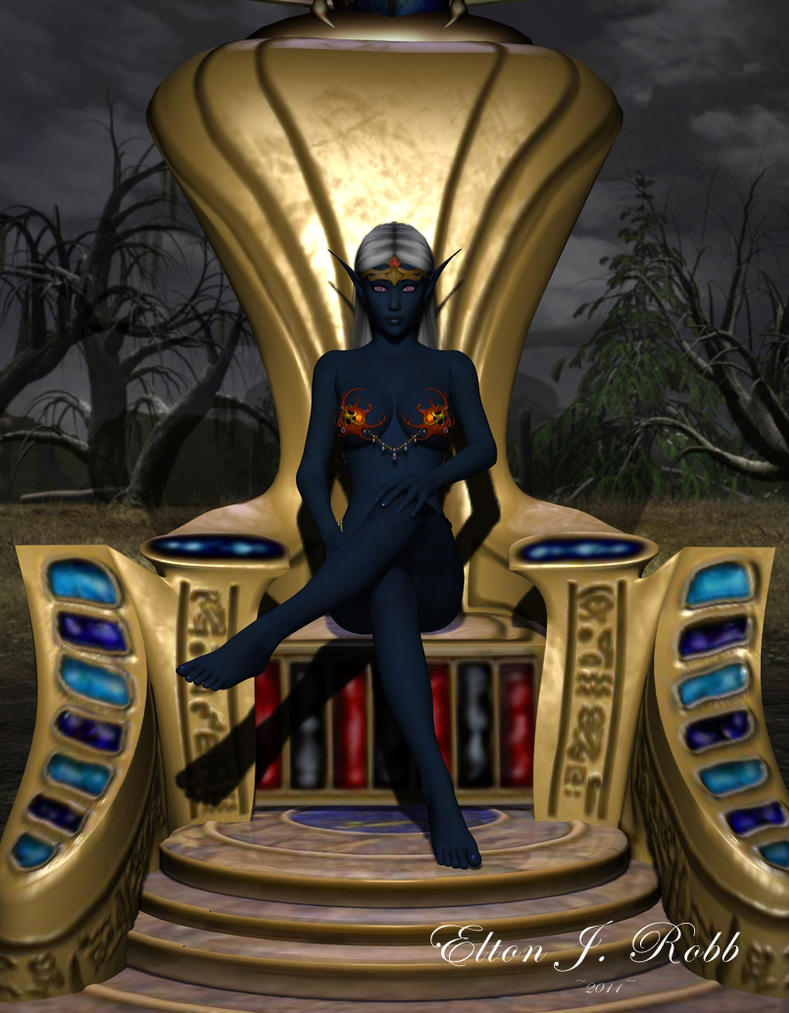
The Fifth elvish race are known as the Drow (pronounced Drau as in "cow") most everywhere except in the Hordelands and parts of the Northlands where they are known as the svartálfar (or black elves).   They have a reputation for being evil, wicked, and fiendish.  Their culture, although extremely individualistic and clannish, is in opposition to human and elven culture.  They have a reputation of being crafty, duplicitous, and nasty.  It is said that they value deception and guile and scoff at honesty. There were times in the past when these fears were confirmed when two drow armies tried to invade Phoenicia before the Hellenes conquered the city.

They succeeded once, but were driven back and destroyed and they never succeeded again.  Phoenicia under the rule of the dark elves was a place of near anarchy; except when the dark elves at the time laid a heavy hand.  Whether or not dark elves now are virtuous or kind its not up to debate.   There is a law that has been in place before the Hellenic Occupation that if any dark elf is discovered then they are to be arrested and imprisoned or executed without trial.

Deep in Phoenicia I, the Dark Elf Madame Ssapinitra Kennett maintains a haven for her kind.  So far, it's secret and no one knows how deep it is.


Half-Dragons

Half dragons are the result of unions or magical experimentation between a humanoid and a dragon.  Dragons typically live a long time, and young dragons have been known to dally with "mortals" (humanoids) or most anything.  Or, crazy wizards may do breeding experiments to produce a particular monstrous result.  What ever the case, half-dragons have been known to be the result.

Half-dragons of a humanoid nature in Phoenicia usually come from Silver Dragon, Red Dragon, or Gold Dragon stock.  While silver dragons are the friendliest and gold dragons are often caught up with humanoids, Red Dragons have been known to play with their food if it's intelligent (or sometimes even fall in love with them).

Half dragons are both respected and feared.  They are rare and tend to be more humanoid than not.  The humanoid types, though, form small communities in the poor sector and call themselves the "Dragonborn" in response to racism.  Generally though, the population is law abiding despite any tendencies individuals have towards committing evil.


Orcs

Orcs are beyond the Dragonwall and come from the Hordelands.  Although exceptions such as the Desert Viper Clan exists, most orcs live in the Hordelands and typically do not bother anyone in Phoenicia.  Orc Myth say that they were born of a forgotten orc god -- which they call the Creator or Nwali.  Nwali, however, is not worshipped and the orcs revere their ancestors or practice animal reverence (through Heathen Shamanism).

Although there is no question that the Orcs brought a codified demon magic through Warlocks into the world; the orcs are generally honorable if slightly antagonistic towards humans.  Although a full scale war between humans and orcs was committed years ago, racial tension is there and every once in a while war erupts between the two races somewhere on the planet.

Generally, the relationship between Phoenicia and the Desert Viper clan is cool.   Every once in a while the orcs raid the city.  The city has never been conquered and it has never been destroyed by orcs.  But no quarter of the city has not felt the orc torch.


Tieflings

If aasimar exists, so do tieflings.  Tieflings are the result of infernal blood being mixed in to human(oid) bloodlines.   A tiefling is typically the descendant of a human-infernal union -- either through a succubus/human mating or a horned demon/human mating.  Tieflings of elven and orc stock are typically called something else.  Tieflings are either warriors, spellcasters (of these, they are typically Warlocks), rogues, or clerics of evil gods.  Most tieflings are evil, and some are chaotic.  It is rumored that one noble family is all tieflings.

Thursday, June 2, 2011

The Races of Phoenicia -- Minor Races

The minor races are so named not because of their stature, but because of their Rarity. It's up to the GM to decide if these races can be played by player characters or not.

Elans
An Elan, by me.

The Elans are humans that have changed themselves to take advantage of the psionic energy around Phoenicia and it's sister cities -- Syracuse and Sybaris.  Elans have changed their physiology so that they will never age and never die of disease or of "natural causes."  Their bodies are capable of converting psionic energy into bio-energy; to the point of sustaining the biological functions of their body -- enough to stave off entropy.

The result is that they have psionic talents beyond those of the regular human.  The ritual for creating an Elan is similar to that of creating a psionic lich.  But there are enough differences that an elan is not an undead.  Still, an Elan is an aberration because the transformation changes how the body processes energy.   The ritual is guarded and considered sacred, almost to the point that the society of elans are often considered to be a secret society or a mystery cult (like those that worship the Spirit of Truth).  The fact is, there are only three known places in the world where Elans can be created.  These three places are Phoenicia, Syracuse, and Sybaris.

What is unusual that the religion of the Elan doesn't seem to change.  An elan would worship the gods she or he worshipped in life before becoming an Elan.  He would have all of his life experience as a personality -- but the transformation results in a forgetting.  A forgetting of knowledge and skills.  In a strange twist of fate -- a new Elan knows everything about himself, just in the area of profession and skill he's like a newborn baby.  The people who developed the ritual still don't understand why, but they are unable to figure it out to the satisfaction of perfection.  They write it off as being "born again" or "born anew" as the new Elan has cast off his old life to begin a new life.

Elans are brimming with energy, psychic energy.  This energy is drawn from the world around them and simultaneously converted into biological energy. Their eyes seem to shine, their skin seems to sparkle, and their hair seems to be made of strands of color in the wind. Elans typically resemble humans in size and weight, with males typically slightly taller and heavier than females.  Their appearance is diverse, as elans will adopt whatever type of dress and physical style of the society they are in.

Racial Traits

  • +2 to one ability score: Elans gain a +2 bonus to one ability score chosen at creation to represent their varied nature.
  • Aberrant Blood: Elans are of the humanoid (aberrant) subtype.
  • Medium: Elan are Medium creatures and have no bonuses or penalties due to their size.
  • Normal Speed: Elans have a base speed of 30 feet.
  • Aberrant Nature: Although human in appearance, elans suffer from a nature slightly off from the rest of the non-elan society. They suffer a -1 penalty to Charisma-based skill checks when dealing with non-elans.
  • Naturally Psionic: Elans gain the Wild Talent feat as a bonus feat at 1st level. If an elan takes levels in a psionic class, she instead gains the Psionic Talent feat.
  • Resistance (Su): Elans can use psionic energy to increase their resistance to various forms of attack. As an immediate action, an elan can spend 1 power point to gain a +4 racial bonus on saving throws until the beginning of her next action.
  • Resilience (Su): When an elan takes damage, he can spend power points to reduce its severity. As an immediate action, he can reduce the damage he is about to take by 2 hit points for every 1 power point he spends.
  • Repletion (Su): An elan can sustain his body without need of food or water. If he spends 1 power point, an elan does not need to eat or drink for 24 hours.
  • Psionic Aptitude: When an elan takes a level in a favored class, he can choose to gain an additional power point instead of a hit point or skill point.
  • Languages: Elans begin play speaking Common. Elans with high Intelligence scores can choose any languages they want (except secret languages, such as Druidic).

Maenads
Maenad  (placeholder)

The Maenads are a dichotomous race created from humans by an accident.  From far out to the west in the known world, the accident that created them stemmed from experimenting with psionic lichdom.  Rumor has it that an explosion was involved in their creation.  Very rare, the Maenads are said to be under the curse of Dionysus by the superstitious, since they have strong emotions.  Emotions that take a great deal of discipline to control.  As a result, Maenads have become philosophers, poets, artists, and warriors.

Standing slightly taller than humans, roughly shoulder to shoulder with half-orcs, maenads are physically impressive. Male maenads are usually equal in height, but slightly heavier than females. They have thick, dark hair on their heads, but lack any other hair on their body; instead their skin is covered in flecks of sparkling crystals, giving them a peculiar sparkle. The coloration of these crystals define the look for each individual maenad, ranging from pale white to jet black, and many believe that the coloration is determined by their most powerful emotion. Maenads are naturally graceful and have fine features, possessing an elf-like beauty. They prefer heavier clothing, and wear armor if available, but tend to go barefoot, especially when aboard a ship.

Maenads are attracted to religions that soothe their emotional spirits, and many are attracted to the Spirit of Truth.  Most maenads are lawful, seeing the structure of rules as helpful toward maintaining composure and self-control. Generally, they seek to help others also maintain their own self-control, and have a tendency toward good alignment as a result.

Racial Traits
  • +2 to one ability score: Maenads gain a +2 bonus to one ability score chosen at creation, to represent their varied nature.
  • Medium: Maenads are Medium creatures and have no bonuses or penalties due to their size.
  • Normal Speed: Maenads have a base speed of 30 feet.
  • Naturally Psionic: Maenads gain the Wild Talent feat as a bonus feat at 1st level. If a maenad takes levels in a psionic class, he instead gains the Psionic Talent feat.
  • Maenad Psionics: Maenad gain the following psi-like ability. 1/day—energy ray. A maenad can deal only sonic damage with this ability. It is accompanied by a tremendous scream of rage. The manifester level is equal to 1/2 Hit Dice (minimum 1st). The DC for this power is equal to 10 + the power’s level + the maenad’s Charisma modifier.
  • Sonic Affinity: Maenads add a +1 to the DC of any spell or power with the sonic descriptor.
  • Outburst: Maenads can dampen their mental processes for an increase in raw power called an outburst. As a result, they take a -2 penalty to Intelligence and Wisdom but gain a +2 bonus to Strength. The character must spend one power point at the beginning of each round during an outburst and may stop an outburst at any time.
  • Inner Rage: Maenads are able to rage one additional round per day should they have the rage ability and they gain an additional round per day every odd character level. In addition to using these rounds for rage, maenads may use them to fuel their outburst, instead of power points.
  • Ordered Rage: Maenads may take levels in the barbarian class even if they are of the lawful alignment.
  • Natural Sailors: Maenads have a +2 bonus to Swim and Profession (sailor) checks. In addition, they gain a +2 bonus to Acrobatics and Climb checks made on sailing ships.
  • Weapon Familiarity: Maenads are proficient with flails. Maenads treat any weapon with the word “maenad” in the name as a martial weapon rather than an exotic one.
  • Psionic Aptitude: When a maenad takes a level in a favored class, he can choose to gain an additional power point instead of a hit point or skill point.
  • Languages: Maenads begin play speaking Common and Maenad. Maenads with high Intelligence scores can choose can choose from the following: Aquan, Draconic, Dwarven, Elven, and Goblin.

Half Giants
Half-Giant (placeholder)

Somewhere in the deep deserts the Half-Giants came.  The result of experimentation in mating between humans and giants, half-giants were created as a slave race by deranged sorcerer kings that rule their desert city states.  Now they escaped, and they live in tribal societies.   The most important thing to Half-Giants is their liberty.  A half-giant is individualistic, and he will fight for his life, his liberty, and his property against those who would use force against him. Some myths claim that the half-giants were spawned from fire giants, while others say that they were spawned from sand giants. Regardless of the truth, half-giants are more resilient to heat, a trait that serves them well in the present, as they have a tendency to dwell in arid lands and deserts.

Standing over eight feet tall, half-giants are the largest of the common races, towering above even half-orcs, with males slightly taller and heavier than females. Their size makes them imposing but slow to react. Their skin ranges from nearly complete black to a deep tan, while their hair is almost always black. Their eyes typically range from blue to green, but a fair number have red eyes, making them stand out against other races. Most half-giants tend to wear little clothing, or very heavy armor, depending on the situation; in a social gathering, their tribal clothing covers very little to account for their tendency to reside in hot lands, and most half-giants are proud of their bodies and physical looks and prowess. In combat, they prefer to wear heavy armor, taking advantage of their natural strength and stature.

Half-giants most commonly organize themselves into nomadic and shifting tribes, following charismatic and wise leaders for brief periods. Many half-giants have a tendency to drift into and out of tribes over time, while a portion of a tribe may split out and start a new tribe, which may later merge with a larger tribe. When enemies gather, empires rise, or war looms, the half-giant tribes might unite under their strongest and wisest leaders, protecting each other from the threat of oppression. In times of peace, they splinter into hundreds of individual tribes, enjoying the freedom they hold so dear. As societies go, the half-giants are generally composed of nomadic hunters, taking down the giant sandworms of the desert or hunting elephants across the savannah and plains. Half-giants enjoy dancing, drinking and games of physical prowess such as wrestling, running, and spear throwing.

Worshiping gods relating to freedom, nature, summer, and the hunt, half-giants are devout but very naturalistic. They manifest their worship with totem poles, believing the gods to be pleased with depictions of their power, thus protecting the tribe from evil. Most half-giants tend to be neutral or chaotic good, striving to help both the tribe and others as well as they can, although their belief in following the law to avoid incarceration can result in lawful half-giants. This does not mean that a half-giant won’t resort to violence at the slightest sign of evil. Indeed, to most half-giants, jail, incarceration, and slavery are all seen as equally evil and to be fought to the last breath.

Racial Traits
  • +2 Wisdom, +2 Strength, –2 Dexterity: Half-giants are tough and intuitive, but not too nimble.
  • Giant Blood: Half-giants count as both human and humanoid (giant) for any effect related to race.
  • Medium: Half-giants are Medium creatures and have no bonuses or penalties due to their size.
  • Normal Speed: Half-giants have a base speed of 30 feet.
  • Low-Light Vision: Half-giants can see twice as far as humans in conditions of dim light. See Vision and Light.
  • Fire Acclimated: Half-giants receive a +2 racial bonus on saving throws against all fire spells and effects.
  • Powerful Build: The physical stature of half-giants lets them function in many ways as if they were one size category larger.

    Whenever a half-giant is subject to a size modifier or special size modifier for a Combat Maneuver Bonus or Combat Maneuver Defense (such as during grapple checks, bull rush attempts, and trip attempts), the half-giant is treated as one size larger if doing so is advantageous to him.

    A half-giant is also considered to be one size larger when determining whether a creature’s special attacks based on size (such as
    grab or swallow whole) can affect him. A half-giant can use weapons designed for a creature one size larger without penalty. However, his space and reach remain those of a creature of his actual size. The benefts of this racial trait stack with the effects of powers, abilities, and spells that change the subject’s size category.
  • Naturally Psionic: Half-giants receive Wild Talent as a bonus feat at 1st level. If a half-giant takes levels in a psionic class, he instead gains the Psionic Talent feat.
  • Half-giant Psionics: Half-giants gain the following spell-like ability: 1/day—stomp. The manifester level for this effect is equal to 1/2 the half-giant’s level (minimum 1st). The DC for this power is equal to 10 + the power’s level + the half-giant’s Charisma modifier.
  • Psionic Aptitude: When a half-giant takes a level in a favored class, he can choose to gain an additional power point instead of a hit point or skill point.
  • Survivor: Half-giants gain a +4 racial bonus to Survival checks.
  • Languages: Half-giants begin play speaking Common. Half-giants with high Intelligence scores can choose from the following: Draconic, Giant, Gnoll, and Ignan.

Half - Ogres
Francisco Bayeu [Public domain], via Wikimedia Commons

The Half-Ogres in Phoenicia are of Psychic Ogre stock rather than regular ogre or ogre mage stock.  They are incredibly rare, and are born of rape between an ogre and a human, an orc, or an elf.  Usually, there is a dichotomy in the ratio of ogre males to females -- instead of 55% female to male in humans, it's 45% female to males in ogres.  So the ogres that are incapable of getting mates often go out to capture a pretty elf, human, or orc to breed with.

In very rare instances, half-ogres are bred to serve in a particularly vicious army. In either case, a half-ogre’s upbringing is rarely a happy one, as they are tolerated for their usefulness and shown little love. Those half-ogres that do manage to survive to adulthood with their sanity intact are solitary creatures, putting their muscles to use while understanding that most civilized folk will give them a wide berth. The half-ogre much prefers the country to the city, where urban architecture rarely accommodates their bulk. Half-ogres have miserable tempers and are quick to anger, but those that show one kindness will never have a more loyal friend.

While technically medium creatures, most half-ogres straddle the line at around 8 feet tall. Like dwarves, half-ogres are stocky creatures for their size. From a distance, a half-ogre can pass as a large human, and many ancient legends about extraordinarily large human warriors probably referred to half-ogres. Up close, the wild stare and unkempt appearance, in addition to his larger height, unmistakably mark one as a half-ogre.

The Psychic stock of the Half Ogres of Phoenicia (and Sybaris and Syracuse) allows the Half-Ogre a great deal of psychic potential.  Once, the ogres were the Titans.  Most titans, except those associated with the Planets, were deposed by the Olympians and then cursed to walk the earth, cursed to reflect the ugliness inside themselves.  While some ogres are definitely Beautiful and Handsome, others are incredibly ugly.  Some have horns,  others are afflicted with a great many warts.  Some look like apes, some look like ugly humans.  Some are terrible to behold and to look upon.  All are regarded as enemies due to their appearance.  Now, they walk the earth as living monstrosities, most of the time breeding true, and at other times breeding with other humanoids. 

Half-ogres get along well with half-orcs, especially since they share similar life experiences. Half-ogres also get along with humans who find their strength useful for labor and military purposes. The smaller races tend to be intimidated by half-ogres and the feeling is mutual; half-ogres fear that gnomes or halflings can play tricks on them or steal their stuff without getting caught. Half-ogres don’t enjoy the company of elves or half-elves, as they often have the beauty, grace, and acceptance that was denied to the half-ogre.

Racial Traits:

  • +4 Strength, +2 Constitution, -2 Intelligence, -2 Wisdom: Half-ogres are immensely strong and hardy, but somewhat slow-witted and brash.
  • Medium: Half-Ogres are Medium creatures and have no bonuses or penalties due to their size.
  • Normal Speed: Half-ogres have a base speed of 30 feet.
  • Darkvision: Half-Ogres can see in the dark up to 60 feet.
    Naturally Psionic: Half-giants receive Wild Talent as a bonus feat at 1st level. If a half-giant takes levels in a psionic class, he instead gains the Psionic Talent feat.
  • Imposing Figure: Half-ogres are intimidating without trying. They get a +2 racial bonus to Intimidate checks.
  • Ogre Blood: Half-ogres count as both humans and ogres for any effect related to race.
  • Languages: Common, Giant. Half-ogres with high Intelligence scores can choose any of the following: dwarven, goblin, orc, or giant.

Wednesday, June 1, 2011

Monday, May 30, 2011

The Races of Phoenicia -- Major Races

The races of the population of Phoenicia are in many ways standard to the races found in the Pathfinder Core.  However, there are a few aspects that are unique to each race that tailor them to the setting.  Also, a few new races and a few "monsters" can also make acceptable PC races. 

Pathfinder Gamemasters and Dungeons and Dragons DMs should decide which races they should allow in their version of Phoenicia.  For your convenience, this post goes into more detail about the races in the player's primer.  They are still divided into Major Races, Minor Races, and NPC races.  The latter are races found in the City of Psionics that are not appropriate for play without consideration on the GM's or DM's part. 

As always, information in the Pathfinder Core Rulebook as well as information in the various Dungeons and Dragons core rule books, should take precedent unless information here contradicts them.   You should also consult the Player's Primer.

Major Races

The major races of Phoenicia are those found in the Pathfinder Core Rulebook, and the Dungeons and Dragons Player's Handbook.  For the Phoenicia setting, they require some changes.   In theory, you -- the GM -- should allow all of these races in your Phoenicia campaign.


DWARVES

The Dwarves come from another world, but were made up of six different tribes.  The Pale Ones, the Gold Ones, the Iron Ones, the Wild Ones, the Dark Ones, and the Desert Ones.  The Pale Ones migrated to the extreme North East, looking for a way to live their isolated, seal hunting ways.  The Pale Ones eventually became the Snowdown Clan.  The Wild Ones migrated into the extreme south of Vedan Lands and became known as the Jungle Dwarves.  The Gold Ones migrated into the extreme southwest, going beyond the fabled land of Khem and beyond human exploration.  This left the Desert Ones, the Dark Ones, and the Iron Ones.

The three of them maintained what little contact they had and formed a tri-clanship.  The Desert Ones became the Wildstone Clan, the Iron ones became the Ironhammer Clan, and the Dark Ones became the Vulcan Clan.  The Clans then split up.  The Wildstone Clan found rich copper ore deposits to the east and settled in the southern hills and valleys of the Dragonwall Mountains.  They would eventually teach Mankind how to make bronze swords with a stone mold.

The Ironhammer Clan moved into the North and West of the Dragonwall, finding rich iron deposits and eventually mastering the Riddle of Steel.  The Ironhammer Clan became a white and delightsome people, though unfortunately they learned the recipe of beer brewing from the fabled Khemites.  They eventually perfected the making of beer into a variety of ales, lagers, and beers (some with impressive heads).  People often wonder if the Ironhammers are just either making steel or getting drunk.  Those assumptions aren't true, of course.  Only a small percentage of Ironhammer dwarves really touch any sort of alcoholic drink.

The Vulcan Clan moved to an active volcanic island and colonized the island.  The Island, said to be the Forge of Hephaestus, became the home of the Vulcan Clan of Dwarves.  Their skins, a dark gray, was as suited to the hot environment they tunneled into as everywhere else.  The Vulcan Clan constructed a great fortress over the lava lake in the mouth of the volcano, and constructed a small city in the mountain itself.  However, living on an active volcano is one thing; and living in one is quite another.  Still, they mastered the art of forging ferroplasm, probably due to the high incidence of psionic talent among them.

Both of the Ironhammer Clan and the Wildstone clan uses the regular Dwarf creation rules found in the Patfinder Core Rulebook.  Wildstone Dwarf PCs, however, may select the Desert Runner elf trait in lieu of one of the regular Dwarf traits.

The Vulcan clan of Dwarves use the Duergar character creation guidelines in Psionics Unleashed.


ELVES

The Elves of Phoenicia come from five tribes that crossed from their world.  The five tribes include the Pelasgiri elves -- who were led by the Pelagsus dynasty; the Fair Elves, the Sea Elves, the Desert Elves, and the Drow.  However, splitting of the tribes have happened numerous times.  The Sea Elves settled and now live in the Great Sea, the nefarious Drow were mostly driven into caves, and the Desert Elves eke out an existence in the deserts and semi-arid areas of the land.  Their history will be described later.  As for the Pelasgiri and the Fair Elves ---

The Fair Elves and the Pelagsiri Elves lived beyond the Dragon Wall in what would become the domains of men.  The Fair Elves created the kingdom of Arcadia and the Pelagsiri split into dozens of barbarian tribes that lived in the central lands.

Pelagsus taught his barbarian people the secrets of making a rough garment, hunting, and basic agriculture -- although they were barbarians.  The Fair Elves, however, built a fledging civilization in Arcadia and started colonies throughout the World: Colonies such as Massalia, Syracuse, Tyr,  Asconia, and Verdania.   One such colony, Arcanus, traded with the Pelasgus elves of the Mountains above Arcadia.

However, the Pelagsiri became enamored with Fair Elf culture, and eventually became jealous when the Arcadians became petty and cruel in their eyes.  In the Middle Bronze Age, the Pelagsiri launched an invasion into Arcadia -- Elf slaying Elf and enslaving elf.

Using the Power of Storm of Vengeance and Waves of Vengeance, entire Arcadian cities were totally destroyed by fire or by sea.  Many Fair Elves were put to the sword or caught in chains.  In five short years, many strong Fair Elven populations were slaughtered and what was left was scattered to the five winds or enslaved.

The Pelagsiri conquered all of Arcadia and the land of Arcadia had become known as the Grey Realm.  Angered as to what happened, the Fair Elves in Massalia gathered together and it was agreed that invasion must be answered.  Building ships of war, the Massalians launched a naval war that caused a rift between the two Elf tribes forever.

While some cities, such as Asconia and Verdania, were eventually retaken; many Massalian Fleets were sunk in the depths of the Sea by the forces of the Pelagsiri's command of Magic -- which they inherited from the destruction of Arcadia.  The magnificent city of Tyr was eventually razed to the ground by Massalian elves after they couldn't retrieve specific texts from the Library of Magic.  Eventually, however, the war was one of a stalemate -- the Massalian Elves had to stop fighting the Pelagsiri Elves in order to preserve their economy.   And the Pelagsiri elves were left weakened.

However, without realizing it, the Massalian Elves got the last laugh as Man soon conquered and colonized Arcadia -- shrinking the Pelagsiri city holdings to just five cities.   The remaining Pelagsiri elves in Arcadia renamed themselves the High Elves, and their lands the Grey Kingdom after their Grey Queen.   And the Massalian Elves called themselves the Massalian Elves; although they hold that their nation is the only Fair Elf nation (which is untrue).

Eventually, slightly weakened, the Massalian nation was invaded by powerful feral trolls.  Faced again with the destruction of their culture, the Massalian elves had made pacts with demons for the power to drive the trolls out.  Once the pact was made, the Massalian Elves with their new found powers have pushed most of the trolls out of their borders.  Currently, several Eastern and Northern forests are in dispute.

As Man expands and form colonies, however, the Elven Range seems to be weakening.  Massalia is looking for new lands to start new colonies, so as to ensure that the Fair Elf race and culture can continue.

Both the Massalian Elves and the High Elves are created according to the Elf entry in the Pathfinder Core Rulebook.  In Dungeons and Dragons, the two groups are considered Eladrin.  However with some differences.

PCs belonging to both groups can choose to have blood feud with each other -- They may take Eternal Grudge, which is directed at one or the other.  The differences between the two are cosmetic.  Most Massalian Elves have eyes that glow brightly green or have emerald green eyes (others have brown, blue, or hazel eyes).   The High Elves have eyes that are blue, brown, grey, orange, or red.  The conflict between them is fifteen hundred years old, although both the Grey Queen and the Massalian Council are tired of the smouldering war.  Both elves are fair, although the Mediterranean Climate of the Massalia has given some of the Massalians a slight uniform tan.


GNOMES

Gnomes are the rarest of the Major Races, and typically live on the islands of the Great Sea.  The Gnomes are typically lovers of magic, music, and the sea.  They partake of the bounty of the sea, and generally are seen as dwarf elves (although most elves would deny the connection).  Some gnomish societies have dealings with the sea elves.


HALFLINGS

Halflings are so human looking that they are thought to be human crosses of either Ironhammer Dwarves or gnomes.  However, this isn't true as Halflings are their own race.  They frequently live among humans, but are seen as wanderers through most lands.  The Halflings avoid the Hordelands; though.   They don't find the term "Halfling" to be derogatory, but they do have a name for themselves in their own tongue which translates to "the People."


HUMANS

The humans are probably seen as children by the Dwarves and the Elves and other races.  However, if they were to know the humans' actual history on the planet, the Dwarves and the Elves will realize that they are the "younger" races.  The Human's range -- known as the World -- is slowly expanding.  However, as the real original race of the planet; humans have colonized virtually everywhere. No changes are needed to the humans from both Pathfinder and the Player's Handbook. 

Sunday, May 22, 2011

Orcs of Galatea

In a fantasy roleplaying game: orcs are living, thinking beings that have all the necessities that humans have.  Since their creation from simple brutes, orcs have been either in societies where they rampage across human societies or they are the race of honor.

It is a conceit to think that orcs are always about honor and battle, no matter what the culture you think of them.  Through this blog, I have sought to bring the orcs into sharp focus, using every sort of tool at my disposal.  However, retconning them from Africa to Caledonia will give the Orcs of Galatea a unique flavor -- separate from Tolkien's or the World of Warcraft's orcs.

Making a fantasy race whole cloth is difficult to do, actually.  The best we can do is create them as a calque of a different race or culture.  Calque means borrowed from, meaning we borrow from history to create a fantasy race.  There should be no apologies for doing this, after all, we Gamemasters do it all the time. 

If it offends someone or somebody, then that someone who is offended with our creation will have to do deal with it.  They can either leave the product alone, find someone else to play it, or they can change how it works in their vision.  A world builder is one individual, and the world he builds comes from his life experience, his ideals and morals, and deep seated prejudices.

So, when you see Orcs of Galatea, and their culture comes from the picts, irish, and mongols; and you feel offended; then you can say so on this blog, or simply not read the blog, it's as simple as that.

-----------------------------
By Hygami

What will this series of blogs contain:

* Orc Society and history

There is a series of blogs that already divide the orcs in to a series of tribes.  And I have gone into their major creation myths. I haven't gone so far as to explain general Orc Culture yet.

* Orc Traits

Traits for playing a Galatea Orc. Taken from World of Warcraft and modified.  Also, new traits for the Orc of Galatea.  As well as a paragon class.

* Orc Feats of Cunning and Daring

Feats from Orcs of Golarion adapted to the Orc of Galatea.

* Orc Faith

The Shaman class is introduced here, and how shamanism, animism, ancestor worship, and pantheism affects Orc culture.  The Shaman is the premier spiritual guide for the Orcs of Galatea, and is presented as a variation on the Cleric Class in Pathfinder.  Also, the totemic spirit mechanic will be introduced.

* Orc Magic

The Warlock class is introduced, a variant on the Wizard.  From the World of Warcraft roleplaying game, Orc Warlocks are linked to the Dark Forces of demons and devils in the Pathfinder Game.  Most are evil, but some are not.  But the lure of power is addicting, and the Warlock can gain command over the devils and demons of the world.  They also summon powerful servants to serve them -- including an imp, a succubus, and a host of other evils.

This part will also include a number of spells -- for shamans and warlocks (some from the Advanced Players Guide, some from the WoW RPG, and some from More Magic and Mayhem).

* Living as an Orc Hero among Orcs

How the classes will stack up.

-----

If good enough, the blogs can be collected and printed in a future book for the Pathfinder roleplaying game. :)

Tuesday, March 15, 2011

Art Preview Part 1


Noriel by ~Atlantean6 on deviantART

An Art Preview of the Adventure I am writing.  Here is Noriel, an NPC.  Seeing this, the Art is going to be full color in my adventure.  It will feature the talents of:
Danie and Marforno
RawArt
Rebelmommy
Countess
Adiene and Vixiphene (RMP VAMP)
Aery Soul
Liquid Rust
and many others, including the classical artists:
Gustav Moreau (Hercules vs. the Hydra painting, just not the whole painting)

And a Roman Copy of an Greek Original of Ares (Mars).

Saturday, March 12, 2011

Move Over Hot Orc and Hot Elf Chicks!


And let this human join the fray.  Okay, she's not human, but a dragon.  Tharkena joins the fray of Hot Orc and Hot Elf chicks!  And guess what?  She's more real looking . . .  Proud player of writer of products for Pathfinder.

Which will be copyhearted.  So that people who like the adventure and play 4th edition, can make their own versions and get this -- publish them on the web!

Monday, March 7, 2011

Nott Lady of the Night


An
Adventures in Terre Preview:
NOTT
LADY OF THE NIGHT 
MOTHER OF THE DROW

A new mother goddess for your Drow without the Insanity of being counted as Wizards of the Coast's intellectual property.  This is Nott, the Lady of the Night, and the Mother of the Drow.  Appearing in a series of Campaign Adventures I'm writing for Pathfinder, Nott can be used for your Dungeons and Dragons 4th Edition games as well as your Pathfinder games.

Nott is from Norse Mythology, brought to life by Tony Puryear.  She is the goddess of the Night, and in Tony's Stories, she tempts Tyr -- the God of War.  In Adventures of Terre, to the Drow she is the Mother Goddess.  The Mother of their kind, much like Lolth is in the Dungeons and Dragons world.

D&D 4th Edition Statistics:
Unaligned
Area of Influence: Night, Civilization, Beauty, Arcane Magic (drow)


Pathfinder Statistics:
Chaotic Neutral
Portfolio: Night, Beauty, Civilization, Arcane Magic
Cleric Alignments: CE, CG, CN, N
Domains: Chaos (Protean), Charm (Love), Community (Family), Magic (Arcane), Void (Dark Tapestry)

Use Nott in your next Pathfinder or D&D 4e game.

-----------------

OGL Section 15:
15. COPYRIGHT NOTICE
Open Game License v 1.0a Copyright 2000, Wizards of the Coast, Inc.
System Reference Document. Copyright 2000, Wizards of the Coast, Inc.; Authors Jonathan Tweet, Monte Cook, Skip Williams, based on material by E. Gary Gygax and Dave Arneson.
Pathfinder RPG Core Rulebook. Copyright 2010, Paizo Publishing, LLC; Author: Jason Bulmahn, based onmaterial by Jonathan Tweet, Monte Cook, and Skip Williams.
The Book of Experimental Might. Copyright 2008, Monte J. Cook. All rights reserved.
Tome of Horrors. Copyright 2002, Necromancer Games, Inc.; Authors: Scott Greene, with Clark Peterson, Erica Balsley, Kevin Baase, Casey Christofferson, Lance Hawvermale, Travis Hawvermale, Patrick Lawinger, and Bill Webb;
Advanced Player's Guide. Copyright 2010, Paizo Publishing, LLC; Author: Jason Bulmahn.
Paizo Blog. Copyright 2011, Paizo Publishing, LCC; Author: James Jacobs.
Nott: An Adventures in Terre Preview. ♡2011 by Elton Robb; Author: Elton Robb. Copying Art is an act of love. Love is not subject to law.
Based on original content from TSR.

--- Published under the GSL ---

Saturday, January 8, 2011

Revising BESM d20 Magic


I'm sort of revising d20 Advanced Magic just because I can.  Why, pray tell?  Some people have trouble understanding how the system works.  I don't.  In fact, I playtested it with a group some years ago, and its very balanced in how it works.

d20 Advanced Magic is a spellcasting system that reduces spellcasting in d20 to a DC skill check.  That's pretty much all it does.  Although it does include a lot of math, people who are illiterate in their math skills will stay away from it.  That's okay, there is a system out there that is especially tailored to them.  They can play magical girls and boys using 4th Edition.

A 4th Edition Wizard using the 4th Edition Powers System.

A 4th Edition Wizard using the Dynamic Spellcasting System!

A 4th Edition Sorcerer using the Dynamic Spellcasting System!

What people don't understand is how the paltry bonuses spellcasters get from their magical techniques, invocations, incantations, rituals, foci, and investments can possibly pass the spell DCs; and not suffer drain (non-lethal damage or energy drain) in the process? Note, a wizard casting a spell without these forms are dashing off their spell like a psion dashes off his psionic powers.

The quick answer is, you don't.  But the writers failed to provide examples explaining how their system works to everyone.  So in my revision, I'm providing some needed examples.  The system is for Pathfinder (surprise, surprise) but can work for 4th edition (if the Wizards, Clerics, and Sorcerer PCs are WILLING to be underpowered compared to the Rogue, Psion, Warlock, and Fighter classes -- but they get to use Skill Challenge checks on spellcasting WISH!)  The new book -- The Book of Advanced Magic preserves the system and explains it in simple terms using examples to bolster its case for adoption.

Also, I'll be providing some new feats (Divine Understanding is one of them -- the PC who has the feat understands What they Really Are and gains a +5 bonus to their casting checks.  This feat can only be taken at 1st level or the PC learns the truth about himself somehow [usually through Divine Revelation].  It's opposite - Rational Atheist - provides a penalty of -5 to their casting checks, but provides a bonus for casting Rational, Logical magic [Basically a PC will rationalize a Dragon into a crocodile]).

There are also going to be some new Prestige Classes.  I.e. the Quantum Mage (which requires the PC to have the Divine Understanding feat and have seven ranks in Knowledge (Arcana) and 3 ranks in Knowledge (Religion), and has a +5 spellcasting Bonus).  The Quantum Mage at level 10 gains the Wish and Miracle spells for free and has the Wish spell's DC reduced by 55 (the DC is 101) because he gains perfect Understanding of What He Really Is and can manipulate the Universe according to his will. (Under the usual spellcasting method, he doesn't have to give up the 25,000 gp diamond to cast Wish [Why a diamond?  Diamonds are carbon, people!]).

The whole idea of the revision is to provide players with a better system for spellcasting that is dramatic and fun at the same time! :)
Related Posts Plugin for WordPress, Blogger...