There were three movies by Ray Harryhausen that revolved around Sinbad. The Sinbad movies are another inspiration for Phoenicia (all of them). The movie on youtube is The Golden Voyage of Sinbad.
Friday, May 6, 2011

Thursday, May 5, 2011
Phoenicia Preview: Living in Phoenicia
(Note: I went over this before in an earlier post, but this is much more structured.)
So, what does the average Phoenician know about his or her city? Here are some basics:
So, what does the average Phoenician know about his or her city? Here are some basics:
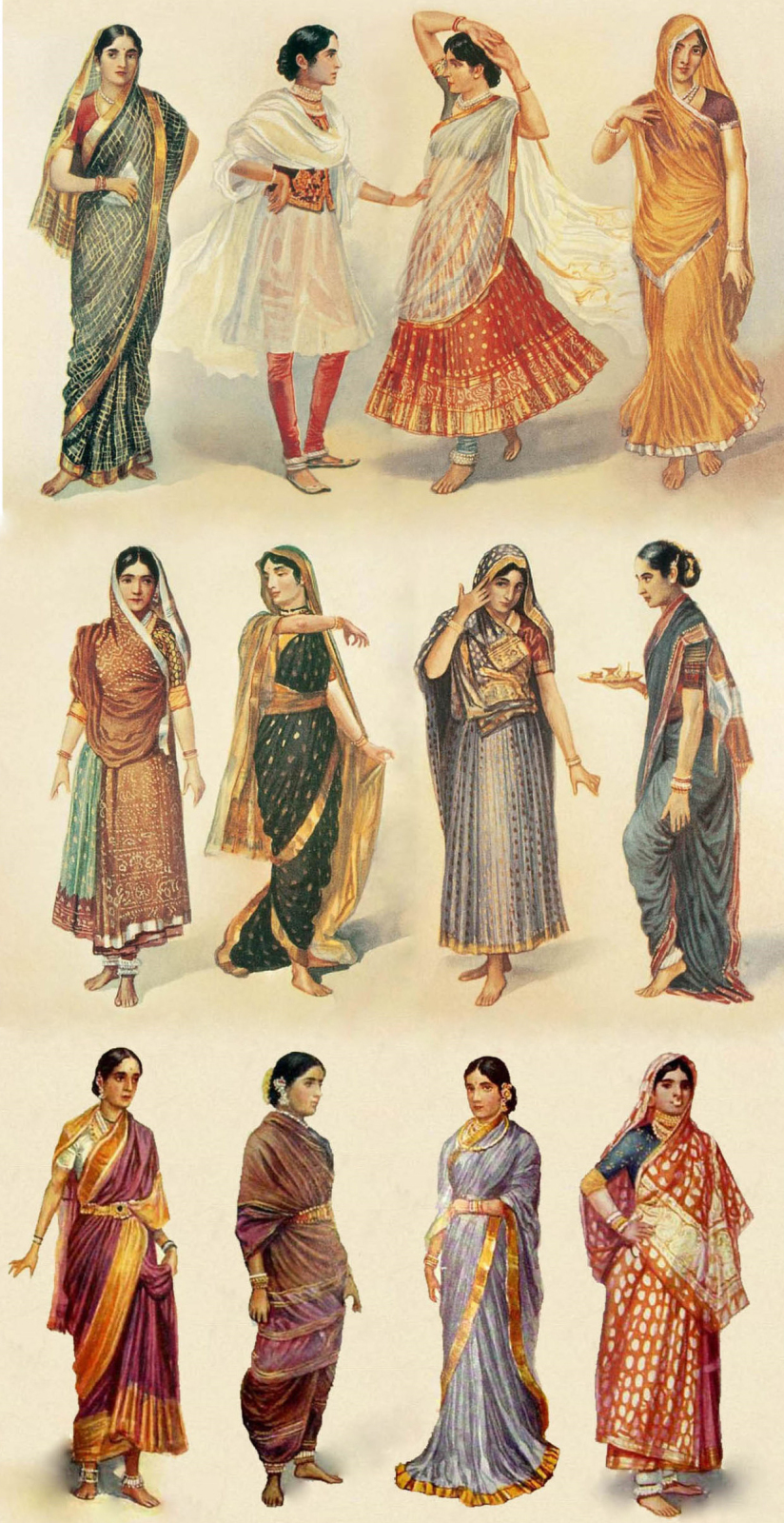 | |
| Styles of various Saris |
- Humans are the most common race in the city.
- The Phoenician year is 365 days, with 12 months, and a seven day week. Every four years, one day is added at the end of the year.
- The Phoenician climate is a Mediterranean climate; more akin to the Climate of Southern France and the Levant. The winters are cool and the summers are warm. During the summer, there is the occasional thunderstorm.
- Pheonician men either wear loose clothing, like a chiton or a lungi, or clothes out of an Arabian Nights movie (long, billowing trousers and a vest) with sandles or shoes. Women are expected to wear a chiton and himaton or sari; however in this new age young people are becoming more daring! Near nudity or full nudity is becoming common among both sexes. As both wizards, philosophers, and psions hunt for the truth and pontificate their findings, people are becoming comfortable with more revealing clothing or nudity; and its more acceptable for women to cross-dress a little. It's still common to see a Phoenician man or woman to be fully clothed or half clothed; but near nudity or nudity in public places are increasing in frequency.
- Men usually keep their hair short and are clean shaven, it's become fashionable among some in the Persian section to wear turbans.
- Women typically like to wear their hair long and styled. Some daring young women, however, are experimenting with "hair dyes" and short cuts.
- The typical commoner earns 1 sp to 3 sp per day. A silver piece is often called a "dinar" or "drakma" (the dinar is more popular).
- The Moneychangers control the banking industry, but it's different. You rent out a personal vault which you can store large sums of cash and use certificates of credit to represent the amount you have in the bank.
- Buildings have primitive glass windows which are teased into shape by stretching. The windows are translucent, although some glaziers are working on a blowing technique to get transparent windows.
- Most buildings, not all of them, have indoor plumbing. The pipes are made of non-rusting metals (like lead).
- You can hire a messenger to carry notes and packages anywhere in the city (these messengers worship Hermes or Siva), and this typically costs 1 sp per delivery. There is also a psionic messenger service.
- Chariots are widely available to take you where ever you want to go. This service costs about 1 sp per trip within the city.
- Most Phoenicians fear the undead that is rumored to stir in the Necropolis. However, more people fear fire, thieves or robbers, and plague.
- Ratmen (Slitherin or Skavin) live in the sewers.
- Rumors often speak of cults worshiping the dark side of Shiva or Khali are finding new members these days.
- Spells that make people do things that they normally would not do, like Charm Person or Dominate Person, are illegal. So are their psionic counterparts (but evidence of the second is hard to find). Spells cast and psionics used for entertainment purposes are the exception.
- Spells or psionics that create Undead or spread plague is considered to be a capital offense.
- Most shops and businesses close at sundown, which means business hours are longer in the summer than in winter. Few are open seven days a week.
Phoenicia Preview: Character Classes
A few guidelines on how the Character Classes work in Phoenicia.
Core Classes
Barbarians: Most human barbarians are from the Dragonwall, the group of mountains that separate the Hordelands from the southern part of Civilization. Barbarian Orcs are from the Hordelands. Elves who are barbarians tend to be desert elves, while there are no dwarven or elan barbarians (unless you have an interesting backstory).
Bards: Bards fit very well in an Urban campaign centered around Phoenicia. Singers, dancers, musicians, acrobats, and orators that pontificate on the local podiums count as bards. Bards with psionic talent (usually wild talent) have been known to incorporate psionics into their performances. Those with PK or Telepathic abilities are the more common. Bards with PK ability often use levitation of objects, while bards with Telepathic ability are known as mentalists. Bards with Clairsentience abilities are known as street psychics. People who are martial art performers, however, are of an entirely different class.
Clerics: Clerics are pretty respected among society. Clerics of Zeus have some political clout and often have to compete with the Brahmins. You can work with the GM to choose a deity that suits your needs. Note that Buddhist monks are considered to be of the Cleric class, not the Monk class.
Druids: Druids are priests or shamans that respect nature. True druids are very rare and most orcs are of the Shaman class. The few druids that exist are among human barbarian tribes and the few high elves that come to live in the city. There are no druids among the Desert Elves, who have more monotheistic leanings (unless you have an interesting backstory). Druids aren't often found in Phoenicia, and therefore the least common.
Athletes (Monks): members of the Monk class are called Athletes. Athletes who tend to adventure wish to follow in the footsteps of Hercules, or the Dioskouroi. The traditions of the Athlete started in the West, and specialized in boxing and wrestling. Athletes who adventure are typically shunned by their more competitive friends, since they use their unarmed combat not for competition; but for survival.
Fighters: Fighters can come from any walk of life in Phoenicia. Phoenicia has several orders of chivalry you may want to join. There is also the Guild of Swords, or the Order of Strength. Many fighters get their start in the Arenas; others join the with the army.
Paladins: Phoenicia has several orders of Chivalry you might find appealing, including the Order of Achilles or the Society of Rama. The two orders have a friendly rivalry. Also, see the discussion in the Cleric entry above about choosing a god to serve your needs.
Rogues: There is a whole society of thieves devoted to Hermes (Hermes' Sons). Remember, though, thief is but one option. There is the espionage route -- because Phoenicia has an entire agency dedicated to espionage called Secret Intelligence. Orc rogues belong to the orc Society of Serpents (which means that they are more sophisticated than they let on). Some rogues act as merchants and artisans, while others are rakes. Not surprisingly, this is due to their skillfulness. Thus, as far as hero classed people go, this class is the most represented in the city.
Sorcerers: Not surprisingly, in a psionic city, Sorcerers are rare but more common than wizards (or their variants). The Bloodlines that are the most common are Abberant, Abyssal, Arcane, Destined, Dreamborn, Elemental, and Infernal.
Wizards: Wizards take a scholarly approach to magic. They tend to look at magic as a science. However, in a city of Psionics, they are extremely rare. So rare that if someone saw a wizard working magic, they would most likely confuse him with a psion. However, people confuse the Wizard with their more malefic counterpart -- the Warlock. Wizards accused of working Dark, Fel Magic have little hope of proving their innocence but are commonly executed by drinking hemlock poison. Wizards, whether apprentice or master, tend to hide their art.
Psionic Classes
Psion: Psions are the most common of the psionic classes. They are typically learned and have learned psionics according to one of three methods: the Will and the Way, the Chakra Method, and the Law of Cause and Effect method.
Psychic Warrior: Like the fighter and the Paladin, there are some chivalristic orders that one can join over time. Psychic Warriors can also start in the arenas.
Soulknives: Soulknives typically train by using their psychic energy to create a mindblade. There are many options for soulknives, however. The same chivalristic orders and espionage are good options for Soulknives; also many soulknives act as paladins for their people. A good number of soulknives operate in the City Watch. They are the rarest of the psionic classes.
Wilders: Typically untrained, wilders have uncontrolled psionic potential. Without the formal training, their powers are connected to their emotions. Wilders are found among the poor and among those who can't demonstrate self control. They are the second most common of the psionic classes.
Core Classes
 |
| A Gorge in the Dragonwall |
Bards: Bards fit very well in an Urban campaign centered around Phoenicia. Singers, dancers, musicians, acrobats, and orators that pontificate on the local podiums count as bards. Bards with psionic talent (usually wild talent) have been known to incorporate psionics into their performances. Those with PK or Telepathic abilities are the more common. Bards with PK ability often use levitation of objects, while bards with Telepathic ability are known as mentalists. Bards with Clairsentience abilities are known as street psychics. People who are martial art performers, however, are of an entirely different class.
Clerics: Clerics are pretty respected among society. Clerics of Zeus have some political clout and often have to compete with the Brahmins. You can work with the GM to choose a deity that suits your needs. Note that Buddhist monks are considered to be of the Cleric class, not the Monk class.
Druids: Druids are priests or shamans that respect nature. True druids are very rare and most orcs are of the Shaman class. The few druids that exist are among human barbarian tribes and the few high elves that come to live in the city. There are no druids among the Desert Elves, who have more monotheistic leanings (unless you have an interesting backstory). Druids aren't often found in Phoenicia, and therefore the least common.
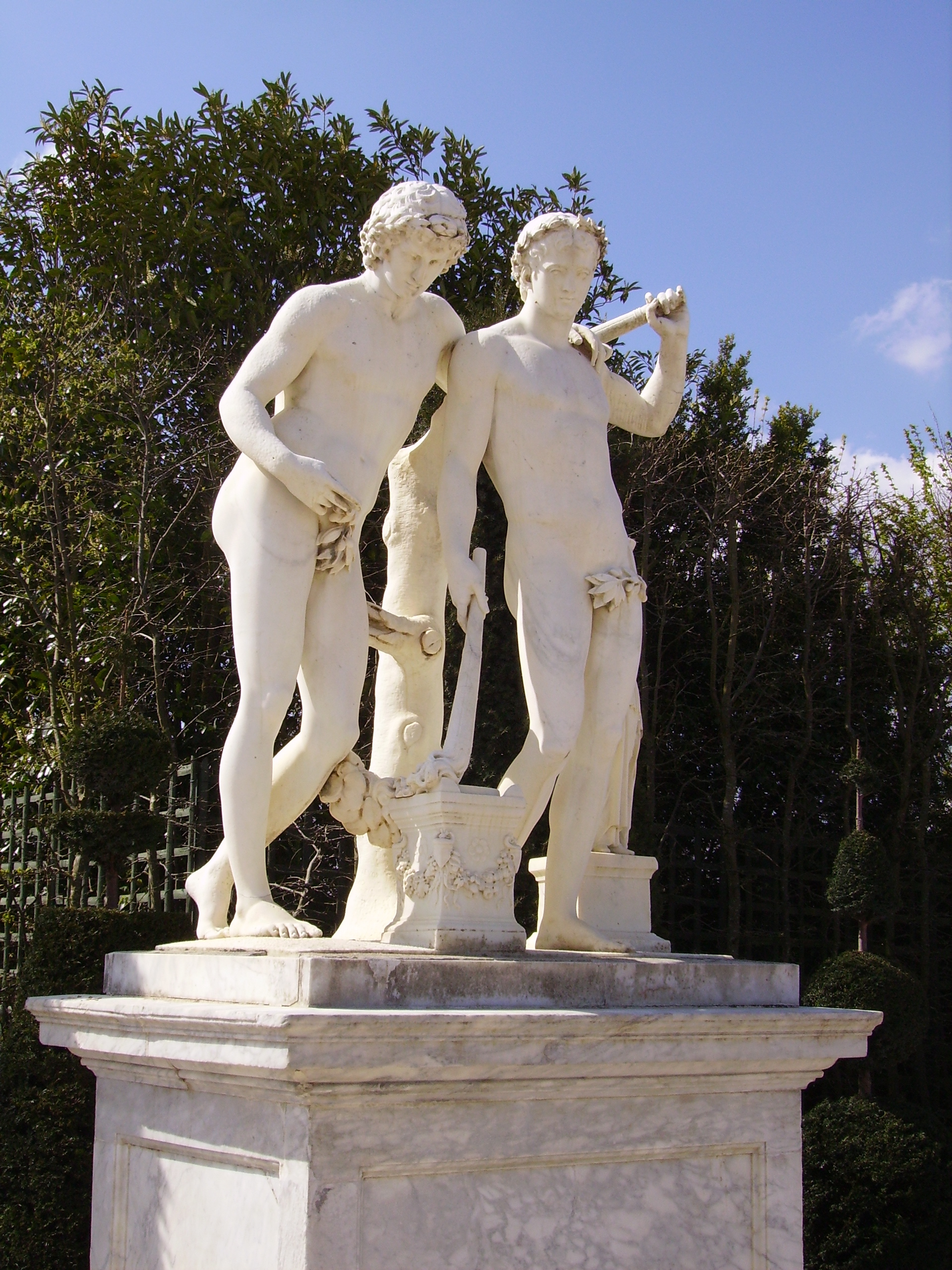 |
| Castor and Pollux |
Fighters: Fighters can come from any walk of life in Phoenicia. Phoenicia has several orders of chivalry you may want to join. There is also the Guild of Swords, or the Order of Strength. Many fighters get their start in the Arenas; others join the with the army.
Paladins: Phoenicia has several orders of Chivalry you might find appealing, including the Order of Achilles or the Society of Rama. The two orders have a friendly rivalry. Also, see the discussion in the Cleric entry above about choosing a god to serve your needs.
Rogues: There is a whole society of thieves devoted to Hermes (Hermes' Sons). Remember, though, thief is but one option. There is the espionage route -- because Phoenicia has an entire agency dedicated to espionage called Secret Intelligence. Orc rogues belong to the orc Society of Serpents (which means that they are more sophisticated than they let on). Some rogues act as merchants and artisans, while others are rakes. Not surprisingly, this is due to their skillfulness. Thus, as far as hero classed people go, this class is the most represented in the city.
Sorcerers: Not surprisingly, in a psionic city, Sorcerers are rare but more common than wizards (or their variants). The Bloodlines that are the most common are Abberant, Abyssal, Arcane, Destined, Dreamborn, Elemental, and Infernal.
Wizards: Wizards take a scholarly approach to magic. They tend to look at magic as a science. However, in a city of Psionics, they are extremely rare. So rare that if someone saw a wizard working magic, they would most likely confuse him with a psion. However, people confuse the Wizard with their more malefic counterpart -- the Warlock. Wizards accused of working Dark, Fel Magic have little hope of proving their innocence but are commonly executed by drinking hemlock poison. Wizards, whether apprentice or master, tend to hide their art.
Psionic Classes
Psion: Psions are the most common of the psionic classes. They are typically learned and have learned psionics according to one of three methods: the Will and the Way, the Chakra Method, and the Law of Cause and Effect method.
Psychic Warrior: Like the fighter and the Paladin, there are some chivalristic orders that one can join over time. Psychic Warriors can also start in the arenas.
Soulknives: Soulknives typically train by using their psychic energy to create a mindblade. There are many options for soulknives, however. The same chivalristic orders and espionage are good options for Soulknives; also many soulknives act as paladins for their people. A good number of soulknives operate in the City Watch. They are the rarest of the psionic classes.
Wilders: Typically untrained, wilders have uncontrolled psionic potential. Without the formal training, their powers are connected to their emotions. Wilders are found among the poor and among those who can't demonstrate self control. They are the second most common of the psionic classes.
Wednesday, May 4, 2011
El Hazard Wednesdays
One of the inspirations for Phoenicia is El Hazard.
This first episode is from the OVA. :)
This first episode is from the OVA. :)
Phoenicia Preview: Id Beast
I redid the Id Beast from Bruce R. Cordell's Hyperconscious for Pathfinder. Yes, I did get a license.
Ahem. . . Around the city of Phoenicia are rare creatures of the Id. Psionic creatures that can pose a threat. So far, the creatures known as puppet masters have not shown up to wreck havoc, but the confluence of Psionic individuals attracts these creatures.
One of the creatures is an Id Beast.
This Elf is an impressive specimen, having lean predatory lines, thick musculature, catlike eyes, and a powerful, hungry conduct that never fades. It’s body swells with excess power and its emotions run especially high. What is more, electrical plasma arcs around it’s muscles.
Id beasts are the result of primitive instincts erupting in the minds of some people; like a volcano, these instincts overwhelm the Self in certain people. While these instincts are apart of all, even the most highly evolved consciousness requires sustenance and survival and harbors a powerful Idbeast that salivates for freedom.
Ahem. . . Around the city of Phoenicia are rare creatures of the Id. Psionic creatures that can pose a threat. So far, the creatures known as puppet masters have not shown up to wreck havoc, but the confluence of Psionic individuals attracts these creatures.
One of the creatures is an Id Beast.
 |
| Mr Hyde from Marvel, used as a stand in. |
Ulundoner (Kirin the Heretic) | CR 6 |
XP 2,400
Male elf magical beast 4
N Medium magical beast (elf)
Init +9; Senses low-light vision; Perception +11
Male elf magical beast 4
N Medium magical beast (elf)
Init +9; Senses low-light vision; Perception +11
DEFENSE
AC 20, touch 17, flat-footed 15 (+5 natural armor, +7 Dex)
hp 34 (4d8+7)
Fort +7, Ref +9, Will +8; +1 vs. divine magic, +2 vs. enchantment, +2 vs. mind-affecting effects
Defensive Abilities evasion, trap sense +1, uncanny dodge; Immune sleep; Resistance 10 poison, acid, cold, electricity; cunning
hp 34 (4d8+7)
Fort +7, Ref +9, Will +8; +1 vs. divine magic, +2 vs. enchantment, +2 vs. mind-affecting effects
Defensive Abilities evasion, trap sense +1, uncanny dodge; Immune sleep; Resistance 10 poison, acid, cold, electricity; cunning
OFFENSE
Speed 50 ft.
Melee 2 mwk short swords +8 (1d6+1/19–20) or mwk short sword +10 (1d6+1/19–20), Bite +3 (2d6), Claws +3 (1d8/1d8)
Ranged longbow +8 (1d8/×3)
Special Attacks Id strike, biofeedback, vigor
Melee 2 mwk short swords +8 (1d6+1/19–20) or mwk short sword +10 (1d6+1/19–20), Bite +3 (2d6), Claws +3 (1d8/1d8)
Ranged longbow +8 (1d8/×3)
Special Attacks Id strike, biofeedback, vigor
STATISTICS
Str 16, Dex 24, Con 18, Int 11, Wis 18, Cha 8
Base Atk +3; CMB +4; CMD 19
Feats Combat Reflexes, Two-Weapon FightingB, Weapon FinesseB, Weapon Focus (short sword)
Skills Acrobatics +11, Climb +6, Diplomacy +0, Disable Device +8, Escape Artist +10, Intimidate +2, Knowledge (dungeoneering) +7, Knowledge (local) +6, Perception +15, Sense Motive +7, Sleight of Hand +10, Stealth +15, Use Magic Device +0
Languages Common, Elven, Goblin
SQ elven magic, Harrow boons (+1 Perception, +2 vs. mind-affecting effects, +1 Diplomacy), rogue talents (combat rogue, finesse rogue) traits (psionic), trapfinding +2, weapon familiarity, psionic
Combat Gear None
Base Atk +3; CMB +4; CMD 19
Feats Combat Reflexes, Two-Weapon FightingB, Weapon FinesseB, Weapon Focus (short sword)
Skills Acrobatics +11, Climb +6, Diplomacy +0, Disable Device +8, Escape Artist +10, Intimidate +2, Knowledge (dungeoneering) +7, Knowledge (local) +6, Perception +15, Sense Motive +7, Sleight of Hand +10, Stealth +15, Use Magic Device +0
Languages Common, Elven, Goblin
SQ elven magic, Harrow boons (+1 Perception, +2 vs. mind-affecting effects, +1 Diplomacy), rogue talents (combat rogue, finesse rogue) traits (psionic), trapfinding +2, weapon familiarity, psionic
Combat Gear None
SPECIAL ABILITIES
An ulundoner is never caught flat-footed.
Id Strike
The ulundoner can make a normal attack to deal additional damage equal to its Hit Dice total (maximum of +20) against a foe once per day. When it makes such attacks, it visibly seems to swell with power as its muscles ripple and its eyes blaze out like beacons of hunger.
Psi-Like Abilities
Biofeedback (1/day): Manifester level 4th and Vigor (1/day). Augmentable powers are augmented to the limit of the manifester level, if appropriate to the power.
Immunities
Ulundoner are immune to sleep.
**Skills
Ulundoner gain constant +4 id bonus to on Perception and Stealth checks.
Id beasts are the result of primitive instincts erupting in the minds of some people; like a volcano, these instincts overwhelm the Self in certain people. While these instincts are apart of all, even the most highly evolved consciousness requires sustenance and survival and harbors a powerful Idbeast that salivates for freedom.
Under the right conditions, a living creature can undergo the most terrifying transformation catalyzed by it’s most basic instincts. A very rare storm of psychic potential can cause a wave of physical and mental alterations in the creature, allowing its most primitive instincts to reshape itself. In such transformations, the Id overwhelms the Self, as the Body supernaturally gains control over the Mind and the Spirit of the organism. Even as his latent psionic energy erupts from the deepest part of one’s consciousness. In an ironic twist, a creature or being without psionic abilities before its release of his id find itself awakened to the power of his mind in a new, more primitive embodiment.
A permanent transformation, these id beasts are too wild to live in the confines of society. These loners hunt the edges of civilization, sometimes forming packs of like individuals. They search for ways to gratify their next unconquerable urge, be it for food or for pleasure. Elves, whether High, Drow, or any other type; are called Ulundoner by the elves when and if they transform into Id Beasts. The name comes from Ulundo, which is elvish for monster.
CREATING AN ID BEAST
“Id beast” is a template you can add to any living creature with an intelligence of at least 3 (referred to hereafter as the “base creature”). Constructs and undead are not viable choices (though an idbeast could become undead with the application of an undead template). With the application of this template, the creature’s type changes to “magical beast.” It uses all the base creature’s statistics and special abilities except as noted here. Statistics and abilities not presented below are as the base creature.
To name your final id beast, simply add the word “id” to the front of the creature’s name as appropriate.
CR: Same as the base creature +1 (for 1–2 HD creatures); same as base creature +2 for 3–16 HD creatures; same as base creature +3 for HD 17+ creatures.
Type: Type changes to “Magical Beast.” Do not recalculate HD, Base Atk, or saves.
Armor Class: Natural armor improves by +5
Speed: The creature’s base speed improves by +20
Attacks: An Idbeast gains bite and claw attacks in addition to the base creature’s attacks, if it did not have them already.
Damage: If the base creature does not have bite and claw attacks, use the damage values in the table below. Otherwise, just use the values below or the creature’s damage, which ever is greater.
Special Qualities and Defenses: Idbeasts have all the special qualities of the base creature, plus they gain immunity to poison, and have acid, cold, electricity, and fire resistance 10. They also gain cunning and are considered psionic creatures (they can participate in mindscape combat).
Special Attacks: An id beast retains all the special attacks of the base creature. Idbeasts with Intelligence or Wisdom scores of 8 or higher possess the following psionic abilities, using their Hit Dice or level as the manifester level (an augmentable power is always augmented fully to the limits of that manifester level), as specified in the table below [see Hyperconscious, Mindscapes, or Beasts of the Id]. Unless otherwise indicated, the ability is usable once per day.
Id Strike (Su): The creature can make a normal attack to deal additional damage equal to its Hit Dice total (maximum of +20) against a foe a number of times per day as noted in the table. When it makes such attacks, it seems to swell with power as its muscles ripple and its eyes blaze like beacons of hunger.
Id Charge (Ex): If an idbeast charges a foe during the first round of combat, it can make a full attack even if it has already taken a move action.
Cunning (Ex): An idbeast is never caught flat-footed.
Abilities: Increase from the base creature as follows: Str +4, Dex +4, Con +4, Int –2, Wis +4, Cha +2.
Skills: Idbeasts receive a +4 id bonus on Perception and Stealth checks.
Alignment: Idbeasts are always neutral.
Idbeasts as Characters
Id beasts often have a character class; they favor fighters and barbarians.
Tuesday, May 3, 2011
Character Backgrounds
 |
| By Anonymous (The Louvre) [Public domain] |
Psionic Entertainer: You were taught to use your gifts to entertain others. You could have been a 'stone charmer', someone who charmed a stone to levitate in the air; a performing circus acrobat, a dancer (with the reputation of having psionic grace), a mentalist (street telepath or hypnotist), a psychic boxer or wrestler (using psychometabolism) or a street psychic. Or perhaps you were raised in a family where your father, mother, or guardian loved to perform. You grew up in that environment but you longed for a different life.
Most Likely Classes: Psion, Wilder, or Bard
Benefit: +2 in Perform (any except Sexual Techniques)
Home District: Any
Escaped Plant: In the Lands of the Sorcerer Kings, they enslaved Shapers to create anything they needed. As a slave, you were forced to bring things into being out of the Ether. These included water, metals, food, artistic items, and nutrients for the soil. This was taxing you, and they made you breed with certain slaves to improve the Shaper stock. You escaped and made your way to Phoenicia to make a new life for yourself. You learned Shaping by a different method than the dominate three in Phoenicia.
Most Likely Class: Shaper (Psion)
Benefit: +2 in Craft skill of choice
Home District: none, outsider.
Artisan's Apprentice: You are the apprentice to a cobber, potter, sculptor, painter, weaver, glazier, or bronzeworker. You may be even an apprentice to a crystalsmith or a blacksmith. Still even an Artisan's apprentice may be drawn into events of extraordinary coincidence.
Most Likely Class: Any
Benefit: +2 in Craft skill of choice
Home District: Any.
Pit Fighter: You are trained to fight in the Arena or the Pits! In any case, in the Arena, you can fight for glory and to perfect your art. The best usually stay in the Area, any may attract annoying people (roadies or adoring fans). Some leave the Arena to find their fame and fortune among adventurers.
Most Likely Class: Barbarian, Fighter, Psychic Warrior, Soulknife
Benefit: Special contacts
Drawback: An annoying adoring fan who worships the ground you walk on (10th level or higher).
Home District: The Bazaar and Desert Gate.
City Watch Guard: You are trained to be apart of the City Guard. You trained in defensive techniques and investigative techniques to find criminals. You use the science of deduction to find criminals: murderers, robbers, inner city bandits, and white collar criminals.
Most Likely Class: Fighter, Paladin, Psion (telepath or seer), Psychic Warrior, Rogue
Benefit: +2 in Knowledge (Investigation)
Home District: Any but the noble districts.
 |
| Judah and Thamar by Horace Vernett |
Most Likely Class: Any except Paladin and Soulknife
Benefit: +2 in Perform (Sexual Techniques)
Home District: Any.
Guru's Apprentice: You study psionics under one of the Gurus that live in the wilderness. Your study of Psionics is coupled with discipline and practice manifesting. After the guru has felt you learned enough, he sets you back into Phoenicia, to seek your fortune.
Most Likely Class: Psion, Psychic Warrior, Soulknife
Benefit: +2 Knowledge (Psionics)
Home District: Any
Clerk in Shop: You work for one of your family members in the family business. Whatever that business is, you hope to excel at it. Being a wine seller, or a seller of glassware, however; might not be to your liking. You hope to go out into the wide world and start a business of your own. Intentionally or unintentionally, being a member of the Adventurer class suddenly seems attractive to gain the capital you need to get started.
Most Likely Class: Any
Benefit: Special Contacts (at least two)
Home District: Any of the middle class areas.
That is about it! I hope you find it an inspiration!
Indigenous Elves of Phoenicia

They favor loose and light clothing, often covering up to keep the heat off of their bodies and the chill of the night away. Most of the Haldamírdor wear head gear that protects them from the sun but provides warmth during the desert nights.
Racial Traits:
+2 Dexterity, +2 Intelligence, -2 Strength: the Desert Elves and are physically weaker than their High and Massalian Elf cousins. But they are also much more hardier than their kin.
Medium: Haldamírdor are medium creatures and have no bonuses or penalties due to their size.
Low Light Vision: Desert Elves can see twice as far than humans in conditions of dim light. See Chapter 7 of the Pathfinder Roleplaying Game Core Rulebook.
Elven Immunities: Desert Elves are immune to magical sleep effects and get a +2 racial saving throw bonus against enchantment spells and effects.
Desert Hardiness: the Desert Elves gain a +4 racial bonus on fortitude saving throws made to resist the effects of hot weather.
Elven Magic: Desert Elves receive a +2 racial bonus on caster level checks made to overcome spell resistance. In addition, elves recxeive a +2 racial bonus on Spellcraft skill checks made to identify the properties of magic items.
Keen Senses: Desert Elves receive a +2 racial bonus on Perception skill checks.
Weapon Familiarity: Desert elves gain the Martial Weapon Proficiency feats for the scimitar, rapier, and short bow (including composite shortbows) as bonus feats. They will treat any weapon with the word "elven" in its name as a martial weapon.
Languages: It's a conceit to think that all elves speak the same language. The Haldamírdor speak Arquilisen -- the desert elf language as well as common. It's not related to Elven, but belongs to an entirely different language tree. Desert Elves with high intellgence scores can choose from the following: Celestial, Draconic, Elven, Gnoll, Gnome, Goblin, Orc, and Sylvan.
------------------
OGL Section 15
15. COPYRIGHT NOTICE
Open Game License v 1.0a Copyright 2000, Wizards of the Coast, Inc.
System Reference Document. Copyright 2000, Wizards of the Coast, Inc.; Authors Jonathan Tweet, Monte Cook, Skip Williams, based on material by E. Gary Gygax and Dave Arneson.
Unearthed Arcana. Copyright 2004, Wizards of the Coast, inc; Andy Collins, Jesse Decker, David Noonan, Rich Redman.
Pathfinder RPG Core Rulebook. Copyright 2010, Paizo Publishing, LLC; Author: Jason Bulmahn, based on material by Jonathan Tweet, Monte Cook, and Skip Williams.
Phoenicia. Copyright 2011, Elton J Robb. Author: Elton J Robb. Some, but not all, rights are reserved.
Monday, May 2, 2011
Making Money as a Cobbler
Again, Karl Fogel is more eloquent than I. So, this is how she earns money from the Sita Sings the Blues distribution project.
-----
The Sita Distribution Project is a public demonstration of how an artist can flourish — economically and artistically — by letting her works circulate for free.
It's not about self-distribution, it's about audience-distribution: put the work out there, let people share it, give them the freedom to organize activities (both commercial and non-commercial) around it, and the artist will benefit, because audiences want to support artists. Our goal is a comprehensible, repeatable model that can be used by independent artists everywhere.
The test subject is artist Nina Paley (now our Artist-in-Residence), who released her award-winning, feature-length animated film Sita Sings the Blues to the world under a totally free license in early 2009. That's free as in "freedom": anyone can make copies, anyone can sell copies, anyone can hold a screening (for profit or otherwise), anyone can make related merchandise, no one needs to ask permission for anything.
Best of all, her income stream is fairly steady. This is the opposite of the traditional "burst and fade" distribution model that so many works endure, dragged out of circulation prematurely to avoid competing with new releases from the same publisher. Because Nina's film is audience-distributed, it's in circulation forever, whenever and wherever people want to see it. And all those audience members are potential customers and donors, as the financial results bear out.
Raw data: While we have to protect the privacy of donors and customers at the online store, we can release summary data and anonymized data. Please see the donations summary, store sales summary, and the store sales details. We're sharing this data in order to give other independent artists some concrete numbers about what a freedom-based distribution model can bring.
Nina Paley's preliminary report from five months after the free release of her film, including the talk she gave at DIY in Philadelphia.
See also The More She Shared, The More She Made by Mike Masnick at TechDirt, for a good writeup of the talk.
--------------------
Sharing your work is good, sharing your work is rewarding. I hope all of this will help certain people see my point of view. Coming soon: Another Preview of Phoenicia. :)
-----
The Sita Distribution Project is a public demonstration of how an artist can flourish — economically and artistically — by letting her works circulate for free.
It's not about self-distribution, it's about audience-distribution: put the work out there, let people share it, give them the freedom to organize activities (both commercial and non-commercial) around it, and the artist will benefit, because audiences want to support artists. Our goal is a comprehensible, repeatable model that can be used by independent artists everywhere.
The test subject is artist Nina Paley (now our Artist-in-Residence), who released her award-winning, feature-length animated film Sita Sings the Blues to the world under a totally free license in early 2009. That's free as in "freedom": anyone can make copies, anyone can sell copies, anyone can hold a screening (for profit or otherwise), anyone can make related merchandise, no one needs to ask permission for anything.
The Results So Far
So far, Nina has made more money by this method than any traditional (i.e., exclusive) distributor was offering before the film's release. Since releasing it for free distribution in February of 2009, she's received approximately $28,000 in donations and another $25,000 in sales of DVDs and other film-related merchandise from the online store. (Note that the donations are dedicated to paying back music licensing fees she had to pay to be able to release the film at all; there's more on that here.) The average donation is a bit over $10 US (but that's not counting the rare outliers, the occasional donations of $500 or $1000 -- if you include those, the average donation is around $30).Best of all, her income stream is fairly steady. This is the opposite of the traditional "burst and fade" distribution model that so many works endure, dragged out of circulation prematurely to avoid competing with new releases from the same publisher. Because Nina's film is audience-distributed, it's in circulation forever, whenever and wherever people want to see it. And all those audience members are potential customers and donors, as the financial results bear out.
Raw data: While we have to protect the privacy of donors and customers at the online store, we can release summary data and anonymized data. Please see the donations summary, store sales summary, and the store sales details. We're sharing this data in order to give other independent artists some concrete numbers about what a freedom-based distribution model can bring.
The Recipe
This distribution model puts the artist squarely on the audience's side: instead of telling people they shouldn't share, the artist encourages them to share. But the key is to do more than just put the work out there and hope for the best. You have to set up infrastructure that makes the artist the focal point for economic activity around the work — not the exclusive owner of all economic activity, just the focal point. Instead of imposing a monopoly on the work itself (which pits artist against audience), let the work flow freely and take advantage of the one natural monopoly that comes from being the artist: attribution, that is, credit for having made the work. Audiences appreciate proper attribution, and will enforce it, because they want to be on the artist's side. So:- Make it very easy for people to donate to you. Remember, if your work is good, some percentage of your audience will want to support you.
- Sell containers, not content (see Understanding Free Content for more: either on the QCO site or below).
For example, the Sita Sings the Blues Merchandise Empire sells DVDs, t-shirts, pins, stickers, and other merchandise. It also makes clear exactly what percentage of the money is going to the artist — people want to know this! While some of the items sold are utilitarian (a DVD is a more convenient way to have the movie), many of them occupy the grey area between utility and "karma value": people purchase them because they want to show their appreciation of the work to others, and they know that their purchase benefits the artist. (Think of why people who go to a concert will buy the band's CD there, even when they know they can download all the songs online for free. It's the same thing.) Don't worry about someone else setting up a store; you're the artist, people want the stuff to come straight from the source, and in any case you have first-mover advantage. - Encourage commercial activity around the work, and give people a clear route to include the artist on the proceeds.
For example, people hold screenings of Sita Sings the Blues and charge admission. Often, they'll send Nina Paley a percentage of the proceeds — even though they don't have to do it, they do. Again, people want to support artists. All artists have to do is make it clear that they're on the audience's side, and audiences will reward them for it.
- License your endorsement.
If you are an artist, your reputation travels with your work, and grows with your work's. That reputation cannot be replicated and cannot be diluted — it's a natural monopoly, so use it!
Tell distributors they can claim to be endorsed by you, the artist, as long as they share a certain percentage of revenue with you. Given a choice between two distributors, one that is clearly sharing profits with the artist and one that is not, people will choose the former. Distributors know that, and in any case they want artists to succeed too. (Another way to say it is: middlemen perform a valuable service, but they perform it better without a monopoly.)
- Encourage the audience to get involved: the people who do get involved will really appreciate it, and even those who don't will sense that there's something interesting going on.
For example, the subtitles on the commercial DVDs of Sita Sings the Blues were done by volunteers who coordinated on a wiki.
- Encourage remixture and re-use — it will only help spread the word about your work.
Some of our favorite examples: a fashion line and this truly stunning film-as-print re-use from Bill Cheswick.
Nina Paley's preliminary report from five months after the free release of her film, including the talk she gave at DIY in Philadelphia.
See also The More She Shared, The More She Made by Mike Masnick at TechDirt, for a good writeup of the talk.
--------------------
Sharing your work is good, sharing your work is rewarding. I hope all of this will help certain people see my point of view. Coming soon: Another Preview of Phoenicia. :)
Thursday, April 28, 2011
The Internet and Copyright
Most of you are probably wondering why I have joined with the Libertarian Cause to get rid of Copyright or to reduce it's power. Why I think the OGL was a good idea, and why I find Wizards of the Coast's handling of 4e so perplexing that I don't know whether to laugh or to cry. So I just laugh, since crying can invite sadness and depression.
To understand where I am coming from I have to address two issues: Free Content vs. Copyright, and the Cult of Originality, Crappy Products, and Good Products.

The simple answer is: We live in an era of near instantaneous communication which works by way of the Internet. The Internet is a copy machine. It's THE perfect copy machine. You either have to take our Free Speech and Free Press Rights away -- which was granted by the Divine, or you have to learn to live with the fact that this machine exists and use it purely for your benefit without infringing on the Rights to Free Speech and Free Press on others.
The simple answer to the second issue is this: You can't curb Crappy derivative and transformative products. It's impossible. Some fan who excercises his creativity in exactly the wrong field will always produce CRAPPY derivatives.
I will deal with part of the Second and the First in this blog post. And I'll largely deal with the second in a future Blog Post.
To first understand why Libertarians want to abolish copyrights is to understand the History of Copyright in the first place and the Internet's purpose in the second. Lets start with the internet.
The Internet is the result of Man's advances in the art of Printing for the last 500 to 600 years. It is the source we go to get our news, to communicate with people over vast distances, and rely on for commerce. The internet is a communication device because it can copy and transmit vast amounts of data to many different people. It's a printing device because it can copy and transmit vast amounts of data perfectly to many different people.
The Internet is the culmination of the moveable type printing press technology. Invented by Johannes Gensfleisch zur Laden zum Gutenberg in and around 1439 A.D.; he first printed the Bible. It was a best seller.
The Printing Press moved to England, and soon William Tyndale printed the bible in English. The Catholic Church got in an uproar over his printing of the Bible in English, and burned him to the stake. That was the first time a Copyright was applied. Despite this, Tyndale's Bible was copied and progulmated across England. The Bible was read in the Southern English Dialect and standardized English pronounciation.
Later, the Government of England got nervous about the Printing Press. Not as nervous as the Catholic Church, but nervous enough. If someone can print a bible, a human anatomy pop-up book, and a scientific treatise of the Solar System; they can print Seditious and Libelous Tracts against the State.
 Parliament and the Crown sought to control such seditious and libelous tracts against the state by creating a guild of private sector censors called the London Company of Stationers. The London Company of Stationers weren't the first thought police, China has that dubious honor of creating the first recorded instance of a thought police.
Because of the Law, the Stationers were granted a monopoly over all printing in England. Yes, the Stationers were granted a monopoly over printing in England. Every work, old and new, could be theirs to print as long as they kept a strict eye on what was printed. As a result, their Charter not only gave them the exclusive right to print but also the right to search out and destroy unauthorized presses and books, and even had the right to burn illegal books. As a result, the Company of Stationers had effectively become the English Government's private, for profit thought police force.
It gets better. This system was openly designed to serve the book seller and the English Government, not the author or the reader. New books were entered in by a company member's name, not the author's. By convention, the member who registered the entry held the "copyright", the exclusive right to publish that book, over other members of the Company, and the Company's Court of Assistants resolved infringement disputes.
This was not simply the latest manifestation of some pre-existing form of copyright. It's not as though authors had formerly had copyrights, which were now to be taken away and given to the Stationers. The Stationers' right was a new right, though one based on a long tradition of granting monopolies to guilds as a means of control. Before this moment, copyright — that is, a privately held, generic right to prevent others from copying — did not exist. People routinely printed works they admired when they had the chance, an activity which is responsible for the survival of many of those works to the present day. One could, of course, be enjoined from distributing a specific document because of its potentially libelous effect, or because it was a private communication, or because the government considered it dangerous and seditious. But these reasons are about public safety or damage to reputation, not about property ownership. There had also been, in some cases, special privileges (then called "patents") allowing exclusive printing of certain types of books. But until the Company of Stationers, there had not been a blanket injunction against printing in general, nor a conception of copyright as a legal property that could be owned by a private party.
This won't Change until the Statute of Anne, and the U.S. Constitution. The copyright clause: "To promote the Progress of Science and useful Arts, by securing for limited Times to Authors and Inventors the exclusive Right to their respective Writings and Discoveries." -- was greatly debated by Madison and Jefferson and this was the result.
Notice it says Authors and Inventors not companies. However, a Copyright Law was enacted with Hamilton suggesting that the Copyright Term lasts to 14 years. However, Copyright always serves the middle man. The Printing Company -- the Walt Disney Company, Wizards of the Coast, Harper and Collins, Houston Mifflin, etc -- is benefited the most when it comes to Printing.
This is was the status quo, with Copyright terms being increased in the 20th Century by authors and artists who were brainwashed that Copyright served them. Then came the invention of the Computer. The first computers were impossibly huge electronic calculators. Although Babbage was working on a cipher machine back in the late 19th Century, the first real computer was a monstrosity of vaccuum tubes and wired circuits.
micro-computers were invented, thanks to the Transistor and the integrated circuit. Then an experiment was conducted by the U.S. Military and a few U.S. Universities taking advantage of XEROX PARC's invention of the ethernet. This experiment, called ArcNet, was the next stage of evolution in printing and communications technology. Something that won't take off until Compuserve, America On-line, and eventually ---- the World Wide Web.
 The Internet was invented, and the Internet is composed of interlocking, interlinking microcomputers across the Planet. And the Internet, for the first time, is a cheep, near instantaneous way of sharing information. It was a revolution! And for the first time, Copyright Law, has been made obsolete by this technology.
Years ago, the Company of Stationers made the argument that if Printing was left in the hands of everyone, printing would be impossible. Now, Printing is left in the hands of everyone thanks to the Internet. Now the Company of Stationers argument can be testable. So, would authors still create without a centralized distribution system to publish their works? The answer is an emphatic YES! They already are. It's as simple as that. :)
Copyright has been borked by the Internet. Copyright has been destroyed by the Internet. Copyright allows for a centralized distribution system to publish works. The Internet has made competition with the middle men possible and profitable. It also made copying of works possible and profitable. Therefore, with this reality, it's become a different world. The Author must work hard to get his thoughts down on paper and to advertise his work.
Now that the internet has been invented, do you think God thinks highly of a centralized distribution system of print? Of course not. One time, he commanded Joseph Smith to sell the copyright of his precious Book of Mormon (God owns the copyright on the Book of Mormon). If God was willing to give it up, don't you think that an author or musician should rethink their position on Copyright?
Shouldn't we all?
To understand where I am coming from I have to address two issues: Free Content vs. Copyright, and the Cult of Originality, Crappy Products, and Good Products.
The simple answer is: We live in an era of near instantaneous communication which works by way of the Internet. The Internet is a copy machine. It's THE perfect copy machine. You either have to take our Free Speech and Free Press Rights away -- which was granted by the Divine, or you have to learn to live with the fact that this machine exists and use it purely for your benefit without infringing on the Rights to Free Speech and Free Press on others.
The simple answer to the second issue is this: You can't curb Crappy derivative and transformative products. It's impossible. Some fan who excercises his creativity in exactly the wrong field will always produce CRAPPY derivatives.
I will deal with part of the Second and the First in this blog post. And I'll largely deal with the second in a future Blog Post.
To first understand why Libertarians want to abolish copyrights is to understand the History of Copyright in the first place and the Internet's purpose in the second. Lets start with the internet.
The Internet is the result of Man's advances in the art of Printing for the last 500 to 600 years. It is the source we go to get our news, to communicate with people over vast distances, and rely on for commerce. The internet is a communication device because it can copy and transmit vast amounts of data to many different people. It's a printing device because it can copy and transmit vast amounts of data perfectly to many different people.
The Internet is the culmination of the moveable type printing press technology. Invented by Johannes Gensfleisch zur Laden zum Gutenberg in and around 1439 A.D.; he first printed the Bible. It was a best seller.
The Printing Press moved to England, and soon William Tyndale printed the bible in English. The Catholic Church got in an uproar over his printing of the Bible in English, and burned him to the stake. That was the first time a Copyright was applied. Despite this, Tyndale's Bible was copied and progulmated across England. The Bible was read in the Southern English Dialect and standardized English pronounciation.
Later, the Government of England got nervous about the Printing Press. Not as nervous as the Catholic Church, but nervous enough. If someone can print a bible, a human anatomy pop-up book, and a scientific treatise of the Solar System; they can print Seditious and Libelous Tracts against the State.
Because of the Law, the Stationers were granted a monopoly over all printing in England. Yes, the Stationers were granted a monopoly over printing in England. Every work, old and new, could be theirs to print as long as they kept a strict eye on what was printed. As a result, their Charter not only gave them the exclusive right to print but also the right to search out and destroy unauthorized presses and books, and even had the right to burn illegal books. As a result, the Company of Stationers had effectively become the English Government's private, for profit thought police force.
It gets better. This system was openly designed to serve the book seller and the English Government, not the author or the reader. New books were entered in by a company member's name, not the author's. By convention, the member who registered the entry held the "copyright", the exclusive right to publish that book, over other members of the Company, and the Company's Court of Assistants resolved infringement disputes.
This was not simply the latest manifestation of some pre-existing form of copyright. It's not as though authors had formerly had copyrights, which were now to be taken away and given to the Stationers. The Stationers' right was a new right, though one based on a long tradition of granting monopolies to guilds as a means of control. Before this moment, copyright — that is, a privately held, generic right to prevent others from copying — did not exist. People routinely printed works they admired when they had the chance, an activity which is responsible for the survival of many of those works to the present day. One could, of course, be enjoined from distributing a specific document because of its potentially libelous effect, or because it was a private communication, or because the government considered it dangerous and seditious. But these reasons are about public safety or damage to reputation, not about property ownership. There had also been, in some cases, special privileges (then called "patents") allowing exclusive printing of certain types of books. But until the Company of Stationers, there had not been a blanket injunction against printing in general, nor a conception of copyright as a legal property that could be owned by a private party.
This won't Change until the Statute of Anne, and the U.S. Constitution. The copyright clause: "To promote the Progress of Science and useful Arts, by securing for limited Times to Authors and Inventors the exclusive Right to their respective Writings and Discoveries." -- was greatly debated by Madison and Jefferson and this was the result.
Notice it says Authors and Inventors not companies. However, a Copyright Law was enacted with Hamilton suggesting that the Copyright Term lasts to 14 years. However, Copyright always serves the middle man. The Printing Company -- the Walt Disney Company, Wizards of the Coast, Harper and Collins, Houston Mifflin, etc -- is benefited the most when it comes to Printing.
This is was the status quo, with Copyright terms being increased in the 20th Century by authors and artists who were brainwashed that Copyright served them. Then came the invention of the Computer. The first computers were impossibly huge electronic calculators. Although Babbage was working on a cipher machine back in the late 19th Century, the first real computer was a monstrosity of vaccuum tubes and wired circuits.
micro-computers were invented, thanks to the Transistor and the integrated circuit. Then an experiment was conducted by the U.S. Military and a few U.S. Universities taking advantage of XEROX PARC's invention of the ethernet. This experiment, called ArcNet, was the next stage of evolution in printing and communications technology. Something that won't take off until Compuserve, America On-line, and eventually ---- the World Wide Web.

Years ago, the Company of Stationers made the argument that if Printing was left in the hands of everyone, printing would be impossible. Now, Printing is left in the hands of everyone thanks to the Internet. Now the Company of Stationers argument can be testable. So, would authors still create without a centralized distribution system to publish their works? The answer is an emphatic YES! They already are. It's as simple as that. :)
Copyright has been borked by the Internet. Copyright has been destroyed by the Internet. Copyright allows for a centralized distribution system to publish works. The Internet has made competition with the middle men possible and profitable. It also made copying of works possible and profitable. Therefore, with this reality, it's become a different world. The Author must work hard to get his thoughts down on paper and to advertise his work.
Now that the internet has been invented, do you think God thinks highly of a centralized distribution system of print? Of course not. One time, he commanded Joseph Smith to sell the copyright of his precious Book of Mormon (God owns the copyright on the Book of Mormon). If God was willing to give it up, don't you think that an author or musician should rethink their position on Copyright?
Shouldn't we all?
Wednesday, April 27, 2011
Understanding Free Content
Someone asked that I should come up with a logical reason to create derivative and transformative works based on someone else's work. He said that my reasons of using neuroscience and quantum mechanics (i.e. the nature of Energy) are stupid and he labeled them as pseudoscience. They are just an original way of addressing the problem.
Lets do something unoriginal and use Nina Paley's little explanation of how Free Content Works. How Copyright is actually causing trouble, and what we can do to stand to profit in world where one uses the non-rivalrous goods (i.e. information in Races of Eberron or Serpent Kingdoms) to sell the rivalrous goods (actual physical copies of Races of Eberron or Serpent Kingdoms).
-----
Lets do something unoriginal and use Nina Paley's little explanation of how Free Content Works. How Copyright is actually causing trouble, and what we can do to stand to profit in world where one uses the non-rivalrous goods (i.e. information in Races of Eberron or Serpent Kingdoms) to sell the rivalrous goods (actual physical copies of Races of Eberron or Serpent Kingdoms).
-----
Content is an unlimited resource. People can now make perfect copies of digital content for free. That's why they expect content to be free — because it is in fact free. That is GOOD.
Think of "content" — culture — as water. Where water flows, life flourishes.


(That's how we get things like this.)


Remember:
Free Enterprise is Free Culture too.
Common Questions about Free Content:
Q. Why make a book when you can get the content free on the Internet?
A. Because there are limits to the Internet. You can't touch it or smell it. Images are restricted to screen quality and may cause eyestrain.


Q. Why make it free on the internet if it's available as a book (or DVD, CD, etc.)?
A. Because if it's free, it can spread. If it's good, the audience will quote it, cite it, share it, review it, and promote it. Free accomplishes everything advertising does, except it's good not evil, free not controlled, voluntarily shared not forced down throats. Instead of spending vast sums on crappy advertising to sell "content" you've locked up, just free the content and let it advertise itself. Use the unlimited resource to sell the limited resource.
Q. But even with the internet, I still have to advertise!
A. Maybe. Depends on what your content and how much time you have. If what you have is good, just give it time. "Viral" growth is exponential, but it can take a while. Or you can use advertising to artificially direct audience attention to something they wouldn't care about otherwise. If the work is not good, interest will drop off when advertising does.

Think of "content" — culture — as water. Where water flows, life flourishes.
(That's how we get things like this.)
Remember:
Q. Why make a book when you can get the content free on the Internet?
A. Because there are limits to the Internet. You can't touch it or smell it. Images are restricted to screen quality and may cause eyestrain.
Q. Why make it free on the internet if it's available as a book (or DVD, CD, etc.)?
A. Because if it's free, it can spread. If it's good, the audience will quote it, cite it, share it, review it, and promote it. Free accomplishes everything advertising does, except it's good not evil, free not controlled, voluntarily shared not forced down throats. Instead of spending vast sums on crappy advertising to sell "content" you've locked up, just free the content and let it advertise itself. Use the unlimited resource to sell the limited resource.
Q. But even with the internet, I still have to advertise!
A. Maybe. Depends on what your content and how much time you have. If what you have is good, just give it time. "Viral" growth is exponential, but it can take a while. Or you can use advertising to artificially direct audience attention to something they wouldn't care about otherwise. If the work is not good, interest will drop off when advertising does.
A Tale of Two Authors: Why Translations Happen, or Don't.
A repost from Question Copyright.org -- by Karl Fogel.
Why don't books get translated?
If you think it's because it's hard to find willing translators, or because the skills required are too rare, I'd like to offer two case studies below that point to another explanation:
The reason translations don't happen is that we mostly prohibit them. That is to say, translations are what happens naturally, except when copyright restrictions suppress them.
If you're skeptical, consider the following tale of two authors, one whose books are free to be translated by anyone, another whose books are not.
We'll even stack the deck a bit. The author whose books are freely translatable will be a relatively minor author, one whose books are not, to be perfectly honest, of earth-shaking importance. Whereas some of the the books by the other author are acknowledged masterpieces in their original language, and you will see quotes from a prominent scholar about how the absence of translations is "one of the great intellectual scandals of our time".
The first author is me. I've written two books, both available under free licenses, and although I'm proud of them and glad I wrote them, neither is of any great historical significance. The first, published in 1999, was a semi-technical manual on how to use some collaboration software. Despite its limited audience and my having put it online in a somewhat cumbersome format, several volunteer translation efforts sprang up quickly, and at least one (into German) was completed. The other efforts may have been completed as well; I'm not sure, and since the book is old now and I can't read the translations anyway I haven't bothered to track them down. Note I'm really just talking about the volunteer translations — the ones that people started because they wanted to, without asking anyone's permission first. There was also a translation into Chinese, which was completed and which I have a paperback copy of, but we won't count it as evidence here because it went through publisher-controlled channels.
My next book, first published in 2005, likewise appeals to a fairly limited audience: it's about how to manage collaborative, open source software projects — I wasn't exactly aiming for the top of the bestseller lists. But with the gracious cooperation of my publisher, O'Reilly Media, I put it online under a free license, this time in a somewhat more amenable format, and volunteer translation efforts sprang up almost immediately. Several of them have completed their translations: the Japanese, Galician, German, Dutch, and French. The Spanish is almost done, and there are others still under way that I'm not even bothering to list here.
(Yes, by the way, some of those translations are available in high-quality commercial paper versions, and I have copies of them at home. Commercial activity is perfectly compatible with non-restrictive distribution models, as we have pointed out before.)
So... all this for a book on open source software collaboration? Really? What does this tell us?
Well, let's look at a contrasting example.
The author Hans Günther Adler (published as "H.G. Adler") died in 1988 having produced what are widely accepted as some of the core works of Holocaust literature in German. Very few of his works have been translated into English, but recently one, the novel Panorama, was published in English and was widely reviewed.
A look at two of the reviews shows why here at QuestionCopyright.org we consider reframing the public conversation around copyright to be our primary mission. Both reviewers — obviously intelligent, obviously in agreement about Adler's significance, and writing for two of the most influential literary publications in the English language — comment on the shameful absence of Adler translations in English, yet collapse into a curious kind of passive voice when it comes to the reasons for that absence.
First, Judith Shulevitz in the New York Times:
I'm not even going to put qualifiers like "probably" or "likely" before that. It should be treated as a finding of fact, at this point. If my books — my little tomes aimed a small sub-demographic of the software development world — get translated multiple times from English into languages with smaller readerships, then there is simply no way that H.G. Adler's much more important books, on a much more important topic, would not have been translated from German into English already, if only anyone (or more importantly, any group) who had the ambition to do so had been free to. English and German have a huge overlap in terms of people fluent in both languages, and there is wide interest in Holocaust studies among speakers of both languages. Furthermore, there are non-profit and state funding sources that would have gladly supported the work. That happened even with mine, for example: the Dutch translation was published in book form by SURFnet, who paid the translators to guarantee completion. It would be incomprehensible if funding could be found for that but somehow not for Adler translations.
The fact that the reason for the lack of Adler translations — and the lack of translations for other important works — is not immediately understood by all to be copyright restrictions points a glaring weakness in public debate about copyright. Right now, translators can't translate if they don't secure the rights first, and since the default stance of copyright is that you don't have those rights unless someone explicitly gives them to you, most potential translators give up without even trying. Or more likely, they never even think of trying, because they have become habituated to the permission-based culture. The process of merely tracking down whom to ask for permission is daunting enough, never mind the time-consuming and uncertain negotiations that ensue once you find them.
It is no wonder that so many worthy works remain untranslated, given these obstacles. But it is a wonder that we continue to hide our eyes from the reason why, even as it stares us in the face.
Thanks, Karl, for letting me copy!
Why don't books get translated?
If you think it's because it's hard to find willing translators, or because the skills required are too rare, I'd like to offer two case studies below that point to another explanation:
The reason translations don't happen is that we mostly prohibit them. That is to say, translations are what happens naturally, except when copyright restrictions suppress them.
If you're skeptical, consider the following tale of two authors, one whose books are free to be translated by anyone, another whose books are not.
We'll even stack the deck a bit. The author whose books are freely translatable will be a relatively minor author, one whose books are not, to be perfectly honest, of earth-shaking importance. Whereas some of the the books by the other author are acknowledged masterpieces in their original language, and you will see quotes from a prominent scholar about how the absence of translations is "one of the great intellectual scandals of our time".
The first author is me. I've written two books, both available under free licenses, and although I'm proud of them and glad I wrote them, neither is of any great historical significance. The first, published in 1999, was a semi-technical manual on how to use some collaboration software. Despite its limited audience and my having put it online in a somewhat cumbersome format, several volunteer translation efforts sprang up quickly, and at least one (into German) was completed. The other efforts may have been completed as well; I'm not sure, and since the book is old now and I can't read the translations anyway I haven't bothered to track them down. Note I'm really just talking about the volunteer translations — the ones that people started because they wanted to, without asking anyone's permission first. There was also a translation into Chinese, which was completed and which I have a paperback copy of, but we won't count it as evidence here because it went through publisher-controlled channels.
My next book, first published in 2005, likewise appeals to a fairly limited audience: it's about how to manage collaborative, open source software projects — I wasn't exactly aiming for the top of the bestseller lists. But with the gracious cooperation of my publisher, O'Reilly Media, I put it online under a free license, this time in a somewhat more amenable format, and volunteer translation efforts sprang up almost immediately. Several of them have completed their translations: the Japanese, Galician, German, Dutch, and French. The Spanish is almost done, and there are others still under way that I'm not even bothering to list here.
(Yes, by the way, some of those translations are available in high-quality commercial paper versions, and I have copies of them at home. Commercial activity is perfectly compatible with non-restrictive distribution models, as we have pointed out before.)
So... all this for a book on open source software collaboration? Really? What does this tell us?
Well, let's look at a contrasting example.
The author Hans Günther Adler (published as "H.G. Adler") died in 1988 having produced what are widely accepted as some of the core works of Holocaust literature in German. Very few of his works have been translated into English, but recently one, the novel Panorama, was published in English and was widely reviewed.
A look at two of the reviews shows why here at QuestionCopyright.org we consider reframing the public conversation around copyright to be our primary mission. Both reviewers — obviously intelligent, obviously in agreement about Adler's significance, and writing for two of the most influential literary publications in the English language — comment on the shameful absence of Adler translations in English, yet collapse into a curious kind of passive voice when it comes to the reasons for that absence.
First, Judith Shulevitz in the New York Times:
Every so often, a book shocks you into realizing just how much effort and sheer luck was required to get it into your hands. "Panorama" was the first novel written by H.G. Adler, a German-speaking Jewish intellectual from Prague who survived a labor camp in Bohemia, Theresienstadt, Auschwitz and a particularly hellish underground slave-labor camp called Langenstein, near Buchenwald. Adler wrote the first draft in less than two weeks in 1948... He wound up in England, but couldn't find anyone willing to publish the book until 1968, 20 years and two drafts later. The book is coming out in English for the first time only now.And this from Ruth Franklin writing for the New Yorker:
It's hard to fathom why we had to wait so long. ... [Adler] is almost entirely unknown in the English-speaking world. Only three of his books have been translated: a historical work, "Jews in Germany"; a novel called "The Journey"; and now, "Panorama." That American and British readers have had such limited access to Adler's writing and thought for so long is, as the eminent scholar of modern German literature Peter Demetz has written, "one of the great intellectual scandals of our time." [emphasis added]
— "A Vanished World. Scenes from the narrator's past are illuminated in H.G. Adler's first novel, appearing only now in English."
by Judith Shulevitz
New York Times Book Review, 30 January 2011
...Hermann Broch wrote that the book ["Theresienstadt 1941-1945"] would become the standard work on the subject, and that Adler's "cool and precise method not only grasps all the essential details but manages further to indicate the extent of the horror in an extremely vivid form." (The book was published in Germany in 1955 and quickly became a touchstone in German Holocaust studies, but it has never been translated into English.) [emphasis added]Now, to be fair, Shulevitz and Franklin were writing reviews of Adler's work itself, not analyses of why those works have been so little translated into English. Yet it is striking that both choose to comment on the absence of translations, at some length, and yet they don't speculate on the reasons at all. They merely describe the situation and express regret, as though it were bad weather. There is no outrage or frustration at the fact that the reason we don't have those translations is simply that they have been suppressed before they could be started.
— "The Long View: A rediscovered master of Holocaust writing."
by Ruth Franklin
New Yorker, 31 January 2011
I'm not even going to put qualifiers like "probably" or "likely" before that. It should be treated as a finding of fact, at this point. If my books — my little tomes aimed a small sub-demographic of the software development world — get translated multiple times from English into languages with smaller readerships, then there is simply no way that H.G. Adler's much more important books, on a much more important topic, would not have been translated from German into English already, if only anyone (or more importantly, any group) who had the ambition to do so had been free to. English and German have a huge overlap in terms of people fluent in both languages, and there is wide interest in Holocaust studies among speakers of both languages. Furthermore, there are non-profit and state funding sources that would have gladly supported the work. That happened even with mine, for example: the Dutch translation was published in book form by SURFnet, who paid the translators to guarantee completion. It would be incomprehensible if funding could be found for that but somehow not for Adler translations.
The fact that the reason for the lack of Adler translations — and the lack of translations for other important works — is not immediately understood by all to be copyright restrictions points a glaring weakness in public debate about copyright. Right now, translators can't translate if they don't secure the rights first, and since the default stance of copyright is that you don't have those rights unless someone explicitly gives them to you, most potential translators give up without even trying. Or more likely, they never even think of trying, because they have become habituated to the permission-based culture. The process of merely tracking down whom to ask for permission is daunting enough, never mind the time-consuming and uncertain negotiations that ensue once you find them.
It is no wonder that so many worthy works remain untranslated, given these obstacles. But it is a wonder that we continue to hide our eyes from the reason why, even as it stares us in the face.
Thanks, Karl, for letting me copy!
Tuesday, April 26, 2011
The Trojan War
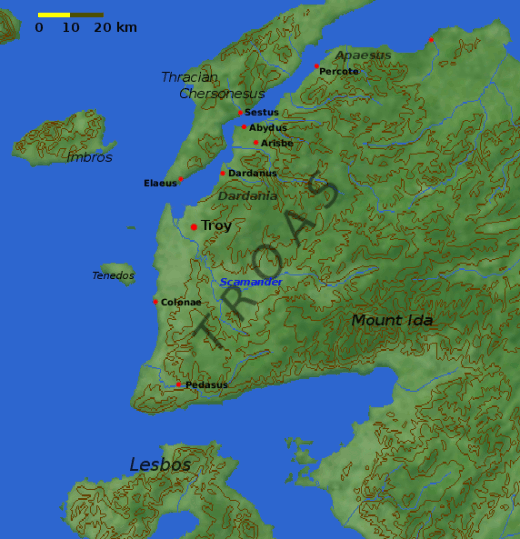
The Trojan War as a National Epic
There are two players in this great drama, of a war that launched a thousand ships from the Aegean to the lands of Troy. Greece and Troy. Greece -- (Achaia) at that time was under control of Mycenae. The Greeks, or Hellenes, shared a double ancestry. First, Javan of Japeth took his family and migrated to the Peloponeseus and founded the lands of Achaia. His inhabitants spread through the land and worshiped first Chronos (Saturn), then Zeus (Jupiter) along with Aphrodite (Venus) and Ares (Mars). Along to join him were other indo-europeans also descendants of Japeth. They spoke proto-Greek.
Javan is identified as Hellen by the Greeks. But in time, others came. Cecrops had come, a descendant of Zarah -- son of Judah. He founded Athens, while his kinsman -- Cadmus -- founded Thebes, and several other cities were founded by other kinsmen (including Argos). Sparta itself was founded by Dan, and many of the Danites moved north, past the Danube. Cecrops and Cadmus brought laws instituting marriage, and cast down human sacrifice to pagan gods. They could not cast down paganism completely, but they instituted many reforms. By the time the Greeks had come to fight the Trojan War, they were a mixed people of Hebrew and Indo-European Descent and spoke Mycenaean Greek.
Troy was founded by Darda (Most likely Troy VI, but could be Troy V). Darda was also a descendant of Zarah, son of Judah. The first son of Judah, Zarah's bloodline was to become the Kings of Europe. He founded Troy, which soon became a great trading center.
 | |
| Achilles |
- Paris -- Prince of Troy, son of King Priam. He falls in love with Helen and steals her away.
- King Menelaus -- King of Sparta, husband to Helen.
- King Agamemnon -- The King of Mycenae. Perhaps the true villain in the entire saga.
- Achilles -- King of Thebes, the best swordsman in all Greece.
- Odysseus -- King of Ithica. Someone who felt he shouldn't have gone in the first place, but Agamemnon needed his wisdom.
- King Priam -- King of Troy and pure descendant of Zarah of Judah.
- Hector -- Best fighter of the Trojans.
- Helen -- the face that launched a thousand ships.
Character Analysis of the Iliad
Protagonist -- King Menelaus, King of Sparta. His wife, his beautiful wife, was stolen from him by Paris, the Prince of Troy.
Antagonists -- Paris of Troy, Agamemnon of Mycenae
Contagonist -- Odysseus of Ithica
Guardian -- King Priam of Troy
Logic -- Hector, Briseis
Emotional -- Cassandra, Helen
Follower -- Patroclos
Skeptic -- Achilles
Main Character
The Main Character in the Iliad is Achilles without a doubt. Although in further adaptations of the story, the Main Character switches from Achilles to Menelaus, to Helen, to Paris, and other characters in the story. There is a play where Agamemnon is treated heroically only to have his life end tragically.
Impact Character
 | |
| Briseis |
Why was the Trojan War fought?
The War was fought over Trojan Wealth, Trojan control of the Bosporus or Dardanelles, and Troy's control of the Tin Oxide trade in the East. All roads led to Troy at that time, and the Hellenes, Danaan, or Achaeans were jealous to control that trade. What ever the reasons, the trigger is the most written about and the most commented upon in the myths.
 | |
| Menelaus |
As far as I understand it, the only Greek King that was truly in the right during the war was Menelaus. King Menelaus felt that Paris kidnapped his wife and took her to Troy. He eventually wins the war, and travels with Helen to Egypt. I agree with this assessment, because Menelaus was truly hurt by Paris stealing his wife, his property.
Who was in the wrong?
Both Paris and Agamemnon are actually to be blamed for wrong doing. Paris, because he stole another man's wife; and Agamemnon for going to war to Troy for reasons that aren't discussed. He needed an excuse and Helen was that excuse.
Who escalated the War?
Odysseus escalated the War. The Iliad begins with Achilles and Agamemnon fighting over who would possess Briseis. When Achilles lost, he sulked in his tent for all that time. Odysseus, getting reports of what was going on in Ithica, wanted to bring the Trojan War to an end. He wanted to return to Penelope and live out his life as King of Ithica. He escalated the war through trickery and deceit.
Which side suffered the most?
Both sides. The Greeks suffered because of Agamemnon's drive and obstinance. Thousands of lives were lost on the Greek side of the war. Similarly, many Trojans and Troy's allies also suffered. Many of the Amazons in the region died during battle. Patroclos was slain, which brought out Achilles. Eventually, the Trojans lost because of poor judgment. They allowed a gift of the Greeks to come in, the Trojan Horse, which contained many Greek Soldiers. During the night, the Greek Soldiers came out of the Horse and proceeded to sack the city.
What was the outcome?
The destruction and razing of Troy by Odysseus and his men and the scattering of the Trojans to the North and to the West. Achilles died because he wanted to protect Briseis. Hector died because he wanted to protect Troy and bring an end to the conflict. Priam died because he brought in the Trojan Horse.
Who survived?
 |
| Aeneas |
A number of kingdoms were founded as the Trojans who left and was scattered to Scandinavia. Memnon eventually begat Thor who eventually begat Odin. These Trojans settled Norway, Sweden, and Finland. Eventually their descendants (who included members of many other Hebrew Tribes) came to settle England and Norway. One of them, William the Conquerer, would set about finally finishing what happened at Glastonbury after the reign of Arthur.
How does it end?
Menelaus wins his wife back, and they retire in Egypt. As they retired, Sparta suffered a decline in power and influence and eventually fell to a Doric (Indo-European) invasion like most of Greece.
Did the Trojan War actually happen?
The Trojan War does have a basis in Historical Fact. The Egyptians, largely a neutral power in the War, have records related to the War. According to the Egyptian perspective, Paris stops in Karnak (Thebes) Egypt and visits the Pharaoh. The Pharaoh recognized that Paris stole Helen from her real husband and sends him back to Troy without her. The Pharaoh keeps Helen until Menelaus comes to claim her. After Menelaus claims her, they stay in Egypt for the rest of their lives.
Hittite sources tell of a Wilusa kingdom in the area where Troy is. This source is the Tawagalawa letter. The letter accounts of an unnamed Hittite king's correspondence to the king of the Ahhiyawa, referring to an earlier "Wilusa episode" involving hostility on the part of the Ahhiyawa. This is based on a letter from the Hittite king to the king of the Ahhiyawa people. Sources independent of the Tawagalawa letter also mentions one Alaksandu, which could have been Paris since his birth name was Alexandros.
 |
| Troy VIIa |
Note though, as Archaeology of the site progresses, a different picture than the one Homer wrote about arises. So what actually happened? Who knows? Archaeology is presenting a different picture based on what has been recovered.
So, is the Iliad truly history? Homer based much of his epic poem in fact, that much is clear. With Hittite sources and Egyptian sources mentioning Helen, Paris, and Menelaus it must have happened based on the testimony of two independent Kingdoms. However, some of Homer may have written what is fiction. Achilles and Hector's superhuman feats, and Achilles supposed invulnerability, is undoubtedly fiction. Homer may have recounted the War for an entirely different reason than to write a national historical epic.
But still, the story is a very popular subject in Hollywood in the U.S. Why this is, it's clear, the Trojan War -- more than any other Greek Myth -- is a National Epic of two nations: Greece -- which was the winners, and Israel, who was the loser. Of course, History is written by the winners, and there is no way to get the actual Trojan view of the war and what led to its defeat.
WORKS CITED
Historical and Literary
- Fagles, Robert, and Bernard Knox. The Iliad . New York, N.Y., U.S.A.: Viking, 1990. Print.
- Ancient Discoveries -- Siege of Troy. Dir. Ben Mole. Perf. Stephen Kemble. A&E Television Networks, 2007. DVD.
- The True Story of Troy (History Channel). Dir. Gary Glassman. Perf. Tom Bruno, Kevin Cirone, Allegra De Vita. A&E Home Video, 2004. DVD.
- In Search of the Trojan War. Dir. Bill Lyons. Perf. Michael Wood, John Chadwick, Peter Connolly. Bbc Warner, 2001. DVD.
- Frost, Frank J.. Greek society . Lexington, Mass.: Heath, 1971. Print.
- Fagles, Robert. The Odyssey . New York: Viking, 1996. Print.
Mythological
Hunt, Keith. "The Trojan connection with Britain." Keith Hunt - Trojans - Jews - Israel - Britain. Version 1.0. Keith Hunt, n.d. Web. 27 Apr. 2011.
Freeborn, Leland. "Helen of Troy, the face that launched a thousand ships." Helen of Troy July 2001 Tribes # 9. Version 1.0. The Parowan Prophet dot com, n.d. Web. 27 Apr. 2011.
Subscribe to:
Posts (Atom)
