Tuesday, May 8, 2012

Earth should be my Campaign World

Reading the Trans-migrations of a certain people (Israelites) makes me think that I should be running Celtic Campaigns on Earth Either in Albion, Hybernia, or Hyboria.  Truth can be stranger than fiction.  Apparently, to understand the Israelitish trans-migration is to understand our Geneaology.  You all heard it that Western and Northern Europeans are Gentiles (non-israelites) and the Crew that worship Judaism are the Chosen People of God.  Well . . . that's not quite the case.

First of all, we need to begin at the Age of Cancer, rather than the Age of Leo.  Noah (known in Chinese as Nu Wa [They mixed up his sex, probably the first time a man's sex got confused by a Nation; the second time where we mixed up the sex of Jesus Christ and his Father and assume them to be women]).  Noah had three sons -- Shem, Japheth, and Ham.

Shem married a white woman, Japheth married a woman who is described as Chinese in appearance, and Ham married a black woman.  All three brothers were admitted into the Celestial Kingdom for making themselves perfect custodians of Life upon the Ark.

Apparently, by studying God's promises to his people, Noah had left a considerable amount of land to his son Shem.  This included the Fertile Crescent, the western part being the Levant.  This included all the land of Cannaan, Syria, Assyria, Babylonia, and Sumer.  However, as one traces the migrations of Hebrews, it is apparent that Shem had been given much more land than supposed.

Shem's lands also include: Spain, France, Holland, parts of the Rhineland, Scandinavia (Finland, Sweden, Norway, and Dan's Mark), Britain, and the Americas.  That's the largest parcel of land given to anyone.  But then Noah had to divide up the Earth amongst his sons, and since Shem was the Birthright Son, Shem got the largest parcel of land.

Japheth was given a good parcel of land; from Japheth came the Indo-Europeans: all of the first Indians, Persians, first Greeks (Pelasgius), Romans, and the first peoples of the Caucasus mountains are descended from him.  The tribes of Gomer and Magog are his legacy.   But so are the Modern Jew (Togramah and Ashkenaz). 

Ham was given all of Africa, and parts of India.  His sons Mizraim, Cush, and Canaan were given parcels of land in Egypt, Ethiopia, and Morocco.  Cannaan never did settle in Morocco; he stole the Levant from Shem instead.  As a result, Ham, Mizraim, and Cush cursed Cannaan.  Ham cursed his own son, after his son's cursing by Noah, that what he steals will result in the destruction of his legacy as a Nation  (Cannaan's son Sin would eventually carry on his legacy as the Hittites and eventually the Chinese, Koreans, Vietnamese, and the Cambodians -- the Japanese people are special).

During the Age of Gemini, the first 70 Nations of men were founded and were waxing large in population.  The accounts of their wars and their politics were never written into the Bible, with the exception of Nimrod's politics and the Tower of Babel (Babylon) that he built.  So we have to turn to Secular History -- which is preserved in Myths and Legends -- to understand what happened.

The Founding of Israel


The founding of the Ethnos called Israel begins with one man.  Abraham.  This is taken from an account written by his own hand upon Papyrus:
"In the land of the aChaldeans, at the residence of my fathers, I,bAbraham, saw that it was needful for me to obtain another place of cresidence;


 And, finding there was greater ahappiness and peace and rest for me, I sought for the blessings of the fathers, and the right whereunto I should be ordained to administer the same; having been myself a follower of brighteousness, desiring also to be one who possessed great cknowledge, and to be a greater follower of righteousness, and to possess a greater knowledge, and to be a father of many dnations, a prince of peace, and edesiring to receive instructions, and to keep the commandments of God, I became a rightful heir, a fHigh Priest, holding the right belonging to the fathers.
 It was aconferred upon me from the fathers; it came down from the fathers, from the beginning of time, yea, even from the beginning, or before the foundation of the earth, down to the present time, even the right of the bfirstborn, or the first man, who is cAdam, or first father, through the fathers unto me.
 I sought for mine aappointment unto the Priesthood according to the appointment of God unto the bfathers concerning the seed."
Book of Abraham, Chapter 1:1-3.
Abraham is in the History Books.  He actually came up out of the land of the Chaldees, which was under the sway of the Egyptians of the Old Kingdom at the time.  Abraham records the founding of Egypt under Mizraim and his wife -- Egyptus.  Also, the time period in which Abraham lived was the Age of Taurus, the Bull.
"Now this king of Egypt was a descendant from the aloins ofbHam, and was a partaker of the blood of the cCanaanites by birth.
 22 From this descent sprang all the Egyptians, and thus the blood of the aCanaanites was preserved in the land.
 23 The land of aEgypt being first discovered by a woman, who was the daughter of Ham, and the daughter of Egyptus, which in the Chaldean signifies Egypt, which signifies that which is forbidden;
 24 When this woman discovered the land it was under water, who afterward settled her sons in it; and thus, from Ham, sprang that race which preserved the curse in the land.
 25 Now the first agovernment of Egypt was established by Pharaoh, the eldest son of Egyptus, the daughter of Ham, and it was after the manner of the government of Ham, which was patriarchal.
 26 Pharaoh, being a righteous man, established his kingdom and judged his people wisely and justly all his days, seeking earnestly to imitate that aorder established by the fathers in the first generations, in the days of the first patriarchal reign, even in the reign of Adam, and also of Noah, his father, who blessed him with the bblessings of the earth, and with the blessings of wisdom, but cursed him as pertaining to the Priesthood.
 27 Now, Pharaoh being of that lineage by which he could not have the right of aPriesthood, notwithstanding the Pharaohs would fain bclaim it from Noah, through Ham, therefore my father was led away by their idolatry;"
Pharaoh Menes (Mizraim) was never the first king of Egypt to hold the title of Pharaoh, they just gave him the title for continuity.  Menes' son Pharaoh was the first to hold the title because that was his name.  Because he had ruled so wisely and so well, his name Pharaoh became a title for all the subsequent kings of Egypt. 
The Founding of the Kingdom of Britain


Now Abraham is descended from a man named Heber, who lived in the Age of Gemini.  Heber was a direct Descendant of Shem, and all the people descended from him were known as Hebrews.  The Hebrews had a distinctive pattern to distinguish them from the nations.  They had long faces, white skin, and -- a propensity to explore.
A tribe of Hebrews, during the Age of Gemini, went up out of the Fertile Crescent and settled in Britain.  In there travels, they brought with them a few people descended from Japheth.  These people are the Neolithic People of Britain.  These proto-Britons built Stonehenge using counterweights, stones, sand, and a simple understanding of levers.

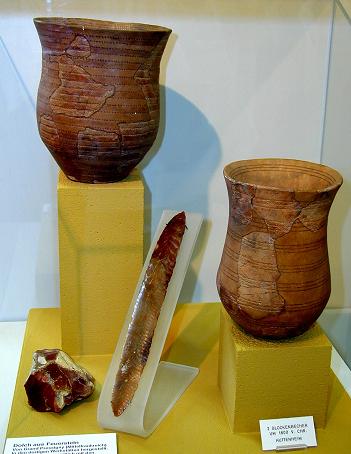
After that, during the beginning of the Age of Taurus came another people.  Presumably Hebrew because their faces were long and their skins were white, this group was called the Beaker People because of their distinctive pots.  They also brought with them metals and the stuff made of bronze.  So, where did these people come from?

We go back to Abraham.

Abraham had two children -- one by an Egyptian named Ishmael, and another by Sarah named Isaac.  However, a fight over who will get the Birthright between Sarah and Hagar meant that Hagar would be kicked from the family.  Hagar and Ishmael were led into Arabia where they would found the Arabian people.  In fact, most muslims say they are the lineal or spiritual descendants of Ishmael who they claim is the Birthright Son.  Now Isaac was a polygamous sort and had many sons and daughters; but the Birthright went to Jacob and not his first born son Esau.

The Beaker People of England is most probably descended from Isaac's other wives.  And Jacob went on to found a powerful nation of White men (yes, White men).  Jacob had twelve sons: Reuben, Simeon, Levi, Judah, Issachar from Leah; from Rachel: Joseph of Egypt, and Benjamin; from Bilhah: Dan and Naphtali; and from Zilpah: Gad and Asher.

During the Age of Taurus, Joseph was taken into captivity by the Arabians being sold by Judah for 20 shekels of silver.  These Arabians or Beduins had taken Joseph and sold him as a slave into Egypt.  And from there Joseph arose from a simple slave to being governor of all Egypt.  He had taken an Egyptian wife and had two sons: Ephraim and Manasseh.  Manasseh was born before Ephraim, but Ephraim inherited the Birthright Blessing.

This was all during the Middle Kingdom of Egypt, when Egypt was ruled by the 11th to 14th Dynasties.  However, of the 70 souls belonging to Israel at that time that went into Egypt something strange happened.  Zarah and his family were missing!


A little background on Zarah.  Before Israel took his family into Egypt, Judah had married into the Cannaanites like his uncle Esau.  He took a Cannaanite wife.  This wife gave him three sons: Er, Onan, and Shelah.  When Er was of age, Judah listened to the counsel of his father and gave Er Tamar: who was of Elamite (re: Sumerian) royalty.

Okay, everything went well until during the Wedding night Er died of a heart attack.  Angered that this happened, Judah gave Tamar to Onan to wife.  However, Onan refused to plant his seed in Tamar's womb because she was his brother's wife, and then he died of a heart attack.  Saddened that two of his sons died, Judah promised Tamar to Shelah.

However, Tamar disguised herself as a harlot and Judah managed to do something stupid.  He procured her services as a harlot (i.e. Prostitute) and planted his seed in her womb.  The results was forced marriage, and Judah took Tamar for his wife.  Tamar gave him twins -- Zarah and Pharez.  When Judah took his family into Egypt, Pharez and his wife and Shelah and his wife followed him.

So, when the famine hit, Zarah couldn't stand it and so he took his family where they could live.  Apparently, they went north.  To Turkey.  And built city and an empire on the edge of Hittite territory over the ruins of an old Hittite city.  Zarah's family founded Troy.

However, that's not all.  Many of Judah's family left Egypt during the Middle Kingdom. One of his descendants made it to Athens and became Athens' first king.  He introduced basic laws:  Laws pertaining to marriage, stealing, murder, theft, and governance.  Other of Israel's family left Egypt and traveled into Hybernia (Spain), and Northern Europe, strengthening the Beaker Culture that flourished there.  However, Israel grew, and grew until a new Pharaoh came into the picture.  This Pharaoh was the first of the 12 Dynasty.

This Pharaoh, Amenemhat I, did not know Joseph.  He worried that the Ethnic Israelites will destroy Egyptian Identity.  So to preserve his race, this Pharaoh had turned the Israelites into White slaves (note, the Egyptians were dark, dusky black skinned but didn't carry the features that delineated them to be of Cush -- they favored the long face of Ham, while the people of Cush favored the blunt nose, and short face of Ham's Black wife).

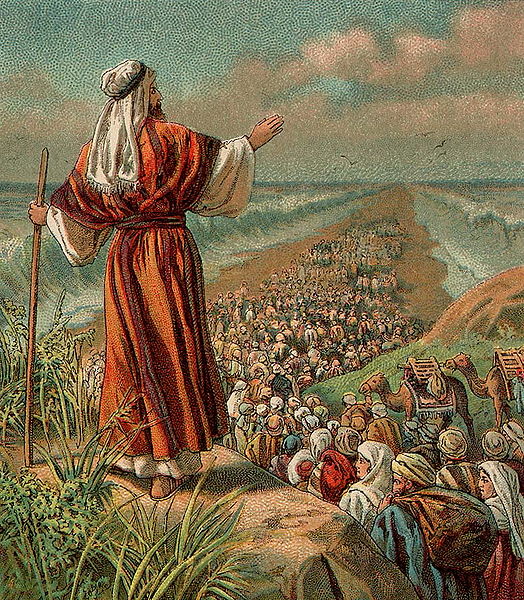
At the end of the 14th Dynasty, and after 400 years of white slavery, Neferhotep was Pharaoh and he contended with the Levite Moses (Amenemhat III).  After the ten plagues of Egypt, Moses and the Israelites left Egypt with Neferhotep chasing them with his army.  When Israel crossed the Red Sea; Neferhotep and his armies perished, and the Amalekites moved into Egypt soon after and took over as the Hyksos.

That's not the end of the story.  you see, the Israelites were forced to journey in the wilderness for 40 years after the incident with the Golden Apis calf.  Moses took his people EVERYWHERE.  A list of places where they could have gone:
* India (the Hindus calls Moses "Mousa," so he must have been there)
* China.
* Mongolia.
* Ubekistan.
* the Ukraine.
* Persia.
* Babylon.
* Syria.
* Cacasus.
* Turkey.
* A good portion of Arabia.
* Korea.
* Burma.
* Cambodia.
* Afganistan
* Pakistan
* Siberia
* Caspian Russia.

It was forty years of wandering in the Wilderness.  FORTY YEARS!

The israelites in the Book of Numbers fluctuated.  So, some people have left and went into Europe.  Some settled elsewhere: India, China, etc.  By the time Israel went into the land of Cannaan to possess the land of Cannaan, the people were hardy and powerful from traveling and the people of Cannaan was so decadent, and so corrupt that most of them fell before the Israelites.

The Trojan War and Brutus


So, we turn our thoughts to Troy.  Zarah and his people founded Troy.  However, Paris stole Helen from Menelaus.  At the end of the Age of Taurus, the Danaans (the Mycenean Greeks) went up unto Troy to attack the Trojans for reasons other than just Helen.  Most probably, gold and silk.

Troy controlled the trade between Asia and Europe, and so the Greeks wanted in on the action.  What is not unusual is that the whole stupid affair with Troy was because it was an internal family squabble.  The Trojans are mostly descended from Zarah, with the Royal Family being the most pure.  The rest were mixed.  The Greeks that participated in the War were the descendants of Dan.

The war resulted in Troy's destruction and it involved the people around about.  With their city destroyed, the Trojans were scattered abroad (and some were taken captive into Greece).  Paris' people eventually made it to France and founded the city of Paris.  And as for Aeneas?

Aeneas founded a kingdom in Etrusca, and his descendants were Romulus and Remus.  But that is not all.  He had a grandson.  Brutus, being of the sort that was impulsive, committed an accidental killing of his father.  Forced to flee, he got many of his ethnic trojans out of Greece and went up into Spain and eventually England and founded Caer Troyas or what will become known as London.  His invasion was the first Iron Age invasion of Britain.  The Beaker culture in Britain became his subjects and the line of Zarah was preserved in the Land of Britain.


Our story continues in part 2 -- The Celts.

Monday, May 7, 2012

The Great Poser Art vs. DIY with Maya debate!

Poser and DAZ Studio artists, you hear it all the time.  There is a big debate on how those that use Poser and DAZ aren't really artists.  We all know that the people at Disney's Pixar take months working on and rendering those 3D movies (Disney shouldn't have bought Pixar, bleh!).  And the typical Poser still can take a fraction of the time to set up (my latest image, using DAZ Studio Pro, took hours to set up properly). 

Because of this, they feel that taking DAZ Studio and posing vickeys and mikeys are completely a cop out and all we do is press the "Make Art Button."  Well, well, well, I suppose these people have forgotten all about Andy Worhal and Roy Lichtenstein.

Andy Warhol (August 6, 1928 – February 22, 1987) was an American artist who was a leading figure in the visual art movement known as pop art. His works explore the relationship between artistic expression, celebrity culture and advertisement that flourished by the 1960s. After a successful career as a commercial illustrator, Warhol became a renowned and sometimes controversial artist. The Andy Warhol Museum in his native city, Pittsburgh, Pennsylvania, holds an extensive permanent collection of art and archives. It is the largest museum in the United States of America dedicated to a single artist.

Some of Andy Worhal's work:


Roy Lichtenstein (October 27, 1923 – September 29, 1997) was a prominent American pop artist. During the 1960s, his paintings were exhibited at the Leo Castelli Gallery in New York City and along with Andy WarholJasper JohnsJames Rosenquist and others he became a leading figure in the new art movement. His work defined the basic premise of pop art better than any other through parody[2] Favoring the old-fashioned comic strip as subject matter, Lichtenstein produced hard-edged, precise compositions that documented while it parodied often in a tongue-in-cheek humorous manner. His work was heavily influenced by both popular advertising and the comic book style. He described Pop Art as, "not 'American' painting but actually industrial painting".[3]

Roy Lichtenstien was considered America's "Worst Artist."  However, some of his industrial paintings have sold for more than 20 million dollars on the auction block.  Here are some examples of Roy Lichtenstien's work.


both have led the Pop Art movement, of which the 3D Medium can be considered to be a part of.  So, the next time some dude who think they know what they are talking about and accuses your use of DAZ Studio and Poser a cop out, then remind them of Andy Warhol and Roy Lichtenstien.  They have paved the way, and one of the pair was even called America's "Worst Artist."  Remember, you are traveling in their shoes.


Wednesday, May 2, 2012

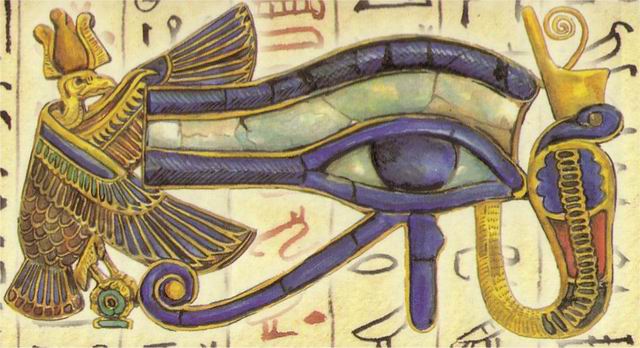
The Wadjet Eye


Apparently, two of my players have enjoyed the Adventure idea of The Wadjet Eye, so I'll be outlining it for them.  Basically, when I outline adventures, I've become enamored about how Robin D. Laws does things, since I think in the same vein.

Do not think, just for a moment, that I'm going for Historicity here.  Basically, in Egypt, there were three kingdoms, two Intermediate Periods, a Hellenic Period, and a Roman Period; and after that muslim domination.  You can't put the history of Ancient Egypt fully together since during the Pre-Dynastic Period all you have to go on is the Book of Jubilees and the Book of Genesis, and the writings of Abraham by his own hand (The Book of Abraham).  So, on with the outlining.


The Wadjet Eye (Tentative Title for a Pathfinder Adventure)

Setting: Ancient Egypt combined with Sinbad the Sailor.  Or in a round about way, this is a dhow goes to Egypt.  To be more precise, the setting is New Kingdom Egypt (18th Dynasty, when the Hyksos or the Israelites were "expelled" from Egypt) combined with Sinbad the Sailor from 1001 Arabian Nights.

Theme: Action and Adventure in a Romance of Ancient Egypt.

Premise: A theft has happened and the thief is discovered and being chased by the town guards.  The thief drops the loot, a wadjet eye, in the laps of the PCs and the thief melts into the shadows.  The PCs are mistaken for thieves and are being chased by the town guard.

The Twist: The PCs search for the actual owner, but the Wadjet Eye is being claimed by two parties.  One is the Wizard Menetnashté and the other is the psion Nafretiri.  They are both rivals, but are one or the other the rightful owners?  And what does the Pharaoh think? (The Pharaoh doesn't have a proper name in this adventure, BTW).  Oh, and the PCs are still chased by the paladin who wants to bring them to justice for stealing the Wadjet Eye.


The Climax: Our Heroes must continue the quest for the actual owner of the Wadjet Eye.  But the Wadjet Eye has powers of it's own.  Where they will lead, is anyone's guess.  However, the search for the actual owner leads to an ancient tomb and a fabulous treasure guarded by a unliving, undead mummy.


THE NPCS


Lysander -- A red half dragon paladin who is overzealous in his charge in protecting his district.  When a Wadjet Eye is stolen, it's his charge to bring back the thief for justice.


Menetnashte -- Egyptian wizard who wants the Wadjet Eye for his own purposes.  He believes that the Eye will lead him to fabulous treasure that will eventually make him Pharaoh over all the land. 


Nafretiri -- Egyptian Psion who also wants the Wadjet Eye for her purposes.  She wants to keep it out of the hands of Menetnashte, but she also wants the treasure.  What are her motives in wanting the treasure?  Who can say?  Maybe she wants the political power of Pharaoh.


Pharaoh -- the Pharaoh is the leader of Egypt.  Pharaoh in this case is unnamed because of the role he plays.  If the PCs meet the Pharaoh, he will try to mediate disputes and hear the PCs' side of the story.  He is Just and Fair.


The Mummy Amenhotep (Amun-hotep) -- not really an NPC but a monster.  The Mummy in this case is tasked with guarding the treasure.  Amenhotep was consigned to Undeath by the priests of Anubis for a great wrong he committed.  And he guards the treasures of the former Pharaoh before him.  


ACT ONE:
-- The PCs were minding their own business fresh from a trading venture in Punt when they see a thief being chased by the town guard in the city of Aden.  The thief bumps into them, and in the process passes the Wadjet eye and melts into the shadows afterwords.


-- The PCs are accosted by Lysander, a half-red Dragon paladin who is the lieutenant of the Wazir over the city of Aden.  He apologizes to the PCs and asks them if they have seen the thief.  When he sees the Wadjet Eye, he screams that the PCs are the thieves and tries to take them into custody.


-- After a little battle, the PCs are saved by the wizard Menetnashte, who desires the Wadjet Eye for he claims that he is the original owner of this particular eye.  The PCs venture with him to sea to reach Egypt, with the paladin Lysander following them.


ACT TWO:
-- After nearly reaching Egypt, the PCs' ship is attacked by pirates in the service of Nafretiri.  The pirates are defeated and the PCs reach the port town of Sayid.  There, while resting, Nafretiri visits the PCs and reveals the truth about Menetnashte -- that he hired the thief to steal the Wadjet Eye and to have the eye brought to her.


-- Confronting Menetnashte will mean that he denies the charge of wanting the treasures of the Pharaoh.  He similarly accuses Nafretiri of the same desire for the royal treasure of Egypt.  With both sides accusing the other of Megalomania, the PCs are reminded that they are still being hunted as Lysander attacks the PCs in order to retrieve the Wadjet Eye to be restored to its rightful owner.


-- It becomes a race to Luxor as the PCs must find that they must recover the treasures of Egypt in order to ascertain the truth.


-- On the way to the temple treasure, the PCs must brave the way there.  On the way, they encounter:
* Robbers
* A basilisk
* A lillend


ACT THREE:
-- Reaching the Pharoah's treasure vault at Luxor, the PCs use the Eye to open the vaults and go in. However, both Nafretiri and Menetnashte appear there and all are revealed through their accusations of one another.  Both accuse each other of wanting the treasures of Pharaoh and becoming the Pharaoh of Egypt for themselves. 


-- All of this shouting arouses the mummy Amenhotep.  Amenhotep, truly a lich, attacks the PCs and the wizard and psion.  However, Menetnashte quickly claims being a servant of Amenhotep and accuses the PCs of wanting to steal the temple treasure.  Amenhotep accepts the claim of servitude and attacks the PCs.


-- To defeat Amenhotep, the PCs must find his phylactery.  The secrets of the lich Amenhotep is stored in a canopic jar that contains his brains.  Once the canopic jar, in the image of Amen, is destroyed the lich will cease existing and pass on to the Spirit World.


-- After Amenhotep is destroyed, Lysander arrives with the Pharaoh.  If the PCs do the right thing and give up the Wadjet Eye to the Pharaoh and tell the truth, the Pharaoh will judge with justice and fairness on the part of the PCs.  


ACT IV:
The PCs will be free to go and Nafretiri and Menetnashte will be arrested for treason and judgement.  If the PCs do not surrender the Eye and claim the treasure for themselves, then the Pharaoh's army will overwhelm them and the Pharaoh will judge them and cast them into prison.


If it turns out good for the PCs, the PCs will be free to go.  Nafretiri and Menetnashte will get their just deserts -- death for treason against the people of Egypt and their rightful ruler.  And the PCs will travel on to Aden in their ship, free to go with any Egyptians they took as wives.  As for the Wadjet Eye, it is delivered unto Pharaoh, who is the real owner of this particular eye.


--------------------


So ends the tentative outline. :) 


Production Design:


This is to help fellow artists when they will be commissioned to do art for this adventure -- 


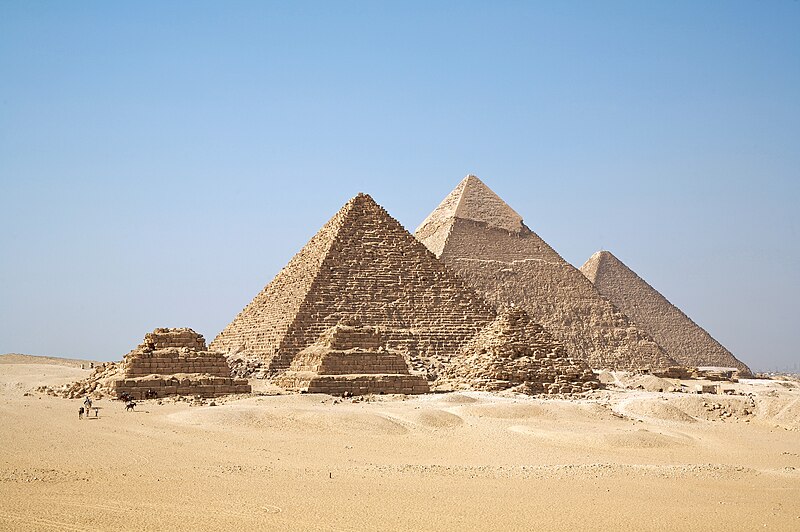
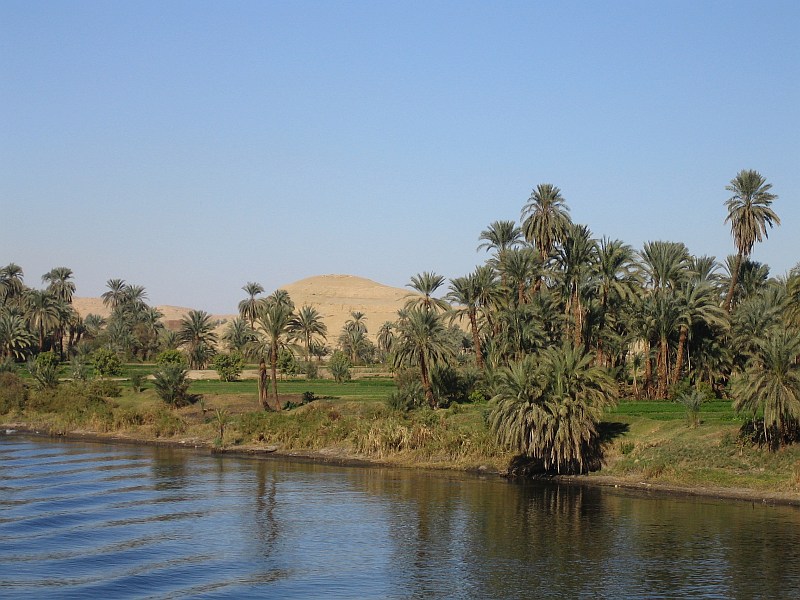
Ancient Egypt


Sinbad, the Sailor:


Monsters:

Lillend --


Lich:


D&D is Dying

Has Loren Green finally slain the Dragon in Dungeons and Dragons? 

Well, the game isn't, but the brand certainly is.  Because of problems with the upper management of D&D, Monte Cook has left D&D Next's development team.  Back when Wizards of the Coast started developing D&D Next, they brought in Monte Cook to help with development.  I thought it was to smooth over relationships with the customers who weren't ready to give up D&D 3.x in the wake of the D&D that was like ST:Enterprise -- D&D the Fourth.

The news was released last monday and to say I'm not surprised.  And Monte had this to say:

"Last week I decided that I would leave my contract position with Wizards of the Coast. I am no longer working on Dungeons & Dragons, although I may provide occasional consultation in the future. My decision is one based on differences of opinion with the company. However, I want to take this time to stress that my differences were not with my fellow designers, Rob Schwalb and Bruce Cordell. I enjoyed every moment of working with them over the past year. I have faith that they'll create a fun game. I'm rooting for them."


Basically, whether you like D&D fourth or not, the company alienated a large part of its customer base when it developed fourth to go after another demographic.  The alienating was done in such a way during 2008 that it left a bad taste in many people's mouths.  And Paizo, because of licensing reasons (mostly the GSL), developed Pathfinder.


So it looks like D&D Next might be D&D Last if Loren Green doesn't get it together and realize that he has to treat his employees and customers like people and the game like a GAME.  Fortunately, though, if Loren Green kills the D&D brand to get money like Perseus killed Cetus to save Andromeda; there are still dragons out there.  the legacy of D&D -- the GAME -- will still live through the Open Gaming License and it's fans. 


E. Gary Gygax and Dave Arneson created a game that was sorely needed by the public, at least by those who wanted to produce their own adventures after studying mythology and watching many of the Hollywood fantasy movies that were coming out at the time (you can also include Star Wars in the list).  They opened a door that cannot be closed.


The hobby will continue after Loren Green has slain the dragon in Dungeons and Dragons.  The brand may die, and people will be sorrowful, but the hobby will live on and creative intelligent people will still create D&D their way.  To sum up, the face of D&D is dying but long live the D&D game.

Tuesday, May 1, 2012

Ideas for Adventures

So, do to my game mastering style, there is some need for some of my adventures to come out.  I'm going to list a few ideas that I had:
* Psionics Adventure: a simple psionics adventure set in a land that is liken unto the Levant.  Where the men and women wear skimpy, exotic outfits.  Something akin to leather briefs and harnesses (A harness is liken unto ERB's harness worn by Barsoomian Martians).

* The Great Greek Adventure: A pseudo-greek land that inspires adventure with Classical Gods demanding to be worshipped.  And an adventure set in therein.

* Mansion for sale: A mansion is for sale, however, it's cheap.  Which means that the person or people who bought it is responsible for clearing the mansion out of nasty monsters that are lairing there.  A twist on the classic adventure in a Dungeon Magazine -- Castle for Sale.

* The Golden Voyage of the Azgari. An adventure set in an Arabian Nights vein.  The PCs are members of a large dhow's crew.  They get involved in an adventure that has a princess, a magic curse, a far away land, and outfits worthy of The Golden Voyage of Sinbad.


* The Dark Shadow on Cemetery Hill. Strange events are plaguing the little sleepy town of Salem.  Some blame the ghosts of Cemetery Hill.  The town hires the PCs to investigate the source of the hauntings, which is said to be a house that belonged to the Funery Priest. 

* The Caves of Alazgar.  The Caves were cleared out before, but overtime the caves had become inhabited again by monsters.  The PCs arrive when the Caves' population of monsters have increased to critical stages.  And the PCs are called in to bring peace to the region. 

* The Mystery of Castle Thornehold.  The PCs are called in by the owners of Castle Thornehold to solve a difficult mystery.  The adventure involves a ghost, a girl, magic, and the mystery itself.

* The Wadjet Eye.  Another adventure of an Arabian Nights vein, this time set in an Egyptian theme.  Everything goes well for the PCs until a fleeing thief drops a wadjet eye in their lap.  Mistaken for the thieves, the PCs are taken for a ride as they learn not only the original owner wants the eye back, but someone else claims it for himself as well.

-- Vote for the Adventure you will like to have outlined! --

Wednesday, April 25, 2012

Interesting Quote from Gwenn Seemel

Sorry everyone, I've been playing Star Wars and in school for updating my blog.  However, I found an interesting quote on QuestionCopyright.org.

"I'm fascinated by how artists say that their adherence to copyright is about money (even when they aren't making a living with their work) but that when you dig a little deeper it comes out that it's about fear.  It's about the fear that someone will do what you're doing but do it better than you ever did."
------------------------------------------


It's nice to know that most of us are afraid that someone is going to do something better than what we did.  Is it not?
Related Posts Plugin for WordPress, Blogger...